Editor’s Note: You’re facing unprecedented business challenges. You need more than theories—you need a blueprint. Welcome to a Leader’s Blueprint, your weekly guide to proven strategies that get results.
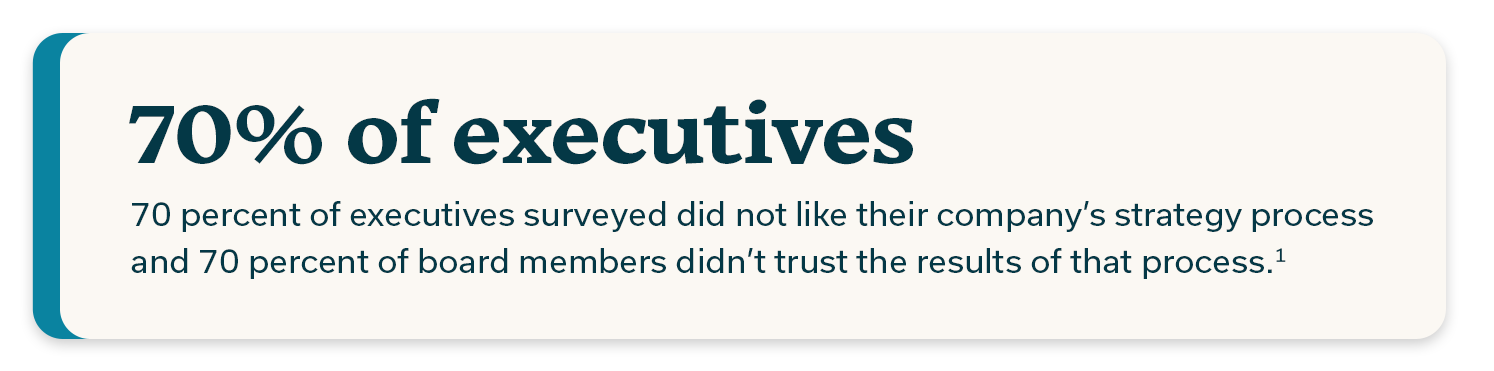
You’ve just concluded the annual strategy offsite. The vision is bold, the goals are ambitious, and the leadership team is energized to conquer new markets. But when you and your peer portfolio leaders return to the office, the energy slowly fizzles out.
Despite the new slide decks, the new strategy never translates into action. Realignment is difficult; most companies have to hire expensive consulting firms just to untangle their organization and identify the value streams and product lines that matter. Because you lack a native model to organize these portfolios yourself, your funding and focus remain perfectly aligned to deliver last year’s strategy. You are trying to row in a new direction, but every portfolio is pulling its oar a different way.
The Hidden Costs of a Strategy-Structure Gap
When your organizational structure is not aligned with your strategic goals, it creates constant friction that silently sabotages your success.
- Wasted Investment: Precious capital and talent are spent on low-priority work. Worse, different teams in different portfolios unknowingly duplicate efforts, solving the same problem in isolation and wasting valuable resources.
- Strategic Drift: The company’s vision points north, but the inertia of the existing portfolios keeps pulling the execution south. This gap between what you say and what you do widens over time, making strategic goals impossible to reach.
- Decision Paralysis: With unclear ownership of value streams, even simple decisions are endlessly escalated. Agility dies as leaders wait for approvals from committees that lack the context to make an informed choice.
From Complexity to Clarity: Identifying Value
The solution is to intentionally design your organization to match your strategy. In SAFe®, this is the Organizing Portfolios competency. This involves structuring your organization around clearly identified products, solutions and value streams—the end-to-end set of steps required to deliver a product or solution to a customer.
Instead of grouping people by function, you create a portfolio with all the people, funding, and authority needed to serve the value streams within it. This clarity of purpose and responsibility is what enables clear strategic execution. Teams are empowered to make fast, smart choices because they are fully aligned and have the context of the larger strategic goal.
Your First Step
You can begin to diagnose your strategy-structure gap this week with a simple exercise. Take your company’s single most important strategic goal for this year and ask your leaders:
“Which teams and which budgets are directly contributing to this goal?”
If they can’t draw that map with clarity in under 30 minutes, your organizational structure is obscuring—not enabling—your strategy.
Unlock the Full Blueprint
Visualizing the problem is the first step, but realigning an enterprise requires a proven approach. The Organizing Portfolios competency provides a complete blueprint for defining value streams, structuring portfolios for flow, and dynamically adapting them as your strategy evolves.

Stop letting your legacy portfolios dictate your strategy.
Unlock the full SAFe Framework, with the competencies and guidance needed to build an organization that can execute your vision. Get complete access by purchasing your SAFe® Insider membership today.
In this Series:
- Catch up on last week’s post: Continuously Delivering Value
- Coming next week: Validating Investment Opportunities
1 Richard P. Rumelt, “Getting Strategy Wrong—and How to Do It Right Instead,” McKinsey Quarterly, accessed October 28, 2025, https://www.mckinsey.com/capabilities/strategy-and-corporate-finance/our-insights/getting-strategy-wrong-and-how-to-do-it-right-instead