A Complete Guide to Enterprise Digital Transformation

The phrase “time and tide wait for no man” dates back to at least the 13th century, but it’s as relevant today as ever—particularly in business. Inevitably, things constantly change, and opportunities are fleeting. The message? You must be agile in order to keep up and remain competitive. 

Enterprise digital transformation is the strategic response to this reality, enabling organizations to adapt quickly and innovate continuously to keep delivering value at scale. 

This is easier said than done, however. Achieving this impact requires an enterprise-wide operating system that supports agility from the ground up. Enter the Scaled Agile Framework (SAFe). 

Let’s explore what enterprise digital transformation is. We’ll look at its benefits, key elements, and the practical steps large businesses can take to achieve sustainable digital transformation with SAFe as the foundation.

What is Enterprise Digital Transformation?

Organizational change is imperative to improving performance and remaining competitive, and enterprise digital transformation is the process to achieve this through innovative business models. It’s the integration of digital technology and tools into all areas of a business to reshape how it operates, including strategies, operating models, mindsets, and customer interactions. By doing so, you streamline operations and, crucially, consistently improve value for customers. 

Many mistakenly think that digital transformation is just the adoption of new technologies, but this is not the case. True transformation goes beyond tools; it requires thinking in a new way and aligning teams, embedding a culture of continuous improvement across the enterprise. Without this holistic approach, technology alone can’t deliver meaningful outcomes.

So, why is digital transformation in enterprises so important? As emphasized earlier, times are constantly changing. Market dynamics are fluid, technology is always advancing, and both customers and employees increasingly expect more and more. Only by embracing change and having a systematic strategy for long-term success can you turn this disruption into successful growth. 

The Importance of SAFe in Successful Enterprise Digital Transformation

SAFe is the world’s most trusted system for business agility. We mentioned that digital transformation efforts go beyond simply adopting new tech; what’s often missing is a way to coordinate people and processes across the business to ensure this change has a wider, more meaningful impact. 

SAFe solves this problem by providing a structured framework that aligns teams and their operations through predictable planning and delivery cycles to implement change at scale. It guides execution and encourages continuous learning, ensuring that transformation is sustainable, measurable, and enterprise-wide, rather than a series of disconnected initiatives.

The Benefits of Enterprise Transformation

Enterprise digital transformation offers clear advantages. Using new technology to your advantage supports innovation and helps you remain competitive. But these are not the only benefits—far from it. 

By transforming your enterprise with the support of the right tools and using SAFe’s structured operation, you’ll enjoy the following gains:

Enhanced Customer Experience

Customers today expect a lot from businesses, such as personalization, efficiency, seamless interactions, and fast issue resolution. By using new technology, organizations can meet these benchmarks and therefore enhance customer experience. 

For instance, effective data analytics tools help you understand customer behaviors and preferences. You can then tailor digital services to meet those needs effectively. As well as increasing satisfaction, this will strengthen customer loyalty, driving revenue growth and improving your company’s market position.

Increased Employee Satisfaction

Digital transformation doesn’t just impact external experience; it also affects your business’ internal environment. Particularly when using SAFe to deliver a transformation project, teams communicate and collaborate more, and are continuously learning and improving through cultural transformation. This creates a positive and engaging work culture, thus boosting productivity and reducing turnover. In fact, 92% of employees believe workplace training positively impacts their job engagement.

Accelerated Growth

Enterprise digital transformation is a key factor in growing your company, including sustaining increased revenue. But 70% of digital transformation journeys fail to meet these objectives. This is usually because the transformation efforts are fragmented or poorly aligned with the overall strategy. 

Using SAFe as the framework behind your digital transformation, on the other hand, ensures a coordinated, enterprise-wide approach that improves responsiveness to market change and ultimately drives sustainable growth.

Optimized Costs

Moving to digital tools and cloud solutions reduces the need for expensive on-premise infrastructure and keeping it up to date. Meanwhile, automation, often powered by machine learning, cuts down on operational costs even more by reducing the amount of manual work, making workflows more efficient, and eliminating wasteful practices throughout the supply chain.

When done right on a large scale, these changes enable businesses to reallocate funds to more valuable projects. This is particularly true when applied to wider value streams rather than individual projects, as in the SAFe methodology, to produce long-term cost optimization in addition to short-term savings driven by new technology.

Greater Agility

The changing market is the greatest reason why digital transformation is essential. So, it follows that one of the biggest benefits of transforming your enterprise digitally is the ability to respond faster and more effectively to market change without disruption. 

By modernizing systems and ways of working, you can shorten feedback loops and accelerate decision-making. And, when supported by SAFe, this agility is scaled across the enterprise. The result? Improved resilience and the ability to capitalize on new opportunities as they arise.

What are the Key Elements of Digital Transformation for Enterprises?

For your business transformation to be successful, you need four key parts to work together: Strategy, technology & data, processes, and people. SAFe provides the structure to connect these elements in practice, ensuring they evolve together rather than in isolation.

Strategy

Your digital transformation strategy underlies the why and what of your change. To be successful, the main goal is to align your digital transformation strategy with your company’s wider objectives. These might be improving customer experience or increasing operational efficiency, but whatever your core business targets, your initiatives should revolve around them. 

A strategy, in addition to a vision, helps you define an actionable roadmap for execution, including key performance indicators (KPIs) to measure success. It also aids in securing buy-in from stakeholders. 

Technology and Data

It’s called enterprise digital transformation for a reason, and that’s because technology is a crucial enabler. A large part of achieving success is building a modern, scalable, and secure technology infrastructure.

Of course, digital transformation initiatives are more than just adopting new tools, but technologies like cloud platforms, advanced analytics, and (increasingly) AI, can deliver great value when applied purposefully and integrated into everyday ways of working. 

AI, for example, can automate complex business processes and unlock deeper insights from data, producing faster and more personalized outcomes. But these benefits only materialize when teams are aligned and data is reliable and accessible across the enterprise.

When technology and data are treated as strategic assets rather than standalone solutions, as they are under a SAFe framework, enterprises can move beyond experimentation and achieve sustainable, scalable transformation.

Processes

Even with a clear strategy and the latest technology innovations, transformation won’t succeed if work is siloed. That’s why processes are so important—they define how work flows throughout your organization. 

The idea isn’t to simply digitize certain existing workflows; it’s to overhaul them using digital tools to create a seamless process that is wholly value-focused. They should be designed to maximize customer outcomes and eliminate bottlenecks, while ensuring that every step contributes to strategic objectives. 

For large enterprises, SAFe provides a structured way to scale these processes, connecting teams and their individual tasks into a transparent and iterative workflow. This alignment ensures processes aren’t isolated, enabling coordinated delivery of change across the organization.

People

Digital solutions are only effective in driving positive change if people adopt them in the right way. Your employees are at the heart of your business’s transformation, which is why building a culture of agility, collaboration, and learning is as important as sourcing the best tools. 

Teams need to be trained to not just use new technologies but apply them in a way that supports meaningful targets and continuously improves outcomes. 

SAFe focuses on the fact that the drivers of change are as important as the transformation process itself. It provides a clear structure for how people at all levels interact and contribute to value delivery so they can play their part in enterprise-wide transformation in the most effective way. 

Interested in learning more?

Discover more key components of healthy agile transformations.

Challenges to Enterprise Transformation

Despite its many positives, digital transformation can be a complex process, and you’re bound to have hurdles to overcome. Most issues arise not from the technologies you choose, but because of a lack of planning, strategy, and structure. This is why a proven framework like SAFe can be instrumental in helping you succeed.

Here are the most common challenges associated with digital transformation: 

Resistance to Change

To truly implement change, you need all your teams to be on board, especially leadership. After all, transformation occurs through everyone’s consistent day-to-day actions, not one-off isolated initiatives. But employees are used to doing things a certain way and may be fearful of using new technology and processes, causing friction and delaying results. 

The remedies to this challenge are explicitly built-in to the SAFe framework: clearly communicate why you’re undertaking the change, involve teams early and often, build a culture of learning, and reinforce change through everyday work aligned with goals and incentives.

Outdated Systems

As the implementation of new technology is a key element of digital transformation, the process can be hindered by your existing inflexible and incompatible systems. Using outdated systems for important business functions can create data silos and hinder the integration of new tools, such as AI. 

This is why digital transformation often requires overhauling legacy infrastructure and ways of working, rather than the isolated adoption of new tools. By modernizing your foundations, you create the flexibility needed to scale innovation across your enterprise. 

Lack of a Clear Roadmap

As discussed, many businesses fall into the trap of adopting technology for its own sake, without connecting the decision to wider objectives. Consequently, these fragmented efforts don’t deliver meaningful results and waste resources without achieving a good ROI. 

To address this, organizations need a clear strategy that prioritizes initiatives based on business value rather than technology alone. SAFe supports this by aligning a plan with delivery, enabling enterprises to maintain focus and adapt as priorities evolve. This ensures transformation efforts deliver measurable returns rather than scattered outcomes.

Cybersecurity Risks

A more interconnected, technology-based infrastructure will inevitably increase your attack surface and introduce new potential vulnerabilities to cyber threats. 

To mitigate this, cybersecurity must be built into your transformation process as a core component, not just added as an afterthought. For example, embed security practices into systems and processes from the outset, ensuring data is protected, access is controlled, and risks are continuously monitored. By taking a proactive, enterprise-wide approach to cybersecurity, you can confidently scale new digital capabilities while safeguarding customer trust and staying resilient.

Failing to Adapt and Iterate

Enterprise transformations are not set-and-forget initiatives; you need to continuously monitor the impact of changes and iteratively adapt your methods to keep up with the market and sustain performance improvements. Only by taking an agile approach will your transformation lead to sustained, scalable success, and this is where SAFe adds real value. 

The framework embeds regular planning and learning cycles across teams, enabling your organization to respond quickly to change and continuously refine how work is delivered.  

Steps to a Successful Digital Enterprise Transformation

We’ve established that a successful enterprise digital transformation hinges on a clear value-driven strategy. There are certain critical steps for planning and execution that every organization should follow to ensure alignment and fruitful implementation. 

These include:

Step 1: Define Clear Objectives

The first step is to establish your why. What goals are you trying to achieve with the digital transformation? These should be specific and measurable, such as increasing customer satisfaction scores by 35% or reducing order-to-delivery time by 20%. Each objective should support your organization’s overall vision and be communicated clearly across the business. 

Step 2: Assess Current Capabilities and Identify Gaps

Review your existing technology stack; which legacy systems must you keep, and which can be replaced? Are there any data silos, and, if so, where? Where are the gaps between your current state and where you’d like to be? This will help you identify the areas to focus on and pinpoint what needs to be retained and what can be modernized or overhauled. 

Step 3: Develop a Phased Roadmap

Your transformation can’t happen overnight, so creating a phased strategy is the best way to keep change manageable and productive. Focus first on high-impact projects that you know will build momentum and demonstrate value to stakeholders. This helps secure enthusiasm for the project. Then, move on to the alterations which will create value over time. However, always be open to adapting as conditions and priorities may change.

Adopting an agile, iterative approach like this allows for learning and adjustment, which are far more likely to consistently and continuously deliver better outcomes. 

Step 4: Build a People-Centered Change Management Plan 

Put people at the heart of your transformation strategy, with a change management plan designed to overcome resistance and enhance your company culture. Ensure every aspect of the roadmap is communicated clearly across the organization, including its purpose and benefits, as understanding goes a long way to securing buy-in. 

Additionally, investing in education and training and involving employees in the process as much as possible will allow for a smoother transition. 

Step 5: Establish Governance and Continued Tracking

The final stage is to set up a system for ongoing monitoring, coordination, and measurement. This includes determining who is in charge of each project, how they are connected, and what metrics will be used to track progress and success. Even well-planned projects can fail if they work in isolation or compete for resources. 

A structured approach like SAFe gives teams and portfolios the transparency and alignment they need to work together and make sure that initiatives are aligned with strategic goals.

Enterprise Digital Transformation Examples

How Sacem Underwent a Global Business Digital Transformation with SAFe How Fletcher Building Used SAFe to Successfully Drive Digital Transformation and Accelerate Flow of Value
Challenge: Sacem needed to accelerate digitalization, improve efficiency, and break down silos to remain a global leader in a rapidly evolving music industry.Challenge: Siloed teams, waterfall practices, and a decentralized IT organization made it difficult to deliver technology solutions quickly, align across geographies, and focus on customer outcomes.
Solution: Adopted SAFe and created a Platform Agile Release Train (ART) to coordinate IT and business initiatives, integrate DevOps practices, and align work across value streamsSolution: Implemented SAFe, creating cross-functional, customer-focused teams, training 150+ people, aligning executives and IT leadership, and embedding business change into ARTs to drive adoption and prioritization.
Results
– Increased delivery speed by 20%
– Reduced deployment time from 1.5 days to 5 minutes
– Cut technical obsolescence by 15%
– Improved service reliability to 98.9%
– Enhanced team autonomy, and fostered cross-team collaboration
Results:
– Halved the time and cost to implement technology
– Increased eCommerce revenue from $0 to $300M (2019–2022)
– Achieved 94% predictability in releases
– Over 90% customer satisfaction, stronger staff engagement
– Hit their $100M sales target a year early

How Scaled Agile Helps Your Enterprise Achieve a Successful Digital Transformation With SAFe

Digital transformation is a crucial strategy that all businesses, particularly enterprises, should implement. However, putting enterprise digital transformation solutions into practice calls for a comprehensive and organized approach that facilitates team alignment and agility—an approach like SAFe.

What got you where you are today may not be sufficient to get you where you want to be tomorrow. SAFe gives you a bridge to a new, more agile way of working, so you can respond to disruptive competitors, adapt to changing customer expectations, adjust to market shifts, and capitalize on opportunities.

More than 2,000,000 practitioners and 20,000 enterprises worldwide, across nearly every industry, trust the Scaled Agile Framework.  

Scaled Agile offers:

  • SAFe Training & Certification: Courses for leaders and teams to build the skills and mindset needed to scale agile effectively.
  • SAFe Framework Guidance: Access to the full framework, including detailed guidance on value streams, ARTs, portfolio management, and agile practices at scale.
  • Implementation Roadmaps & Toolkits: Step-by-step resources for launching Agile Release Trains, aligning strategy to execution, and embedding agility across the enterprise.
  • Community & Support: Access to a global network of other enterprises for knowledge sharing, best practices, and ongoing support.

Take the first step toward your transformation: explore SAFe today and see how Scaled Agile can help your organization unlock enterprise-wide agility and deliver value faster in your digital transformation. 


AI Project Management vs Traditional Methods

Digital transformation continues to reshape how businesses operate, and AI is one of several powerful forces driving that change. From logistics to staffing to operations to product development, there’s practically nothing that isn’t already enhanced by AI solutions, machine learning, and automation. 

Even project management, which seems to be inextricably linked to human leadership skills, is leaning more and more on the power of AI to speed up timelines, project success rates, and better control project outcomes.

But is artificial intelligence automatically better than traditional methodologies in project management? Let’s compare.

How the Landscape of Project Management Is Evolving

At the risk of sounding trite, project management is changing rapidly in the wake of digital transformation, and in response to technologies that businesses have adopted and everyone now expects. Even as early as 2019, Gartner was predicting that 80% of project management tasks would be taken over by AI by 2030.

From rigid, predictive techniques like Gantt charts, project management has become more flexible and iterative, thanks in large part to Agile, as well as other modern tools. 

This evolution in project management has enhanced planning, budgeting, stakeholder management, risk mitigation, and communication, but it also means that managers need to get used to artificial intelligence in their business environment. lobal GDP, highlighting that disengaged teams are not just a culture issue—they are a bottom-line liability. 

The Difference Between AI and Traditional Project Management At a Glance

StepsTraditional Project ManagementAI Project Management
PlanningFixed upfront, sequential (e.g., Waterfall) ​Dynamic, data-driven, with real-time adjustments ​
Decision-MakingManual human judgment, often delayedPredictive analytics for proactive choices ​
Resource AllocationStatic assignments based on estimates ​Automated optimization via real-time data ​
Risk ManagementPre-identified with contingency plans ​Continuous forecasting and early detection ​
AdaptabillityLow; resists changes to avoid scope creep​High embraces iterations and feedback

What We Mean When We Say Traditional Methods

Traditional project management doesn’t necessarily mean anything that happened before the advent of AI. In fact, traditional project management originally meant methods that predate the Agile Manifesto and the subsequent development of iterative approaches. 

Pre-Agile Era

Before Agile, there were several project management methods:

  • The Waterfall method is what people usually mean when they’re referring to traditional project management. Categorized as linear, rigid, and sequential, the Waterfall method is broken down into five stages: Initiation, Planning, Execution, Monitoring, and Closure.
  • While not its own method, Gantt charts are used by PMs to outline the entire scope of a project and help teams better understand the process. Gantt charts are useful in traditional methods because they facilitate project monitoring.
  • CPPM or critical chain project management (also known as the critical path method) helps PMs keep track of essential resources while they prioritize dependent tasks for maximum efficiency. CCPM is a good strategy to keep an eye on resources so that each task in the critical path has what it needs to reach completion.
  • The PERT (program evaluation and review techniques) method is more focused on timeline analysis. Using this method, the PM calculates the minimum amount of time each individual task needs, and then uses that to determine how long a project will take before dividing up resources.

Pros of Traditional Methods

  • Mapping out project plans ahead of time creates clear expectations and makes it easy to estimate costs, workloads, and resources.
  • Helps everyone on the project clearly understand their responsibilities.
  • Gives PMs abillity to foresee and therefore mitigate potential risks.
  • Helps PMs maintain more control of any changes and makes them solely accountable.
  • Processes and standards are well documented, which helps inform management of other projects.

Cons of Traditional Methods

  • Lack of flexibility can lead to increased costs and delays.
  • Non-collaborative.
  • Limited customer or user feedback due to the linear nature of the process.

Post-Agile Era

These days, the Agile method is the most popular approach to project management because it is iterative, collaborative, flexible—in other words, agile. There are 12 basic principles of Agile, all of which enforce customer satisfaction, adaptability, and cooperation. Common Agile methods and frameworks include: 

  • Kanban is a visual workflow tool designed to help teams limit multitasking by ensuring they only have a certain number of ‘in progress’ tasks at a time. Everyone sees the scope of work, which helps teams better manage workflows and see the “big picture”.
  • The Scrum framework is an iterative approach to tackling complex tasks that requires the adoption of certain roles (i.e. Scrum master, developer, and product owner) and certain Events (e.g., sprint planning, etc.) to deliver usable product increments frequently.
  • The Extreme Programming (XP) method is designed to help teams deliver high-quality software products through ongoing customer feedback and short development cycles. This is achieved through tactics like pair programming, frequent communication, and simple design.


Whether your management style is based more on traditional or Agile methods, AI project management tools primarily enhance Agile methods but also increasingly support hybrid approaches, as we will see.e Framework for establishing cross-functional teams, clarifying roles, and fostering the relentless improvement that drives business agility.


What We Mean When We Say AI Project Management

You’d be hard-pressed to find an organization that doesn’t already have an AI system somehow baked into daily project delivery. When we say AI for project management, we’re not just talking about automating task assignments, though automation is certainly a part of it. Rather, we’re talking about a major shift in intelligence, prediction, and optimization.  

AI PM tools use machine learning to enhance business decision-making and efficiency. These tools excel at:

  • Analyzing historical data for risk prediction (e.g., delays or overruns).
  • Auto-generating schedules and reports.
  • Dynamically allocating resources.
  • Prioritizing tasks.
  • Integrating with Gantt charts and automatically adjusting task dependencies.

What Could an AI PM Workflow Look Like?

Imagine the human project manager types a natural-language prompt into the AI tool. It could be something like, “Help me make a 10-week plan to launch a new feature, with design, build, test, and launch phases for a team of 6.”

The AI tool will then…

  • Generate a timeline and break it down into tasks with their dependencies.
  • Assign tasks to owners and set milestones.


The human PM can then quickly review the project data and tweak any details necessary. As the project tasks are being carried out, all team updates and activities will automatically trigger the AI to auto-update statuses, flag risks like potential delays with confidence scores, and suggest fixes to help teams stay on track and meet their targets. In scaled environments, AI monitors Agile Release Train (ART) work to detect inter-team dependencies and proactively predict bottlenecks.

In the meantime, the AI tool can draft concise status reports for stakeholders and personalized reminders for individuals to minimize the need for manual communication. If a disruption arises, such as a designer going on sick leave, the project manager can ask the AI tool to help simulate their options.

When the project reaches its end, the AI tool can compile a full summary report, including details like:

  • On-time deliverables.
  • Delays and slippages, and what caused them. 
  • Resource patterns (e.g., testing is often underestimated by 25%) and risk outcomes.

Benefits of Using AI in Project Management

When combined with human expertise, automation and ML can introduce the advantage of speed, accuracy, and productivity, and act as intelligent forecasters to help PMs make better, more cost-effective decisions. In a nutshell:

  • Optimized planning and scheduling.
  • Data-backed decision-making.
  • Enhanced risk assessment and mitigation.
  • Better resource optimization.
  • Streamlined task automation.
  • More accurate cost estimation.
  • Insightful predictive analytics and accurate forecasting.

But Before You Invest in AI…

The potential of AI is far-reaching, but without having solid foundations in place, your team may resist adopting it. Becoming AI‑Native means thinking with AI in all aspects of the organization, rather than just seeing it as a tool for course correction. 

But you need to invest in your people first. This means building up their AI literacy and confidence. True adoption happens when project managers and business leaders understand how to frame decisions, interpret data-driven insights, and redesign processes around AI intelligence as a core organizational capability.

AI works best when combined with human judgment, experience, and contextual awareness. As poor data inputs can lead to unreliable forecasts or unrealistic timelines (for example), using AI systematically and consistently rather than experimentally is a high priority.

The Smart Project Management Path

No matter which project management style best suits your organization, AI is the next stage in your organization’s evolution.

With structured training that builds the capability to think architecturally about AI from the ground up, your business can start embedding intelligence into every decision cycle, thereby improving project outcomes.

Ready to scale with SAFe + AI? Get started with our AI-Native training courses.

AI Native Foundations Certification

AI Native Change Agent Certification

Request Private Group Training

Why AI is the Ultimate Partner for Product Owners and Product Managers

Editor’s Note: Unprecedented business challenges are impacting your day-to-day role. You need more than theories—you need a plan and tactics. Welcome to the AI-Empowered blog series: Your guide to the what, why, and how of embracing AI to adapt and amplify your impact.

You’ve seen the headlines. You’ve felt the quiet buzz of AI chatbots in the background of your daily stand-ups. As a Product Owner (PO) or Product Manager (PM), your world is shifting beneath your feet.

Perhaps you’re staring at a backlog that feels more like a feature factory than a value-driven roadmap, wondering if artificial intelligence is about to automate your job away. You might feel the pressure to use AI tools but find yourself stuck in prompt purgatory, writing generic requests and getting hallucinated results that don’t fit your business context. The world of the modern product owner and product manager today looks like a frantic race to acquire new skills while simultaneously managing stakeholders who expect “AI magic” yesterday. The uncertainty isn’t just about the technology; it’s about your role in a world where data moves faster than your current workflows can handle.

The Hidden Costs of AI Inertia

Ignoring the AI evolution isn’t just a missed opportunity; it’s a direct threat to organizational health. When product leaders fail to integrate AI for POs and PMs, the business pays the price in three critical areas:

The productivity gap: Without AI augmentation, product teams spend up to 40 percent of their time on administrative debt—drafting user stories, manually summarizing feedback, and chasing status updates.

Strategic blindness: Companies failing to leverage AI-driven data analysis miss market signals that competitors catch in real time. This leads to strategic drift, where you build features that were relevant six months ago but are obsolete today.

The innovation tax: Research shows a widening chasm between AI-native firms and laggards.

Additionally, organizations that adopted AI for business functions saw a drop in productivity of 1.33 percentage points initially, but failing to redesign workflows around AI leads to a long-term ‘productivity paradox’ where legacy processes stifle new technology. 2

A Glimpse of Tomorrow: The AI-Empowered Product Leader

The future isn’t about AI taking over PO and PM jobs; it’s about the AI Product Owner taking over the market. Think of it as a world where your AI tools act as a tireless chief of staff. In this new reality, you aren’t just a task manager; you are an architect of outcomes. You use GenAI to synthesize thousands of customer tickets into actionable personas in seconds. You use prompt engineering to generate high-quality User Stories that are 90 percent ready-to-code, allowing you to spend your Mondays talking to customers instead of fighting with Jira. These are impactful skills you’ll gain from the AI-Empowered SAFe® Product Owner/Product Manager (POPM) course.

Your Expertise Enhanced: Defining the New Roles

The distinction between traditional roles and their AI-empowered counterparts is simple: leverage.

The AI Product Manager focuses on the what and the why by using AI to identify market gaps, conduct competitive research, and align AI initiatives with the long-term product vision. The AI Product Owner focuses on the how and when, utilizing AI-integrated tools to refine the backlog, automate acceptance criteria, and ensure the team is building the right thing at the right time. The Data Product Manager is a specialized role focused on the data supply chain, ensuring the models that power your product are fed high-quality, ethical, and unbiased data. Here are some specific examples of what AI could look like in your daily workflow as a PM or PO.

The AI product manager’s daily workflow

As an AI Product Manager, you leverage AI’s immense data processing power to anticipate a range of outcomes that inform your strategy:

Dynamic roadmapping. Research is vital, but roadmapping and prioritization are the heartbeat of a PM’s daily life. AI helps you move beyond static spreadsheets to create flexible, living roadmaps. You can use AI to create flexible roadmaps and “think around corners” to simulate what-if scenarios. If a competitor launches a surprise feature or a key dependency fails, AI can quickly re-calculate prioritization scores across your entire portfolio, helping you pivot without the usual panic.

Market sentiment synthesis. Instead of reading hundreds of App Store reviews, you use AI tools to ingest quarterly feedback and generate a “Top five friction points” report in minutes.

Strategic planning. Use AI to run “pre-mortem” simulations. “Act as a skeptical stakeholder. Identify three ways our proposed AI-driven recommendation engine might fail to meet our Q3 North Star Metric.”

Persona development. Use GenAI to create hyper-specific user personas based on actual behavioral data segments. This allows you to tailor features to a late-night power user rather than a generic customer.

The AI product owner’s daily workflow

For the AI Product Owner, the focus is on maximizing the flow of value through the Agile Team:

Accelerated User Stories. Writing user stories is no longer a blank-page exercise. By applying prompt engineering—such as providing the AI with a Feature description and asking for a breakdown into INVEST-compliant stories—you reduce drafting time by 70 percent.

Backlog refinement and estimation. During refinement, the PO can use AI tools to cluster sticky notes and identify dependencies across teams. AI can even suggest story point ranges based on historical velocity data for similar past tasks.

Automated acceptance criteria: Use AI to generate edge case scenarios. For a new login feature, the AI might suggest testing for “expired session during active API call,” a detail often missed in manual drafting.

By mastering these skills, you move from being a process follower to an AI-augmented strategist. You can link your expertise directly to tangible business results, such as reducing cycle time or increasing feature hit rates; benefits that are foundational to the SAFe Product Owner/Product Manager certification.

Practical applications: AI in your agile workflow

You don’t need to be a data scientist to lead an AI-empowered team. Here is how you can start today:

Prompt engineering. Stop asking AI to write a story. Instead, use structured prompts like this one: “As a SAFe AI Product Owner, draft three user stories for a new checkout feature, including acceptance criteria in Gherkin format, focusing on mobile-first users.

Backlog refinement: Use AI tools and chatbots to cluster similar feature requests and identify themes that your human eyes might miss.

Step by step: Integrating AI into SAFe workflows

Preparation (PI Planning). Use AI to ingest your Strategic Themes and generate draft PI Objectives.

Execution. Use AI to record and summarize Daily Stand-ups, automatically updating the team’s blockers list.

Refinement. Use chatbots to take a high-level Feature and break it down into small, estimable User Stories.

The Conscience of the Machine: Responsible and Ethical AI

Innovation without ethics is a liability. As an AI Product Owner or Product Manager, you are the primary steward of how artificial intelligence interacts with your customers and their data. Implementing responsible AI isn’t a one-time task; it is a mindset that must be woven into every User Story and architectural decision.

The ethical guardrails for product leaders

To lead responsibly, you should implement four guardrails of ethical AI within your agile teams:

Data privacy and compliance. Establish clear data classification (public, internal, restricted). Never feed sensitive customer data or intellectual property into a public GenAI tool without anonymization. Ensure your AI features comply with global standards, such as GDPR or the EU AI Act.

Human-in-the-loop (HITL). AI should assist, not decide. High-stakes decisions—such as those involving financial approvals, medical data, or hiring—must always have a final human review. Use AI for drafting and analysis, but keep the human product conscience at the center of the backlog.

Fairness and bias mitigation. Actively audit your training data and outputs for bias. If your product uses AI to recommend features or predict user behavior, ask: Does this system treat all demographic groups equitably? Regularly conduct consequence scanning workshops to identify potential harms before they reach production.

Transparency and explainability. Be open with your stakeholders about where AI is used. Maintain an AI contribution registry and provide transparency notes for AI-powered features so users understand how decisions were reached.

By championing these principles, you don’t just protect the company from legal risk; you build the one thing AI cannot generate on its own: trust. You can further develop these leadership skills by exploring the SAFe Achieving Responsible AI guidance.

Unlock Your Full Potential

It’s time to rewrite the old product playbook. You have a choice: watch from the sidelines or become the author of your career’s next chapter. The AI-Empowered SAFe Product Owner/Product Manager course is more than a certification; it’s your survival guide for the AI-native era.


In this series:

Coming soon: The AI-Empowered SAFe® for Teams

“The New Reality of AI in Product Management.” Productboard Report, October 22, 2025. https://www.productboard.com/blog/ai-in-product-management-report/.

McElheran, Kristina. “The ‘Productivity Paradox’ of AI Adoption in Manufacturing Firms.” MIT Sloan Management Review, July 9, 2025. https://mitsloan.mit.edu/ideas-made-to-matter/productivity-paradox-ai-adoption-manufacturing-firms.

The AI Scrum Master: How Scrum Masters Use AI to Accelerate Team Flow

Scrum master using AI to improve scrum team performance

Editor’s Note: Unprecedented business challenges are impacting your day-to-day role. You need more than theories—you need a plan and tactics. Welcome to the AI-Empowered blog series: Your guide to the what, why, and how of embracing AI to adapt and amplify your impact.

You start your Monday ready to coach your scrum team toward high performance, but by noon, you’re buried. You are manually chasing updates for the iteration report, squinting at Jira boards to find hidden dependencies, and trying to guess why the team’s velocity took a nosedive last Friday. 

You’re also manually subtracting vacation days and part-time availability for a seven-person team just to get an initial velocity. Then there’s the mental load of managing the ART Planning Board—aka dealing with the “red-string” chaos. When you’re manually tracking physical dependencies across 5 to 12 teams, a single missed link can tank a PI. Instead of being the servant leader who removes blockers, you’ve become a high-paid administrative assistant. Your Scrum ceremonies feel more like Scrum chores. 

You want to focus on team dynamics and psychological safety, but the sheer volume of data management makes continuous improvement feel like a distant dream. 

This is the reality for many Scrum Masters today: You are working in the process rather than on the agile team.

Hidden Costs of Manual Agile Workflows for Scrum Masters

When Scrum Masters like you are bogged down by manual tasks, the organization pays a steep price that goes beyond simple overhead. Without the support of an AI-driven Scrum Master, even the most capable teams struggle to sustain true agility.

Innovation stagnation: Every hour spent on manual data entry is an hour lost to mentoring or innovation. Teams without active coaching often fall back into “water-scrumb-fall” habits. An AI-empowered Scrum Master helps reclaim this time by automating low-value work and surfacing actionable insights.

Predictability collapse: Without real-time data analysis, risks like technical debt or scope creep aren’t caught until the Iteration Review—or worse, the release. That can lead to poor ART predictability measures. If a team consistently operates outside the 80% to 100% range, they might lose the trust of the business owners. An AI Scrum Master provides earlier visibility into trends and risks, enabling timely course correction.

Talent burnout: High-performing engineers lose motivation when blockers take days to resolve because the Scrum Master is busy with other priorities. By reducing manual workload, an AI-empowered Scrum Master can respond faster, remove blockers sooner, and keep teams focused and engaged.

Technical debt: A team’s relentless focus on solution delivery often pushes innovation to the wayside. Without artificial intelligence to handle routine tasks, teams lose their buffer for innovation, leading to technical debt that can grow uncontrollably. An AI Scrum Master helps restore that balance by creating space for continuous improvement and innovation.

By integrating AI for Agile Teams, Scrum Masters can shift from reactive administration to proactive leadership, delivering greater flow, predictability, and sustainable agility across the Agile Release Train (ART).

The AI-Empowered Scrum Master: A Glimpse of an AI-Powered Future

An AI Scrum Master is a practitioner who integrates artificial intelligence—specifically Generative AI (GenAI) and predictive analytics—into their day-to-day work to improve their leadership capabilities. Adopting those behaviors involves being AI native—where AI becomes an intrinsic and trusted component in the way you and your teams think.

But let’s be clear: AI does not replace the human Scrum Master. While the AI handles pattern recognition in backlogs and automates meeting transcriptions, the human Scrum Master provides the empathy, ethics, and complex problem-solving that machines cannot replicate. The role has evolved into a strategic, analytics-based position that combines human judgment with AI-generated insights to navigate the complexities of enterprise-scale development. 

The future of the Scrum Master role is not about working harder within a manual process; it is about evolving into a high-impact leader by leveraging an AI-augmented workforce. In this future, the Scrum Master acts as the human navigator for a powerful suite of machine-driven tools, creating a force multiplier effect for the entire team.

Redefining the partnership: human vs. machine

There is an important synergy between human and machine intelligence when discussing AI in an Agile Team practicing Scrum.

Humans provide the why. You bring emotional awareness, moral reasoning, and the ability to understand complex team context and nuance. You navigate the storming phase of team development by building trust—something a machine cannot replicate. 

Machines provide the how much and how fast. AI excels at processing vast amounts of technical data, identifying hidden patterns in a backlog, and executing administrative tasks at an incredible scale. This is not a replacement strategy; it is an enhancement strategy. By allowing AI to handle the rote, data-heavy tasks, you’re free to focus on high-value leadership activities like coaching, conflict resolution, and strategic alignment.

Everyday applications in the Scrum Master role

Here’s what that synergy could look like in practice: 

Planning Interval (PI) events. Use tools to rapidly calculate initial capacity. Instead of spending hours on spreadsheets, you can ask AI to instantly adjust for part-time team members and scheduled PTO, allowing the team to spend more time on story analysis. AI can even assist in drafting PI objectives that are specific, measurable, and aligned with the business goals.

Backlog management. GenAI can assist in splitting large features into vertical slices of value. AI can suggest acceptance criteria in a given-when-then format, moving your requirements from ambiguity to technical precision.

The strategic benefits of AI-Empowered Scrum Masters

Automating the mundane: Scrum Masters can use tools to automate Iteration Planning summaries and technical debt tracking—saving hours of manual documentation. Tools exist to handle sprint reporting, and can connect to the platforms you already use. AI note-takers can record, transcribe, and extract action items from your Team Syncs. During backlog refinement, GenAI assistants can help you write clear acceptance criteria and identify overlapping user stories.

Providing predictive risk management: AI can analyze historical Agile Team data to identify hidden dependencies or predict if a sprint is likely to fail its commitment by midweek.

Enhancing decision-making: By synthesizing vast amounts of data, AI helps Scrum Masters identify why continuous improvement has plateaued, offering suggestions based on industry benchmarks.

Offering facilitation support: AI can help structure retrospectives by clustering feedback into themes, ensuring every voice is heard without facilitation bias.

The future of the AI-Empowered Scrum Master

The future of the role isn’t about working harder; it’s about working smarter with AI-Empowered SAFe® Scrum Master training. This isn’t just a certification; it’s a transformation. An AI-Empowered Scrum Master uses GenAI and advanced analytics to automate the everyday and illuminate the invisible.

Imagine a world where your iteration reports are auto-generated with narrative context, where AI tools predict delivery risks before they happen, and where you have more time to spend on the human side of agile—coaching, conflict resolution, and leadership.

This is the promise of an AI-Empowered Scrum Master.

Boost Your Agile Expertise with AI-powered, Data-driven Leadership

The most tangible application of the AI-Empowered SAFe Scrum Master course is moving from gut-feel coaching to data-driven facilitation. Here are some examples.

A SAFe Scrum Master’s core responsibility is to improve flow. While traditional tools show you a Cumulative Flow Diagram, AI can take this a step further by automatically identifying bottlenecks in your system. It can analyze flow load and iteration velocity to pinpoint exactly where work is piling up—such as a specific testing environment or dependency on another team. Present that information to the team via a bottleneck report that suggests specific flow accelerators, such as adjusting WIP limits, to get value moving again. 

AI can quickly convert vague PI objectives and draft specific and measurable ones that tie success measures to business outcomes. The result? Better alignment and stakeholder communication.  

If your team is struggling with over-commitment during Iteration Planning, use predictive analytics to compare the current iteration backlog against historical iteration velocity and individual team member capacity. If the team is planning 40 points but AI identifies that the team is only likely to finish 32 (based on current PTO and technical debt levels), you can quickly intervene. This data-driven approach helps the team set realistic iteration goals and maintains the predictability that Business Owners rely on.

Scrum Masters are also turning to AI for “coach me” advice around conflict navigation and tough conversations. Maybe a Product Owner or Product Manager is pushing an unrealistic scope. You can ask AI to help you prepare a ready-to-use conversation guide that is direct, empathetic, aligned to Lean-Agile principles, and focused on outcomes and agreements.

When you can show leadership a clear correlation between technical debt reduction and increased iteration velocity, you move from a facilitator to a strategic partner. This shift is a core benefit of the SAFe® Scrum Master Certification, positioning you as a high-value asset in an AI-first economy.

Responsible AI: The Ethical Frontier of Agility

Integrating these powerful tools into our teams means anchoring innovation in responsible AI. For an AI-Empowered Scrum Master, this isn’t just about following rules; it’s about protecting the team’s psychological safety and the enterprise’s data integrity.

Three pillars of responsible AI in agile workflows

The AI-Empowered SAFe® Scrum Master course structures your ethical approach around three critical pillars:

Human-centric AI: Protecting people and social norms. This pillar focuses on fairness and inclusiveness, ensuring that AI tools do not inadvertently introduce bias into performance reviews or team dynamics.

Trustworthy AI: Ensuring solutions are reliable, secure, and accurate. As a Scrum Master, you must be the first to verify that AI-generated velocity reports are based on high-quality data.

Explainable AI: Moving away from black-box logic. If an AI tool suggests a specific team member is a bottleneck, you must ensure the reasoning is transparent and documented before taking coaching action.

Next steps: Adopting AI tools in the Scrum Master workflow

Starting with AI doesn’t require a computer science degree. Begin by:

Identifying the three manual tasks that take the most time each week.

Introducing one AI-powered tool (like a meeting summarizer) to your team and gathering feedback during the next retrospective.

Pursuing a Scrum Master certification that specifically includes AI-native modules to understand how these tools fit into SAFe.

Unlock Your Full Potential with AI for Scrum Masters

Don’t let the administrative grind stifle your impact. Transition from a traditional facilitator to an AI-powered leader who drives true continuous improvement.

Enroll in the AI-Empowered SAFe® Scrum Master Course today, and lead your team into the future of agile and AI.


In this series:

Coming soon: The AI-Empowered SAFe® Product Owner/Product Manager

¹ “The Cost of Dysfunction: How Your Ineffective Team May Be Undercutting Your Organization’s Success,” Profusion Strategies, accessed January 9, 2026, https://profusionstrategies.com/profusion-blog/the-cost-of-dysfunction.

The Contract Bottleneck: When Traditional Procurement Slows You Down

Editor’s Note: You’re facing unprecedented business challenges. You need more than theories—you need a blueprint. Welcome to a Leader’s Blueprint, your weekly guide to proven strategies that get results.

Your Agile Teams are ready to sprint. The product vision is clear, the funding is approved, and the market opportunity is right now. But then, you hit a wall. You need a partner—a vendor to supply a critical component or specialized skill. Suddenly, agility grinds to a halt. You enter the world of traditional procurement: months of writing detailed requirements for an RFP, waiting for sealed bids, and enduring long rounds of contract redlining. By the time the ink is dry, the market has shifted, your requirements have changed, and your Agile Teams have been idling. You aren’t co-innovating; you’re just waiting on paperwork.

The Hidden Costs of Transactional Sourcing

When your procurement process operates in a silo separate from your development value stream, it creates a drag on the entire organization.

  • Lost Market Windows: While you negotiate terms and conditions, competitors who treat partners as extensions of their team are already launching.
  • Transactional Friction: Focusing rigidly on “lowest price” and fixed scope creates an adversarial relationship. Vendors protect their margins rather than solving your problem, leading to change-order wars later.
  • Innovation Stagnation: When you dictate the solution in a rigid RFP, you cap the potential for innovation. You get exactly what you asked for, not necessarily what you need or what the expert vendor could have proposed.

From Vendors to Partners: A Glimpse of the Solution

The solution is to stop treating procurement as a back-office administrative function and start treating it as a strategic capability. This is the Lean-Agile Procurement (LAP) competency. LAP moves away from the “us vs. them” transactional model toward co-innovation. Instead of paper-heavy RFPs, LAP utilizes collaborative events—like the Big Room Workshop. Here, key stakeholders and potential partners come together to clarify goals, co-create solutions, and even draft agile contracts in real-time. It integrates procurement directly into the Agile release train, ensuring that legal and sourcing align with the rhythm of value delivery.

Your First Step

You can start shifting the mindset from transaction to partnership this week. Identify one critical vendor or partner relationship currently in the pipeline or up for renewal. Ask your team:

“Are we collaborating with this partner to define the solution, or are we just negotiating the price of a predefined output?”

If the answer is the latter, you are likely leaving innovation—and speed—on the table.

Unlock the Full Blueprint

Moving from traditional sourcing to Agile partnerships requires a new toolkit. The Lean-Agile Procurement competency provides the frameworks you need, including the Lean Procurement Canvas™, to align partners, create adaptive legal frameworks, and reduce risk.


In this Series:

¹ Mirko Kleiner, “The Values of Lean-Agile Procurement,” Lean-Agile Procurement Alliance, accessed December 8, 2025, https://www.lean-agile-procurement.com.

Escaping the Urgent: Why Immediate Demands Are Killing Your Future Growth

Editor’s Note: You’re facing unprecedented business challenges. You need more than theories—you need a blueprint. Welcome to a Leader’s Blueprint, your weekly guide to proven strategies that get results.

You start every quarter with a bold intention: this is the quarter we finally make traction on our future-proofing initiatives. You have a list of strategic bets that will open new markets and secure the company’s longevity. But then Monday morning hits. A legacy server goes down. A key client requires an immediate bespoke feature update. The sales team needs support to close the quarter. Slowly but surely, the “tyranny of the urgent” takes over. By the time the quarter ends, your team is exhausted from keeping the lights on, and those critical strategic bets haven’t moved an inch. You are surviving today, but you are mortgaging tomorrow.

The Hidden Costs of an Unbalanced Portfolio

When your portfolio is heavily weighted toward immediate demands at the expense of long-term strategy, you aren’t just delaying innovation; you are actively degrading your competitive advantage.

  • Innovation Starvation: While you pour resources into maintaining the status quo, your competitors are building the disruption that will make your core business obsolete.
  • Legacy Anchors: Without a strategy for “Horizon 0” (retiring systems), you continue to fund low-value work and legacy debt, draining the budget needed for growth.
  • Economic Sub-Optimization: By saying “yes” to every urgent request, you dilute your focus. You end up with a traffic jam of good ideas, but very few great outcomes actually getting delivered to the market.

A Glimpse of the Solution

The answer isn’t just “working harder”—it is implementing the Managing a Balanced Portfolio competency. This component of Lean Portfolio Management (LPM) moves you away from reacting to fire drills and toward intentional Horizon Planning. By visualizing your work through a Portfolio Kanban, you can actively manage the flow of value across different horizons:

  • Horizon 1: Extending your core business.
  • Horizon 2: Growing emerging value.
  • Horizon 3: Placing future bets.
  • Horizon 0: Retiring what no longer serves you. This framework empowers Portfolio Leaders to make data-driven “Go/No-Go” decisions, ensuring you are allocating capacity to the future, not just the present.

Your First Step

You can do a quick assessment of your portfolio’s health this week. Review the last 10 significant initiatives or Epics where your portfolio has made significant progress in delivering. 

If 90% or more of your investment is sitting in Horizon 1 (Core), your portfolio may not be balanced for the future. 

You are optimizing for safety today at the risk of irrelevance tomorrow.

Unlock the Full Blueprint

Recognizing the imbalance is the start; fixing it requires a systemic approach. The Managing a Balanced Portfolio competency provides the tools to implement Horizon Planning, visualize flow with Kanbans, and use economic prioritization to make the hard choices easier.


In this Series:

¹ Moore, Geoffrey. Zone to Win: Organizing to Compete in an Age of Disruption. Diversion Books, 2015.

Rowing in Different Directions: Don’t Let Your Legacy Portfolios Prevent Future Success

Editor’s Note: You’re facing unprecedented business challenges. You need more than theories—you need a blueprint. Welcome to a Leader’s Blueprint, your weekly guide to proven strategies that get results.

You’ve just concluded the annual strategy offsite. The vision is bold, the goals are ambitious, and the leadership team is energized to conquer new markets. But when you and your peer portfolio leaders return to the office, the energy slowly fizzles out.

Despite the new slide decks, the new strategy never translates into action. Realignment is difficult; most companies have to hire expensive consulting firms just to untangle their organization and identify the value streams and product lines that matter. Because you lack a native model to organize these portfolios yourself, your funding and focus remain perfectly aligned to deliver last year’s strategy. You are trying to row in a new direction, but every portfolio is pulling its oar a different way.

The Hidden Costs of a Strategy-Structure Gap

When your organizational structure is not aligned with your strategic goals, it creates constant friction that silently sabotages your success.

  • Wasted Investment: Precious capital and talent are spent on low-priority work. Worse, different teams in different portfolios unknowingly duplicate efforts, solving the same problem in isolation and wasting valuable resources.
  • Strategic Drift: The company’s vision points north, but the inertia of the existing portfolios keeps pulling the execution south. This gap between what you say and what you do widens over time, making strategic goals impossible to reach.
  • Decision Paralysis: With unclear ownership of value streams, even simple decisions are endlessly escalated. Agility dies as leaders wait for approvals from committees that lack the context to make an informed choice.

From Complexity to Clarity: Identifying Value

The solution is to intentionally design your organization to match your strategy. In SAFe®, this is the Organizing Portfolios competency. This involves structuring your organization around clearly identified products, solutions and value streams—the end-to-end set of steps required to deliver a product or solution to a customer.

Instead of grouping people by function, you create a portfolio with all the people, funding, and authority needed to serve the value streams within it. This clarity of purpose and responsibility is what enables clear strategic execution. Teams are empowered to make fast, smart choices because they are fully aligned and have the context of the larger strategic goal.

Your First Step

You can begin to diagnose your strategy-structure gap this week with a simple exercise. Take your company’s single most important strategic goal for this year and ask your leaders:

“Which teams and which budgets are directly contributing to this goal?”

If they can’t draw that map with clarity in under 30 minutes, your organizational structure is obscuring—not enabling—your strategy.

Unlock the Full Blueprint

Visualizing the problem is the first step, but realigning an enterprise requires a proven approach. The Organizing Portfolios competency provides a complete blueprint for defining value streams, structuring portfolios for flow, and dynamically adapting them as your strategy evolves.


In this Series:


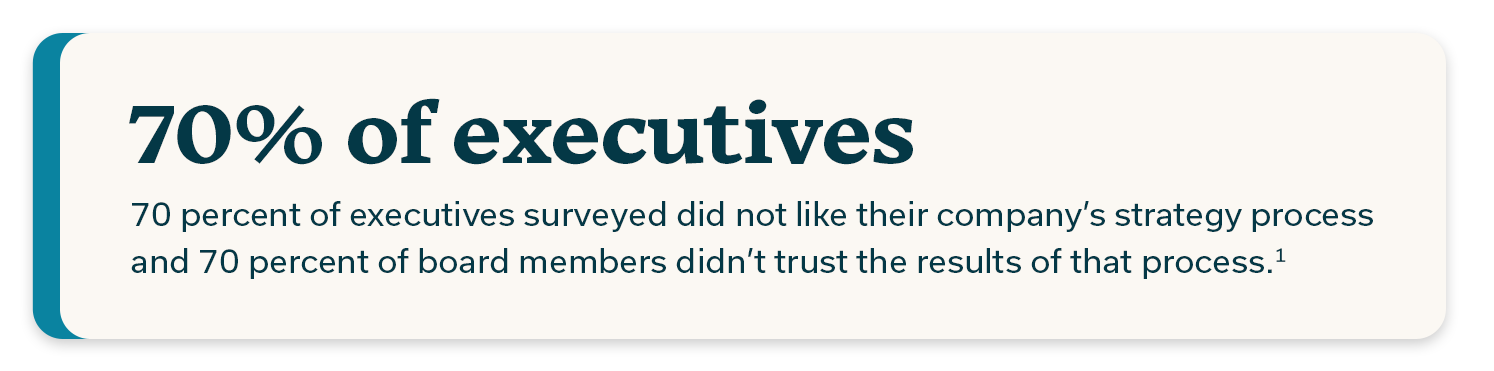
1 Richard P. Rumelt, “Getting Strategy Wrong—and How to Do It Right Instead,” McKinsey Quarterly, accessed October 28, 2025, https://www.mckinsey.com/capabilities/strategy-and-corporate-finance/our-insights/getting-strategy-wrong-and-how-to-do-it-right-instead

The Innovation Brake: When Your Delivery System Can’t Keep Up with Ambition

Editor’s Note: You’re facing unprecedented business challenges. You need more than theories—you need a blueprint. Welcome to a Leader’s Blueprint, your weekly guide to proven strategies that get results.

The CEO’s got a big, game-changing idea, and the product team has the numbers to back it up. All eyes in the strategy meeting turn to you, the technology leader. The question is simple: “How fast can we build it?”

On the outside, you project calm confidence. But on the inside, you’re mentally navigating a minefield of potential bottlenecks, excessive work in process (WIP), and the friction of too many handoffs. The honest answer isn’t a date; it’s a list of caveats. Your ambition as a leader is to say “yes,” but your current system is screaming “not so fast.”

The Hidden Costs of Technical Drag

When your delivery pipeline has too much friction, the consequences ripple through the entire technology organization, creating significant risks and liabilities.

  • The WIP Whirlpool & Bottleneck Backlog: Excessive Work in Process (WIP) and unaddressed bottlenecks create a vicious cycle. Teams are constantly context-switching, leading to slower completion times and a growing mountain of unfinished work. This grinds innovation to a halt, making every future change slower, more expensive, and more complex.
  • Developer Frustration & Attrition: Top engineering talent wants to solve complex problems and ship great code, not spend their days fighting a frustrating system. A slow, cumbersome process leads to burnout and the loss of your best people to competitors with modern tech stacks.
  • Increased System Risk: Every manual handoff and complex, rushed deployment is a potential failure point. As speed is prioritized over stability, the system becomes more fragile, leading to more bugs, unexpected downtime, and security vulnerabilities. This is exacerbated by legacy policies and procedures that are slowing down everything.

From Friction to Flow: A Glimpse of the Solution

The solution isn’t just about better code; it’s about building a better system for delivering that code. In SAFe®, this is the Accelerating Product Flow competency. For technology leaders, this means creating a streamlined, automated path from a developer’s keyboard to a live production environment.

This involves a relentless focus on accelerating flow. Starting with:

  1. Identifying Bottlenecks: This means looking at your entire delivery pipeline—from build times to security scans to testing environments—and finding the single biggest source of delay. Is it a manual approval gate? A slow testing cycle? Addressing these constraints is the key to unlocking speed.
  2. Minimizing Handoffs: Every time work is handed from requirements ideation through to approval for release, you introduce wait time and the potential for error. The goal is to create cross-functional teams and automated processes that reduce these handoffs, smoothing the path to production.

Your First Step

You can begin to diagnose your biggest point of friction this week. Ask one of your engineering teams a direct question:

“What is the most frustrating, time-consuming manual step between writing a line of code and seeing it live in production?”

The answer will immediately pinpoint what you need to resolve first.

Unlock the Full Blueprint

Identifying a bottleneck is the first step, but creating a high-velocity engineering organization requires a holistic approach. The Accelerating Product Flow competency provides a full blueprint for implementing eight flow accelerators, including optimizing time in the zone and getting faster feedback.


In this Series:


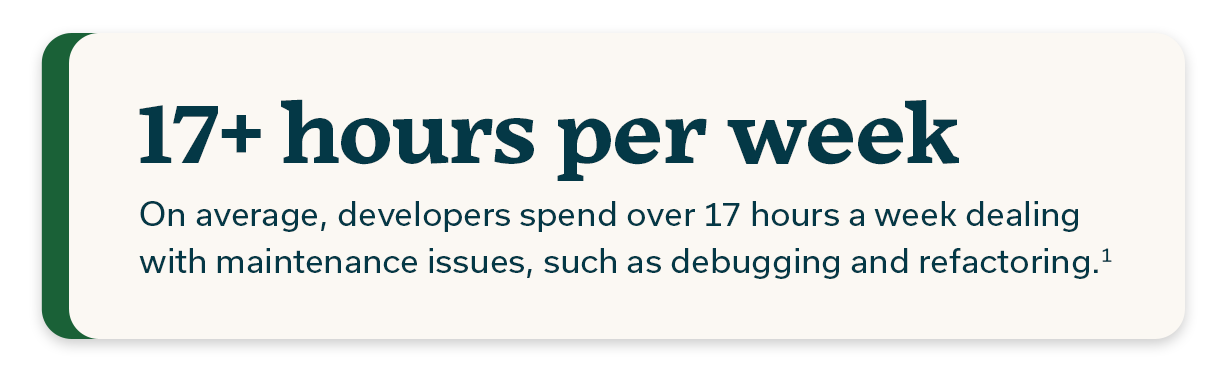
1 Stripe, “The Developer Coefficient: Software engineering efficiency and its $3 trillion impact on global GDP,” (September 2018), accessed October 28, 2025, https://stripe.com/files/reports/the-developer-coefficient.pdf

Why You Should Build a Data-Driven Product Strategy for Modern Product Management

data-driven product strategy - a SAFe series

Editor’s Note: You’re facing unprecedented business challenges. You need more than theories—you need a blueprint. Welcome to a Leader’s Blueprint, your weekly guide to proven strategies that get results.

You’re in the quarterly strategy meeting. The stakes are high, and a critical decision must be made: which major initiative should be prioritized for funding? The debate is passionate, but it’s driven by compelling arguments and seniority, not data. You have dashboards, but they’re filled with vanity metrics. No one can definitively answer the most important question: “Which of these options will actually move the needle on our business goals?”

When the loudest voice in the room becomes your primary decision-making tool, you’re not strategizing; you’re gambling.

What is a Data-Driven Product Strategy?

A data-driven product strategy is one that relies upon product analytics and qualitative insights to inform decision-making and which direction you should take your products in.

It’s a product management and development approach that aims to improve strategy by ensuring it’s driven by a comprehensive understanding of product usage based on concrete information and evidence, such as usage patterns, customer behavior, and performance metrics, rather than guessing what should be done next using assumptions or intuition.

The Hidden Costs of an Opinion-Driven Culture

Operating without clear, consistent product metrics is like flying a plane without an instrument panel. The risks are immense and go far beyond inefficient meetings:

Strategic Drift

Teams invest significant time and effort into features that feel important but are never tied back to defined outcomes. Over time, this disconnect causes the product to slowly drift away from its original goals and customer needs, as well as market position. Without data to course-correct and identify areas for improvement, even well-intentioned work can pull the product in conflicting directions.

Wasted Investment

When priorities aren’t grounded in measurable impact, precious capital and talent are spread thin across initiatives that don’t really make a difference. Engineering time, design effort, and marketing spend are consumed by features or experiments that fail to improve business performance or user experience and satisfaction. And this is often done without anyone realizing the true cost.

Inability to Learn

Without measuring the results of decisions, product teams lose the ability to learn from their work. Every launch becomes a shot in the dark, with no feedback loop to indicate success or failure. This prevents continuous improvement, making it difficult to refine strategy or build confidence in future decisions.

Slower Decision-Making

In the absence of data, decisions rely heavily on debate to try to reach a consensus. This leads to prolonged discussions and decision paralysis. Instead of moving quickly with clarity, teams spend time defending opinions rather than aligning around evidence and quantitative data.

Erosion of Trust and Alignment

When decisions are driven by opinion, stakeholders often question why certain choices were made. This can erode trust between teams and leadership, which creates friction across functions and makes it harder to align around a shared vision. Product development guided by the right data provides a common language; Without it, alignment becomes fragile and short-lived.

Data-Driven Product Management: From Guesswork to Guidance

The antidote to this uncertainty is building a culture of data-driven decision-making. In SAFe®, this is guided by the Measuring Product Performance competency. This framework provides clarity by viewing your product through four essential lenses: Business Outcomes, User Engagement, Customer Satisfaction, and Technical Performance.

This holistic view is powered by combining two types of metrics:

  • KPIs (Key Performance Indicators): hese are your instruments, providing a continuous pulse-check on the operational health of your product.
  • OKRs (Objectives and Key Results): This is your destination, aligning everyone toward ambitious, strategic goals.

Using both, you always know your current health and where you’re headed.

Benefits of Using Product Data to Make Strategic Decisions

Product management data analytics help PMs in several ways:

Enable Better Product Decisions for Product Managers

For a product manager, data provides the foundation for confident prioritization. By relying on key data instead of intuition alone, teams can optimize product decisions, focusing effort on initiatives that deliver the greatest value to users and the business.

Leverage Data Analysis to Move Faster with Confidence

Strong data analysis helps teams to reduce uncertainty and accelerate decision-making. When evidence is readily available, discussions become more focused, alignment happens faster, and teams can make data-driven decisions without unnecessary debate.

Create a Data-Driven Culture with Shared Metrics

Shared metrics help create a data-driven culture where teams align around outcomes instead of opinions. This common language enables better collaboration across functions and ensures everyone is working toward the same strategic goals.

Reduce Risk and Waste

When teams use product data effectively, they can identify underperforming initiatives early. This reduces risk and avoids wasted investment. It also ensures resources are allocated based on evidence rather than guesswork.

Support a Strategy Framework with Transparency and Accountability

An effective strategy depends on having a clear view of how the product is performing. When decisions are grounded in measurable outcomes, it becomes easier to understand the reasoning behind them and assess their impact over time. This shared visibility helps teams stay aligned and reinforces ownership of decisions. What’s more, it allows strategic choices to be evaluated and refined over time.

How to Use Data to Drive Product Growth and Actionable Insights

Start With a Clear, Measurable Question

You can begin this shift with a single question. This week, pick one significant feature on your upcoming roadmap and ask the team:

“If this feature is wildly successful, which single, measurable metric will change, and in what direction?”

If there isn’t a clear answer, the feature’s purpose—and its value—is a mystery.

Define Meaningful Metrics

Metrics should tell you something important about your product, not just fill a report. Think about engagement, retention, revenue impact, or operational efficiency—whatever shows real customer value. The key is choosing measures that are specific and actionable. They should be directly tied to decisions, so you always know which levers to pull next.

Integrate Metrics Into a Strategy Framework

Undertaking the first two steps above brings immediate clarity. But creating a true data-driven engine requires a complete system. The Measuring Product Performance competency provides a full blueprint for defining meaningful metrics across all four lenses and integrating them into powerful OKRs and KPIs. Stop flying blind. Unlock the full framework, competencies, and guidance you need to make every product decision with confidence. Get access by purchasing your SAFe® Insider membership today.

Continuously Measure and Adjust

Data isn’t a one-time check; it’s a constant feedback loop. Track results for every launch, experiment, or update, then analyze what’s working and what’s not. Use these insights to refine priorities, validate assumptions, and make smarter decisions for the next round of features. Your product evolves with each insight.

Embed a Data-Driven Culture

A data-driven strategy only works if the team lives it. Encourage using metrics in discussions and planning. Share results openly to celebrate wins and learn from misses. Over time, using data becomes second nature, helping everyone make better decisions and keeping the product aligned with real customer needs.


In this Series:


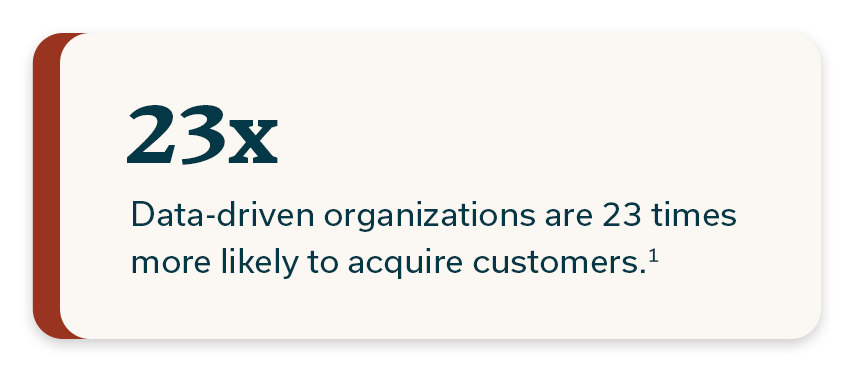
1 According to the McKinsey Global Institute, as cited on the Data Ideology website, “Data-Driven Organizations Are 23 Times More Likely to Acquire Customers, Six Times as Likely to Retain Customers, and 19 Times as Likely to Be Profitable as a Result”. Retrieved on October 22, 2025, https://www.dataideology.com/data/data-driven-organizations-are-23-times-more-likely-to-acquire-customers-six-times-as-likely-to-retain-customers-and-19-times-as-likely-to-be-profitable-as-a-result/