How to use the gap between where you are and where you want to be
This post is part of the ongoing Practice Makes Permanent blog series. Read the first post here.
OK, so your Lean-Agile transformation is stalling. It’s not delivering the increased value and reduced delivery times you expected. Your teams are struggling and perhaps updating their resumes. You thought that implementing the Scaled Agile Framework® (SAFe®) would bring you these outcomes, but you’ve discovered you’re not using all Ten Critical Success Factors of SAFe. Perhaps you’ve discovered that you’re not actually implementing SAFe correctly as you intended, which means you’re probably not gaining the full value of what the Framework has to offer. The key to taking full advantage of this realization is to be encouraged rather than discouraged. We can’t improve until we see the improvements that are needed. The purpose of this article is to help you see that these discoveries should be cause for celebration, not concern.
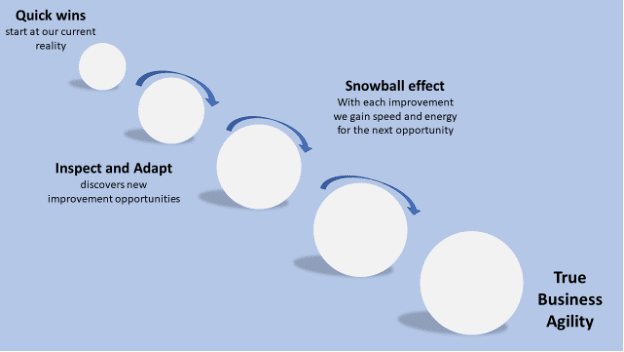
One of my favorite books (and authors) is Peter Senge’s The Fifth Discipline. In his book, Peter describes the concept of creative tension as ”the tension between vision and reality.” It’s the concept of discovering the gap between where you are and where you want to be and using that gap as energy to make improvements. Think of it as a transformational snowball effect.
SAFe guidance depicts the perfect scenario where an organization exemplifies all seven core competencies, delivering high quality and accurate value to customers, and having the kind of culture and work environment that makes it a great place to work. Then we look at the current reality and realize we have a long way to go to reach this nirvana state of business agility.
Sometimes that gap seems insurmountable, unachievable, and perhaps just unrealistic. As we identify that first improvement opportunity and implement that first improvement effort, we start to see some excitement and engagement. We’re still a long way from that nirvana view, but we’re starting to make progress. And that creates more energy for the next effort. So, we take on the next improvement effort, and there seems to be just a bit more engagement and hope that we can move forward. And that’s where we start to see the snowball effect of relentless improvement.
The snowball effect.
For each improvement we make, we gain more energy, engagement, and willingness to change. And we start to go faster. And faster. And faster. And now, that relentless improvement pillar seems to make more sense, and in fact, becomes part of our DNA. As Peter Senge stated, “The most effective people are those who can ‘hold’ their vision while remaining committed to seeing current reality clearly.”
Positive change is contagious. It brings excitement and hope to the organization. That energy must start somewhere. So, as Taichi Ohno said, “If you are going to do Kaizen continuously … you’ve got to assume that things are a mess. Too many people just assume that things are all right the way they are … If you assume that things are all right the way they are, you can’t do Kaizen. So, change something!”
My point is to change something with a huge grin on your face because you can see the snowball effect of creative tension pulling you upward.
A team celebrating its small wins.
So, when you see that gap between your current reality and where you want to be, you should view it as an opportunity, not a negative situation. In other words, you should view every improvement opportunity with excitement and anticipation of where you can go next on the journey toward business agility.
As change agents, we’ve learned that empathy along the transformation journey is vital. We know how hard it is, so we fully understand why you skipped some of the steps. But now is the time to restart or renew that journey. In subsequent posts, we will talk about specific activities and components we can use the creative tension approach to jump-start a Lean-Agile transformation. The goal of this series is to help you find the next opportunity to accelerate that snowball effect in your transformation.
Check back soon for the next post in the series.
About Dwayne Stroman
Dwayne is an Enterprise Transformation Coach and Trainer and SAFe® Program Consultant Trainer (SPCT) with more than 20 years of experience. He is ultra-passionate about helping large organizations learn how to build the right products and deliver optimal value through learning and customer validation. Dwayne uses his SPCT role to help several Fortune 100 companies, as well as many growing companies in finance, retail, healthcare, and logistics, realize the benefits of a Lean-Agile mindset. Connect with Dwayne on LinkedIn.
The title of my post may read like acronym soup but all of these concepts play a critical role in SAFe, and understanding how they’re connected is important for successful SAFe implementation. After exploring some connections, I will suggest some actions you can take while designing, evaluating, or accelerating your implementation.
KPIs and OKRs
The SAFe Value Stream KPIs article describes Key Performance Indicators (KPIs) as “the quantifiable measures used to evaluate how a value stream is performing against its forecasted business outcomes.”
That includes:
Health of day-to-day performance
Work to create sustainable change in performance
Objectives and Key Results (OKRs) are meant to be about driving and evaluating change rather than maintaining the status quo. Therefore, they are a special kind of KPI. Objectives point towards the desired state. Key results measure progress towards that desired state.
But how do these different concepts map to SAFe’s Operational Value Streams (OVSs) and Development Value Streams (DVSs)? And why should you care?
Changing and Improving the Operation
Like Strategic Themes, most OKRs point to the desired change in business performance. These OKRs would be the ones that company leadership cares about. And they would be advanced through the efforts of a DVS (or multiple ones).
For example, if the business wants to move to a subscription/SaaS model, that’s a change in the operating model—a change in how the OVS looks and operates. That change is supported by the development of new systems and capabilities, which is work that will be accomplished by a DVS (or multiple ones).
This view enables us to recognize the wider application of the DVS concept that we talk about in SAFe 5. Business agility means using Agile and SAFe constructs to develop any sort of changing the business needs, regardless of whether that change includes IT or technology.
Whenever we are trying to change our operation, there’s a question about how much variability we’re expecting around this change. Is there more known than the unknown? Or vice versa? Are we making this change in an environment of volatility, uncertainty, complexity, and ambiguity? If yes, then using a DVS construct that employs empiricism to seek the right answers to how to achieve the OKR is essential, regardless of how much IT or technology is involved. We might have an OKR that requires business change involving mainly legal, marketing, procurement, HR, and so on, that would still benefit from an Agile and SAFe DVS approach.
These OKRs would then find themselves elaborated and advanced through the backlogs and backlog items in the various ARTs and teams involved in this OKR.
In some cases, an OKR would drive the creation of a focused DVS. This is the culmination of the Organize around Value Lean-Agile SAFe Principle. This is why Strategic Themes and OKRs should be an important consideration when trying to identify value streams and ARTs (in the Value Stream and ART identification workshop). And a significant new theme/OKR should trigger some rethinking of whether the current DVS network is optimally organized to support the new value creation goals set by the organization.
Maintaining the Health of the Operation
As mentioned earlier, maintaining the health of the operation is also tracked through KPIs. Here we expect stability and predictability in performance. It’s crucial work but it’s not what OKRs or Strategic Themes are about.
This work can be simple, complex, or even chaotic depending on the domain. The desire of any organization is to bring its operation under as much control as possible and minimize variability as it makes sense in the business domain. What this means is that in many cases, we don’t need Agile and empiricism in order to actually run the operation. Lean and flow techniques can still be useful to create sustainable, healthy flow (see more in the Organizational Agility competency).
Whenever people working in the OVS switch to improving the OVS (or in other words working on versus in the operation), they are, in essence, moving over implicitly to a DVS.
Some organizations make this duality explicit by creating a DVS that involves a combination of people who spend some of their time in the OVS and some of their time working on it together with people who are focused on working on the OVS. For example, an orthopedic clinic network in New England created a DVS comprising clinicians, doctors, PAs, and billing managers (that work the majority of their time in the OVS) together with IT professionals. Major improvements to the OVS happen in this DVS.
Improving the Development Value Stream
The DVS needs to relentlessly improve and learn as well. Examples of OKRs in this space could be: improving time-to-market, as measured by improved flow time or by improving the predictability of business value delivered, as measured by improved flow predictability. It could also be: organize around value, measured by the number of dependencies and the reduction in the number of Solution Trains required.
This is also where the SAFe transformation or Agile journey lives. There are ways to improve DVSs or the overall network of DVSs, creating a much-improved business capability to enhance its operation and advance business OKRs.
Implementing OKRs in this space relates more to enablers in the SAFe backlogs than to features or capabilities. Again, these OKRs change the way the DVS works.
Running the Development Value Stream
Similar metrics can be used as KPIs that help maintain the health of the DVS on an ongoing basis. For example, if technical debt is currently under control, a KPI monitoring it might suffice and hopefully will help avoid a major technical debt crisis. If we weren’t diligent enough to avoid the crisis, an objective could be put in place to significantly reduce the amount of technical debt. Achieving a certain threshold for a tech debt KPI could serve as a key result (KR) for this objective. Once it’s achieved, we might leave the tech debt KPI in place to maintain health.
It’s like continuing to monitor your weight after you’ve gone on a serious diet. During the diet, you have an objective of achieving a healthy weight with a KR tracking BMI and aiming to get below 25. After achieving your objective, you continue to track your BMI as a KPI.
Taking Action to Advance Your Implementation Using OKRs
In this blog post, we explored the relationship between operational and development value streams and the Strategic Themes and OKRs. We’ve seen OVS KPIs and OKRs as well as DVS OKRs and KPIs.
A key step in accelerating business agility is to continually assess whether you’re optimally organized around value. OKRs can provide a very useful lens to use for this assessment.
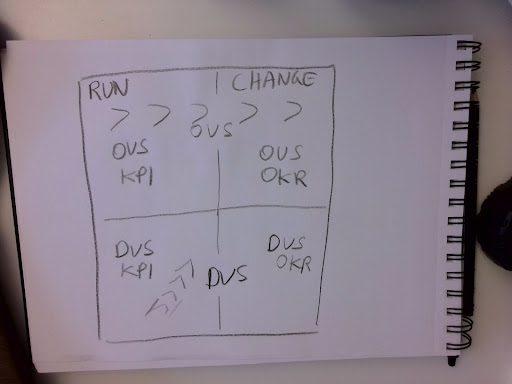
Start by reviewing your OKRs and KPIs and categorize them according to OVS/DVS/Change/Run.
You can use the matrix below.
If you find some OKRs on the left side of the matrix, it’s time to rethink.
Run-focused OKRs should actually be described as KPIs. Discuss the difference and whether you’re actually looking for meaningful change to these KPIs (in which case it really can be an OKR—but make sure it is well described as one) or are happy to just maintain a healthy status quo.
You can then consider your DVS network/ART/team topology. Is it sufficiently aligned with your OKRs/KPIs? Are there interesting opportunities to reorganize around value?
This process can also be used in a Value Stream Identification workshop for the initial design of the implementation or whenever you want to inspect and adapt it.
Find me on LinkedIn to learn more about making these connections in your SAFe context via an OKR workshop.
About Yuval Yeret
Yuval is a SAFe Fellow and the head of AgileSparks (a Scaled Agile Partner) in the United States where he leads enterprise-level Agile implementations. He’s also the steward of The AgileSparks Way and the firm’s SAFe, Flow/Kanban, and Agile Marketing. Find Yuval on LinkedIn.
How the Business Agility Value Stream will prepare you to win in the post-digital economy with AI, big data, and the cloud.
Introduction
At the 2021 Global SAFe Summit, Dean Leffingwell presented the idea that we are at the threshold of a new technological revolution. A post-digital economy that’s being driven by the adoption of ABC: artificial intelligence (AI), big data, and the cloud. Dean further explained how the Business Agility Value Stream (BAVS) creates a system that will allow businesses to rapidly react to the insights provided by ABC.
If you’re anything like me, listening to Dean’s talk generated many different ideas. In fact, several weeks passed before I went back and re-listened to the keynote to identify the core intent of the talk.
Those insights are what I’m sharing with you today: an understanding of the BAVS and how the concepts of ABC fit into the future of organizations using SAFe.
The Business Agility Value Stream
The value stream construct has been discussed in every version of SAFe dating back to SAFe 2.5 (2013). However, the conversation wasn’t top-of-mind until SAFe5 and the introduction of SAFe Lean-Agile Principle #10, Organize Around Value.
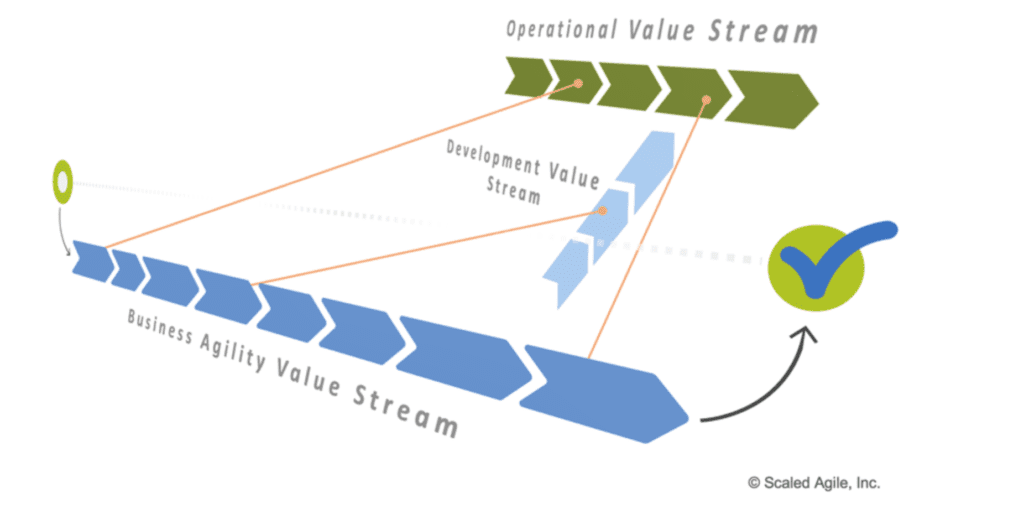
Now, and rightfully so, every organization that seeks to embrace SAFe is challenged to identify and optimize how value reaches the customer via their operational value streams (OVSs). We then challenge organizations to go a step further and optimize the relationship between the OVS, its supporting development value streams (DVSs), and the Agile Release Trains (ARTs) that realize them by considering complexities of the business architecture, technical architecture, and how the people who support the systems are dispersed.
We do our best to support SAFe enterprises and SPCs in this difficult conversation with the Value Stream and ART Identification workshop, and the newly released Value Stream Mapping workshop (both are available on the SAFe Community Platform). Even with the assets and expert consulting available, changing and optimizing the system to focus on outcomes instead of outputs is no small undertaking. And for what purpose?
Though optimizing these value streams is a goal, we must also consider why optimized value streams are so important and what to do with them.
Enter the BAVS.
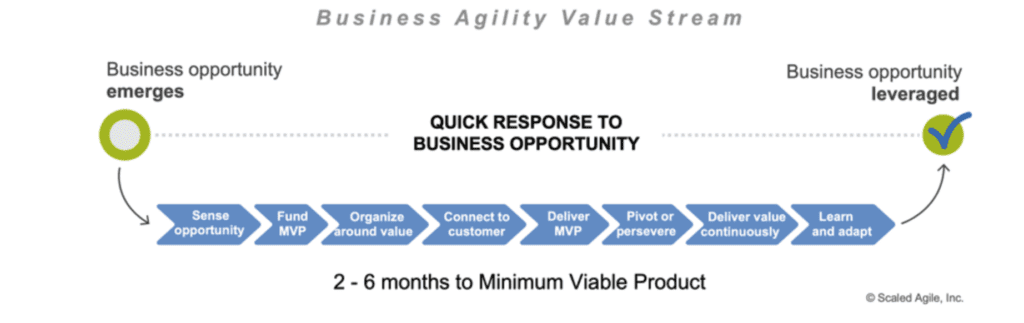
Powered by optimized OVSs and DVSs, the BAVS puts those charged with strategy in a position to:
Sense market opportunities
Formulate a hypothesis to exploit the identified opportunity via the Lean Business Case
Gain alignment and approval to pursue an MVP through Lean Portfolio Management (LPM)
Organize around value by introducing the MVP to existing ARTs (or if needed, standing up a new ART)
Leverage the tools of Agile product management and design thinking
Develop a customer-focused solution
Deliver the MVP in 2–6 months via the continuous delivery pipeline
Monitor the solution in LPM to determine if the hypothesis holds true or needs to be reconsidered
Continue to deliver value and learn until the business opportunity has been fully leveraged
What is ABC?
With the system optimized and the BAVS in place, you are likely now left wondering how the enterprise is expected to sense emerging business opportunities. Though expertise and experience continue to play a role in how opportunities are addressed, we can no longer afford to guess where the next opportunity lies. Partly because an uninformed guess is full of risk to revenue, team stability, and market reputation, but mostly because uninformed guesses could rapidly destroy a business. In the post-digital economy, the amount of time required for an organization to recognize an opportunity, ruminate about how to address it, and then put the plan into action is far greater than the window of opportunity will remain open.
This is where ABC comes in—its three elements power the modern decision engine.
AI
There are bound to be some really cool applications for AI, but I suspect that the majority will be less dramatic than its portrayal in Hollywood. For many of our organizations, AI will be put to use to address customer service, mitigate fraud and other risks, optimize development processes, and identify emerging trends in data. In terms of the BAVS, when leveraged, AI will serve as the trigger that identifies market opportunities and threats that the BAVS will respond to through business insights, operational efficiencies, and intelligent customer solutions.
Big Data
For AI to work effectively, the algorithms require access to large amounts of data—the more the better. Fortunately, many companies have decades worth of historical data and are collecting more each day. The problem that many organizations are addressing is how to pool that data into an easily accessible common format, but that is a conversation for another day.
Data is the answer. And for it to power organizations, it cannot be bound by organizational politics or structures. The key to enterprise success in the next digital age is in the organization’s data. We only need to ask the right questions of the data.
Cloud
With so much data and so much analysis required to make sense of it all, we are fortunate to live in the age of infinitely scalable infrastructure via the cloud. Imagine 15 years ago the amount of work required to bring 100 new CPUs online to address a complex problem. An undertaking of this magnitude would have required new servers, racks, bandwidth, electricity, and a facility to store the new hardware. It would have taken months to a year or longer to bring online.
Today, we can scale our infrastructure to nearly infinite capacity with the touch of a button, and descale it nearly as fast. We have the capacity (cloud), we have the resources (data), and we have the capability (AI) to win in the post-digital economy. The only thing that stands in the way of exploiting those elements is changing our system of work to keep pace.
What Will You Do with ABC?
The purpose of the Scaled Agile Framework is to help organizations thrive in this technological revolution and those that are sure to come. The mission of SAFe is to work differently and build the future. The path to achieving our mission and purpose is constantly evolving with the world of business and technology. Though we don’t claim to have all of the answers, we’re confident that we can provide the tools and intent to help organizations solve for their own unique context.
The BAVS is the latest evolution of a perspective that started nearly eight years ago with improving the delivery of technology to the enterprise. We’re excited to see what organizations do with ABC and how their BAVS delivers value and change to the world. Especially as all we do becomes more interconnected and the true possibilities of the near-limitless potential of people become more apparent.
About Adam Mattis
Adam Mattis is a SAFe Fellow and a SAFe® Program Consultant Trainer (SPCT) at Scaled Agile with many years of experience overseeing SAFe implementations across a wide range of industries. He’s also an experienced transformation architect, engaging speaker, energetic trainer, and a regular contributor to the broader Lean-Agile and educational communities. Learn more about Adam at adammattis.com.
If you’ve read the first post in my blog series, you may have been inspired to think about how the emotional intelligence competencies manifest in every step of the business agility value stream. From identifying and sensing the opportunity to learning and adapting to ultimately delivering on the business opportunity. So, if we can measure emotional intelligence competencies, my hypothesis is that they, directly and indirectly, impact flow and outcomes as well.
Let’s go step by step in the business agility value stream and see how applying emotional intelligence directly impacts flow and outcomes.
Sensing the opportunity involves market research, data analysis, customer feedback, and directly observing customers in the marketplace. Applying your own self-regulation, empathy, and social skills can help you have more productive empathy interviews, obtain less-biased, face-to-face research, and control how you react to customer feedback.
This key step in the organizational agility competency involves not only leaders applying ‘go see’, but offering the same ‘go see’ opportunities to other key roles in the development value stream so that they can better understand and reason about the problem to solve. This expands the social networks so that they can apply and evolve their emotional intelligence competencies to effectively communicate, pitch, reason, and articulate effective hypothesis statements that inspire and engage innovation.
Funding the minimum viable product (MVP) requires the motivation and social skills to help drive change, innovate, and communicate intent at scale. We all know this isn’t easy. It requires you to craft the “why” and use your social skills of influence and conflict management to negotiate and secure the funds. Some of the recommendations from the Lean Portfolio Management competency where we can leverage these social skills include:
Engage in participatory budgeting
Establish flow and stakeholder engagement through the portfolio Kanban system
Roadmap the portfolio
Integrate enterprise architecture and SMEs
Realize epics
Establish Lean budgets and guardrails
Organizing around value requires even more of the social skills around communication, building new bonds, and fostering the information coherence necessary to build some of the world’s most complex systems. As well as the ability to connect to the customerso that our people embrace and understand what value they’re trying to deliver.
Team and technical agility and organizational agility not only aid in building these bonds but can leverage and grow all of the emotional intelligence competencies of self-awareness, self-regulation, motivation, empathy, and social skills. This can be amplified with the coveted help from our scrum masters and RTEs.
Connect to the customer leverages our Agile product delivery and enterprise solution competencies and their design thinking skills to listen, reflect, empathize, and connect with the people for whom we’re designing solutions.
This requires going deep into the empathy competency of emotional intelligence by leveraging our service-orientation mindset so that we can foresee, recognize, and meet customer needs. Diversity is also important for the ongoing development of opportunities and awareness in all societies and social circles. If we can evolve the empathy competency in all aspects of product and solution delivery, we have the opportunity to excel beyond our competitors in delivering value.
Delivering that MVP calls upon our product and solution delivery folks to lead, and our social networks to collaborate, iterate, communicate, and deliver using their motivation and social skills. It also pulls highly on our social networks to have courage, collaborate and cooperate, take risks, and instrument rapid change so that we can learn and adapt to our ever-changing market landscapes.
Pivot or persevere pulls on the need for empathy when things don’t turn out as desired and the time comes to pivot or persevere. Our Lean portfolio management fiduciaries reason about the data, facts, and outcomes of the MVP and could quite possibly pivot to a direction of a higher cost of delay at any moment. This means we need to abandon our emotional attachment to what we created and turn to the next-highest value delivery. Self-regulation and empathy both play strongly in this step of the business agility value stream. Having the emotional awareness of why our folks are for or against any change in this step can help mitigate any delays in fostering rapid change and learning.
Deliver value continuously imposes that our product and solution delivery people and ARTs always work together to share knowledge, build out that continuous delivery pipeline, and innovate. The continuous delivery pipeline and our DevOps mindset enable that fast-feedback loop to foster our continuous learning culture. Our iterative and incremental heartbeat also facilitates that continuous value delivery and learning cycle. All require using our social skills to grow and enable knowledge transfer and information coherence so that the social network can continue to thrive and innovate.
Our learn and adapt cycle is integral to the process, Measuring our emotional intelligence competencies will help us learn and grow our own selves alongside the SAFe core competencies. After all, if we don’t learn about ourselves, how can we show up with our truest authenticity to grow and foster that continuous learning culture?
Lean-Agile leadership enables the business agility value stream, as does the evolution of everyone’s emotional intelligence. Leaders model and leverage all of the emotional intelligence competencies so that our development value streams can evolve both their business agility competencies and their emotional competencies. If we don’t consider human emotion, we can inhibit flow, people shut down and lose their motivation, and thus jeopardize providing value to our customers.
Now, if the business agility value stream is a perspective across operational and development value streams, then the benefits, interactions, and human impacts that the emotional intelligence of the development value stream network provides to the operational value stream will propagate and evolve. The interactions and modeling of emotional intelligence will have a bi-directional impact that will engage and accelerate the operational value stream in delivering value.
I hope I’ve provided a perspective that it’s not just mastering the SAFe business agility process competencies that enable business agility. The evolution of human emotional intelligence impacts the flow and outcomes of the business agility value stream every step of the way. As I mentioned in part 1 of this blog series, Goleman’s personal competencies of self-awareness, self-regulation, and motivation fuel our human agency and our ability to manage our own emotions. The social competencies of empathy and social skills fuel how we handle relationships. Together, the evolution of emotional intelligence within our organization increases our ability to deliver value to our customers, as well as value to our individual people. What enterprise doesn’t want that?
At this point, you may be asking, “Well, how can I bring these into my SAFe transformation and journey toward business agility?”
Here are a few techniques to get you started on your emotional intelligence journey:
Start with you. Allow time for self-reflection, self-work, and to recharge yourself. Leverage your retrospectives, your own personal plan-do-check-adjust cycles, and the teaming activities to evolve your emotional intelligence competencies. Integrate some emotional intelligence workshops with your leaders and teams to help evolve and experience the competencies, starting with self-awareness and self-regulation. This will help build trust so you can continue to unfold into the deeper and perhaps more sensitive competencies of empathy and social skills.
Grow your own internal and external coaching network. In the same way that sports teams need coaches, our operational and development value streams and the individuals within them need coaches too. They help with all aspects of emotional intelligence, wherever folks may need or want assistance. They can provide the tools and techniques to become more self-aware, provide exercises for self-regulation and motivation, and practice empathy. Not to mention offer assistance to help people evolve their social skills. And even more powerful, coaches model the behaviors so that our social networks can lean into what they see and learn.
Create a community of practice around the competencies and practices. In the latest Leading by Example module that Scaled Agile released, one of the beautiful outcomes was a cohort that trusted each other and was willing to share their deepest challenges with authenticity. This type of network provides the power of a safe space that people can always come back to, to practice, share ideas and concerns, and grow without judgement or fear.
Help evolve assessments around Goleman’s Emotional Intelligence Competency Framework. And measure the evolution within your people and the enterprise. You’ll start to see some correlations between the SAFe measurements of flow, competencies, and outcomes.
Share with our community. We’d love to hear how evolving your enterprise intelligence will help your employees achieve their aspirations and help customers receive better products and solutions.
And, reach out to me. I’d love to hear how it’s going so I can learn and grow with you! I may not have been born with emotional intelligence but I’m passionate about learning and evolving with you. Find me on LinkedIn.
About Jennifer Fawcett
Jennifer is a retired, empathetic Lean and Agile leader, practitioner, coach, speaker, and consultant. A SAFe® Fellow, she has contributed to and helped develop SAFe content and courseware. Her passion and focus have been in delivering value in the workplace and by creating communities and culture through effective product management, product ownership, executive portfolio coaching, and leadership. She has provided dedicated service in these areas to technology companies for over 35 years. Connect with Jennifer on LinkedIn.
This post is part of an ongoing blog series where Scaled Agile Partners share stories from the field about using Measure and Grow assessments with customers to evaluate progress and identify improvement opportunities.
One of our large financial services clients needed immediate help. It was struggling to meet customer demands and industry regulations and needed to align business priorities to capacity before it was outplayed by competitors. The company thought the answer would be to invest in business in Agility practices. But so far, that strategy didn’t seem to be paying off.
Teams were in constant flux and the ongoing change was causing unstable, unpredictable performance. The leading question was, “How can we get more output from existing capacity?”
Among the client’s key challenges:
No visibility into common patterns across teams
Inspect-and-adapt data was stuck in PowerPoint and Excel
Output expectations didn’t match current capacity
Teams weren’t delivering outcomes aligned to business value
Getting a baseline on team health
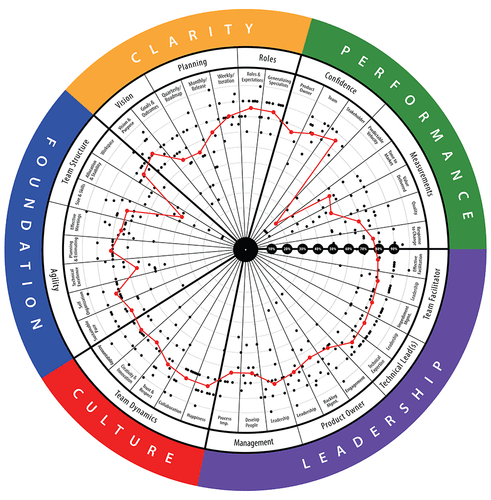
We introduced the AgilityHealth® TeamHealth Radar Assessment to the continuous improvement leadership team, and it decided to pilot the assessment across the portfolio. Within a few weeks after launching the assessment, the organization got a comprehensive readout. It identified the top areas of improvement and key roadblocks for 90+ teams.
These baseline results showed a lack of a backlog, not to mention a lack of clarity around the near-term roadmap. Teams were committing to work that wasn’t attached to any initiatives and the work wasn’t well-defined. Dependencies and impediments weren’t being managed. And the top areas of improvement matched data collected during inspect and adapt exercises over the previous two years. Even though the organization had previously identified these issues, nothing had been done to resolve them, as leaders did not trust the data until it came from the voice of the teams via AgilityHealth.
The ROI of slowing down to speed up
Equipped with this knowledge, leaders took the time to slow down and ensure teams had what they needed to perform their jobs efficiently. Leaders also developed a better understanding of where they needed to step in to help the teams. The organization re-focused efforts on building a sufficient backlog, aligned with a roadmap, so teams could identify dependencies earlier in the development lifecycle.
This intentional slow-down drove a return on investment in less than a year and $6M in cost savings—equivalent in productivity to the work of five extra teams—while generating an additional $25M in value for the company.
By leveraging the results of the AgilityHealth assessment, leaders now had the data they needed to take action:
A repeatable process for collecting and measuring continuous improvement efforts at the end of every planning increment (PI)
Clear understanding of where teams stood in their Agile journey and next steps for maturity
Comprehensive baseline assessment results showing where individual team members thought improvement was needed, both from leaders and within their teams
What’s next
An enterprise transformation doesn’t stop with the first round of assessments. Like other Fortune 500 companies, this client plans to continue scaling growth and maturity across the enterprise, increasing momentum and building on what it’s learned.
The company plans to introduce the Agility Health assessment for individual roles, so it can measure role maturity and accelerate the development of Agile skills across defined competencies. It will continue to balance technical capacity with an emphasis on maintaining stable, cross-functional teams since these performance metrics correlate to shipping products that delight customers and grow the business. And to better facilitate “structural agility” (creating and tracking Agile team structures that support business outcomes), it will focus on ensuring the integrity of its data.
Get started
You too can leverage AgilityHealth’s Insights Dashboard to get an overall view of your organization’s Agile maturity: baseline where you are now, discover how to improve, and get to where you want to be tomorrow. Get started by logging into the SAFe Community and visiting the Measure and Grow page.
About Sally
Sally is a thought leader in the Agile and business agility space. She’s passionate about accelerating the enterprise business agility journey by measuring what matters at every level and building strong leaders and strong teams. She is an executive advisor to many Fortune 500 companies and a frequent keynote speaker. Learn more about AgilityHealth here.
The circular economy offers opportunities for better growth through an economic model that is resilient, distributed, diverse, and inclusive. It tackles the root causes of global challenges such as climate change, biodiversity loss, and pollution, creating an economy in which nothing becomes waste, and which is regenerative by design.
Many enterprises are committed to making their products eco-friendlier and participating in global coalitions such as The Plastics Pack. Nevertheless, due to the lack of global standards or lack of dialogue and collaboration, they could create fragmented, small-scale, and sub-optimal solutions. For example, an enterprise might design a product that contains recyclable materials, is built with mono-material components, and is easy to disassemble. Still, it would only maximize its recycling value when embedded in a functioning collection system and treated in proper recycling facilities.
What Is the Solution, Then?
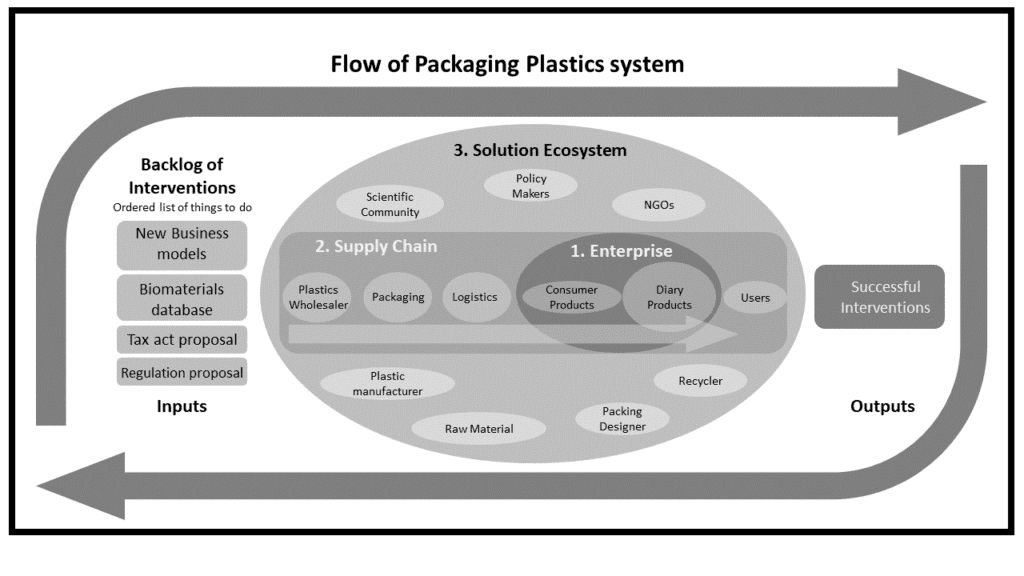
Circularity is a property of a system and not of individual products. It depends on how different actors, products, and information interact with each other. Improving the whole system would require that a group of loosely coupled actors combine their business models to achieve a better collective outcome. The proposed solution is a virtual organization that aligns the strategy and execution of all the stakeholders creating a solution ecosystem.
Let’s look at one example. I will illustrate a management framework to improve the packaging plastics system shown below.
Applying SAFe Principles to the Circular Economy
SAFe principle #10, Organize around value, recommends creating a virtual organization that would maximize the flow of value. It involves eliminating silos and barriers for collaboration, including the people, the processes, and the tools, from all relevant stakeholders that are trying to achieve the same outcome.
This organization would be called a solution ecosystem, and its goal will be to implement the desired changes. Following SAFe principle #2, Apply systems thinking, the solution ecosystem would include all the actors involved in or impacted by the flow of packaging plastics, from business, government, scientists, and NGOs to end-user communities, including all the necessary activities and information flows required. Decisions would be made collaboratively, iteratively, and based on science-based targets.
The objective of the solution ecosystem would be to deliver a series of interventions to improve the flow of plastics iteratively. The teams would validate each intervention hypothesis through a series of minimum viable products following a roadmap. An intervention example could be, “to get the top 20 manufacturers of packaging plastics to commit to plastic packaging that’s 100% reusable, recyclable, or compostable by 2025,” while the desired outcome would be “to reduce packaging plastics flowing into the ocean by 50%.”
The solution ecosystem comprises small, long-standing, cross-stakeholder, and cross-functional teams or teams of teams dedicated to addressing specific outcomes. They will also have access to part-time specialized resources and count on all the necessary skills to deliver value independently of other teams.
The solution ecosystem could be coordinated top-down, from organizations such as the World Economic Forum, or led by a single enterprise coordinating with all the stakeholders impacted by its products. This organization could reach out vertically to all actors along the supply chain, such as those in logistics, packaging, and wholesale, horizontally to competitors, or circularly to all stakeholders impacted.
Aligning Strategy to Execution
The solution ecosystem is likely to be composed of many people and organizations. To align strategy and execution, SAFe proposes to create a golden thread. From a single and shared vision to strategicthemes to a common backlog of interventions to hold and prioritize all the interventions that will realize those themes.
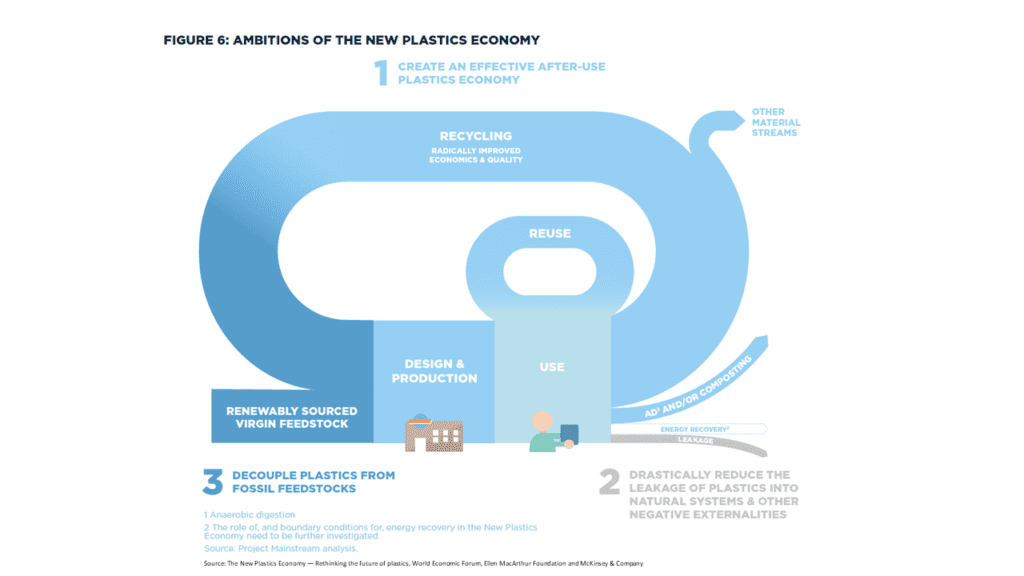
The overarching vision of the New Plastics Economy is that plastics never become waste. Instead, they re-enter the economy as valuable technical or biological nutrients, creating an effective after-use plastics economy, drastically reducing the leakage of plastics into natural systems, and decoupling plastics from fossil feedstocks.
Strategic themes are the way to achieve that vision or areas of investment. They are a way to group and classify Interventions. The solution ecosystem’s scientific community would express them in objectives and key results (OKRs). Thus, providing a qualitative and quantitative measurement to evaluate progress and success. An example could be:
Objective: Drastically reduce leakage of plastics into natural systems.
Key result 1: Improve after-use infrastructure in high-leakage countries by x%
Key result 2: Increase the economic attractiveness of keeping materials in the system
Key result 3: Increase investments in efforts related to substances of concern by x %
The teams would strive to accomplish the strategic themes by implementing a series of interventions. The solution ecosystem’s backlog is the prioritized list of interventions to be done. For example, it might look like this:
Bio-benign materials
Reversible adhesives
Super-polymer
Plastics toolkit for policymakers
Bid data service to track the flow of dangerous chemicals
Food delivery containers as a service
Collaborative Decision-making Process
SAFe recommends using Participatory Budgeting (PB) as a tool for budget allocation across the same enterprise business units. We could expand PB for multi-stakeholder decision-making, as many municipalities use it, gathering all the stakeholders’ voices. All the stakeholders impacted would be heard, voice their concerns, choose their priorities, and learn about other stakeholders’ concerns. The PB process should be done periodically to create a rolling wave agreed plan.
Creating a Balanced Portfolio
To maintain a well-balanced portfolio, SAFe proposes several budget guardrails:
Capacity allocation: This technique classifies interventions into different types and allocates a percentage of the available capacity to each kind, such as building the basic science, writing communications material for end-users, or drafting policy documents. Every three months, we can decide the percentage allocation to each type, keeping the desired balance across all categories.
Investment horizons: Classifying interventions by their impact timeframe allows leadership to maintain the right balance between the immediate, short, and long term. Quick wins are needed to win the hearts and minds of the naysayers, while the more difficult things usually take longer.
Epic approval: Decentralizing decision making is fundamental to reduce time-to-market and to improve flow. Nevertheless, substantial initiatives that impact multiple stakeholders need to go through an approval process based on a short business case.
Project to Product
The traditional projectapproach would have required well-defined Interventions with fixed scope, fixed budget, and a fixed timeframe, such as building a clearly defined database of biomaterials at the cost of £2m over one year. One major drawback of this approach is that the success criteria of the intervention usually focus more on staying within these artificial constraints rather than on achieving the desired outcome of increasing the percentage of biomaterials used in packaging plastics by x%. Another problem is that designs and plans must be agreed upon upfront to obtain funding and approval. At that moment is when we know the least about the problem and the solution. Hence, it becomes harder to pivot later if needed.
The book Project to Product proposes a product approach, where funding is associated with long-standing teams working on a set of interventionsrelated to thedesiredoutcome. They would iteratively validate hypotheses and measure progress irrespective of the validity of their initial plans and assumptions. Products must be launched and maintained during their life cycle and have multiple target users with evolving needs.
For instance, the budget would be related to a product called ‘biomaterials for packaging,’ including research, product launch, product support in life, and end-of-life activities, rather than related to a project to launch a new packaging material.
Timeboxing
SAFe principle #1, Take an economic view, proposes that we work incrementally and iteratively. Working in small timeboxes and on small pieces of independently valuable work would allow us to obtain the best economic outcome. We will get quick feedback; the value will get accumulated over time, and it will enable us to test our hypothesis and pivot quickly if needed.
SAFe principle #7, Cadence and synchronization, promotes that all teams involved in the solution ecosystem get together every three months to collaboratively plan the work for the next three months. This recurrent process helps evaluate progress toward the shared outcome, manage cross-team dependencies, and facilitate cross-team collaboration to create a stable and predictable rhythm of key events.
Every three months, all teams demonstrate their accomplishments to evaluate progress objectively. They would get together to reflect on how they deliver value and look for opportunities to improve the process.
Epic Owner
The Epic Owner is a new role that would work at the solution ecosystem level to track and shepherd the intervention through its life cycle and across all the teams involved. In our example, the Epic Owner for the biomaterials database would be accountable to define the scope, building the short business case, getting it approved, building the teams across all stakeholders, tracking progress, being a consultant to the delivery teams, and evaluating whether they are meeting the desired outcome. It is a role, not a title. Hence, it might be fulfilled by a group of people.
Transparency
Transparency and visualization of all the work and all the dependencies by everyone are key. Kanbanboards would allow us to see every intervention’s status to match demand with available capacity. A dependency board would show when each intervention will be delivered and its dependencies with other teams.
Decentralized Decision-making
No amount of central planning will be enough at this scale. To enable decentralized decision-making, we need to create a framework that provides organizational clarity and technical competence. This would allow individual teams to make decisions independently with the confidence that those will be good decisions. An example could be that a team can decide to increase the cost of the solution up to £1,000 to produce an additional reduction on the amount of plastics leakage into the ocean, as long as there is no impact on any of the other planetary boundaries.
References and Sources of Inspiration
Several reports are calling for organizations like the proposed solution ecosystem that could lead a multi-stakeholder systemic change:
TheMetabolic Institute proposed that The Netherlands implements a regional ecosystem approach to scale up circular economy innovation.
The Ellen MacArthur Foundation calls for a global, independent collaboration initiative that brings together all actors across the value chain from consumer goods companies, plastic packaging producers, plastics manufacturers to cities, businesses involved in the collection, sorting and reprocessing, policymakers, and NGOs.
J. Konietzko writes, “Ecosystem innovation aims at changing how actors relate to each other and how they interact to achieve the desired outcome… circular products and services often maximize their circularity in conjunction with other assets. A circular ecosystem perspective thus goes beyond the question, what is our value proposition? Instead, it asks, how does our offering complement other products and services that together can provide a superior and circular ecosystem value proposition?”
D. Meadow, in her book Thinking in Systems, says, “You can’t predict a system, but you can dance with it.” Hence, do not design a solution upfront at the enterprise level, expecting the whole ecosystem to react as you hoped. Instead, implement a management framework that allows you to work iteratively at the system level, which we call the solution ecosystem; listen to the feedback, and react accordingly.
Conclusion
In this blog post, I proposed a management framework, adapted from the Scaled Agile Framework, to manage a multi-stakeholder ecosystem to scale up solutions for the circular economy. At this stage, these are ideas extrapolated from my experience in business agility transformations and my readings into the circular economy. Please get in touch with me via LinkedIn to explore these ideas further, or if you have a concrete initiative you would like to apply them to.
About Diego Groiso
As a Principal Consultant at Radtac, a Scaled Agile Partner, Diego supports companies in their Business Agility journeys as an Enterprise Agile Coach, Trainer, and Release Train Engineer. Recently, he has transformed the whole infrastructure department of a global utility company, as well as launched and coached several Agile Release Trains within the Digital Transformation Programme in a global telecom company. He has a passion for the circular economy as one of the solutions to climate change. Connect with Diego on LinkedIn.
This post is part of an ongoing blog series where Scaled Agile Partners share stories from the field about using Measure and Grow assessments with customers to evaluate progress and identify improvement opportunities.
At AgilityHealth®, our team has always believed there’s a correlation between qualitative metrics (defined by maturity) and quantitative metrics (defined by performance or flow). A few years ago, we moved to gather both qualitative and quantitative data. Once we felt we had a sufficient amount to explore, we partnered with the University of Nebraska’s Center for Applied Psychological Services to review the data through our AgilityHealth platform. The main question we wanted to answer was: What are the top competencies driving teams to higher performance?
Before we jump into the data, let’s start by reviewing what metrics make up “performance.” Below are the five quantitative metrics that form the Performance Dimension within the TeamHealth® radar:
Time-to-market
Quality
Predictable Delivery
Responsiveness (cycle time)
Value Delivered
During the team assessment, we ask the team and the product owner about their happiness and their confidence in their ability to meet the current goals. We consider these leading indicators for performance, so we were curious to see what drives the qualitative metrics of Confidence and Happiness as well.
Methodology
We analyzed both quantitative and qualitative data from teams surveyed between November 2018 and April 2021. There were 146 companies representing a total of 4,616 teams (some who took the assessment more than once) which equates to more than 46,000 individual survey responses.
We used stepwise regression to explore and identify the top five drivers for each outcome. Stepwise regression is one approach in building a model that explains the most predictive set of competencies for the desired outcome.
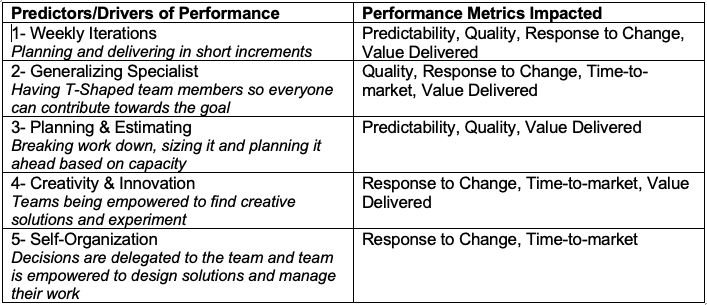
The results of our analysis identified the top five input drivers for each of the performance metrics in the TeamHealth assessment, along with the corresponding “weight” of each driver. We also uncovered the top five drivers of Confidence and Happiness for teams and product owners. These drivers are the best predictors for the corresponding metrics. All drivers are statistically significant, and each metric has the driver’s ranked order.
By focusing on increasing these top five predictors, teams should see the highest gain on their performance metrics.
Results
After analyzing the top drivers for each of the performance metrics, we noticed that a few kept showing up as repeat drivers across performance.
When analyzing the drivers for Confidence and Happiness, we found these additional predictors:
We know from experience that shorter iterations, better planning and estimating, and T-shaped skills all lead to better performance—but we now have data to prove it. It was a welcome surprise to see self-organization and creativity take center stage, as it did in our analysis. We’ve always coached managers to empower teams to solve problems, but for the first time, we have the data to back it up.
Recommendations
Pulling these patterns together, it’s clear that if a team wants to impact its performance in an efficient way, it should focus on weekly iterations, T-shaped team members, effective planning and estimating, enabling creativity and self-organization, role clarity, and right-sizing and skilling. Teams that invested in these drivers saw a 37 percent performance improvement over teams that didn’t. So when in doubt, start here!
We’re excited to share that you can now see the drivers for each competency inside the AgilityHealth platform. We hope it helps you make informed decisions about where to invest your time and effort to improve your performance.
Sally is a thought leader in the Agile and business agility space. She’s passionate about accelerating the enterprise business agility journey by measuring what matters at every level and building strong leaders and strong teams. She is an executive advisor to many Fortune 500 companies and a frequent keynote speaker. Learn more about AgilityHealth at https://www.agilityhealthradar.com.