
Editor’s Note: Unprecedented business challenges are impacting your day-to-day role. You need more than theories—you need a plan and tactics. Welcome to the AI-Empowered blog series: Your guide to the what, why, and how of embracing AI to adapt and amplify your impact.
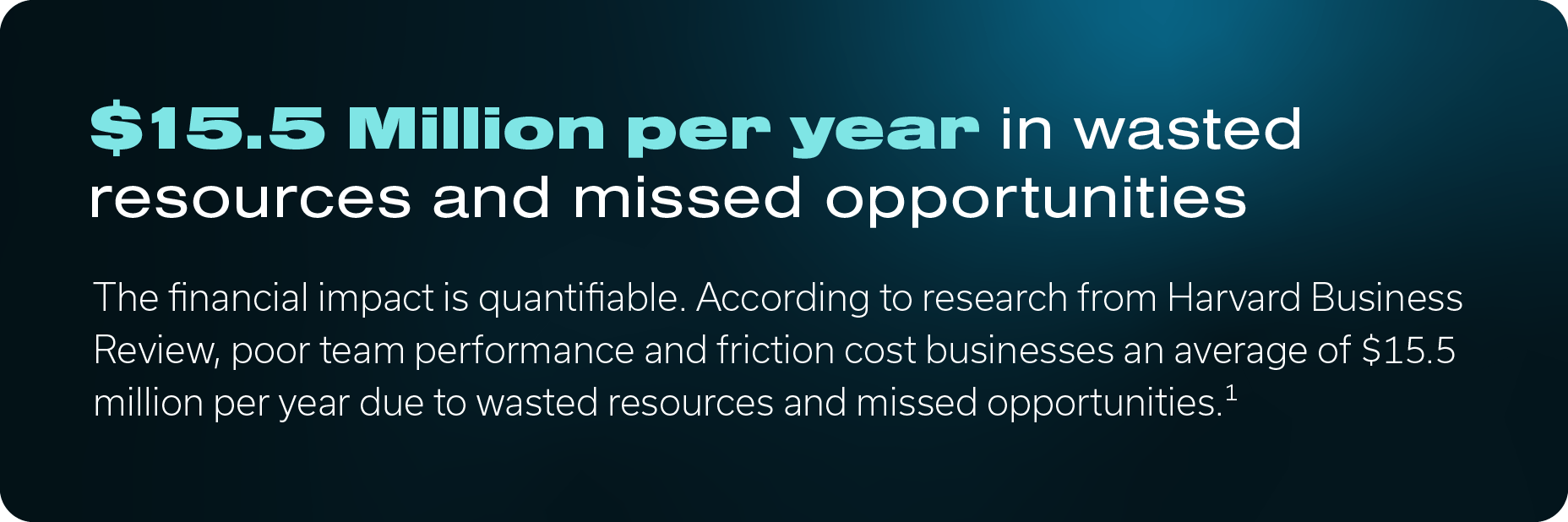
You start your Monday ready to coach your scrum team toward high performance, but by noon, you’re buried. You are manually chasing updates for the iteration report, squinting at Jira boards to find hidden dependencies, and trying to guess why the team’s velocity took a nosedive last Friday.
You’re also manually subtracting vacation days and part-time availability for a seven-person team just to get an initial velocity. Then there’s the mental load of managing the ART Planning Board—aka dealing with the “red-string” chaos. When you’re manually tracking physical dependencies across 5 to 12 teams, a single missed link can tank a PI. Instead of being the servant leader who removes blockers, you’ve become a high-paid administrative assistant. Your Scrum ceremonies feel more like Scrum chores.
You want to focus on team dynamics and psychological safety, but the sheer volume of data management makes continuous improvement feel like a distant dream.
This is the reality for many Scrum Masters today: You are working in the process rather than on the agile team.
Hidden Costs of Manual Agile Workflows for Scrum Masters
When Scrum Masters like you are bogged down by manual tasks, the organization pays a steep price that goes beyond simple overhead. Without the support of an AI-driven Scrum Master, even the most capable teams struggle to sustain true agility.
Innovation stagnation: Every hour spent on manual data entry is an hour lost to mentoring or innovation. Teams without active coaching often fall back into “water-scrumb-fall” habits. An AI-empowered Scrum Master helps reclaim this time by automating low-value work and surfacing actionable insights.
Predictability collapse: Without real-time data analysis, risks like technical debt or scope creep aren’t caught until the Iteration Review—or worse, the release. That can lead to poor ART predictability measures. If a team consistently operates outside the 80% to 100% range, they might lose the trust of the business owners. An AI Scrum Master provides earlier visibility into trends and risks, enabling timely course correction.
Talent burnout: High-performing engineers lose motivation when blockers take days to resolve because the Scrum Master is busy with other priorities. By reducing manual workload, an AI-empowered Scrum Master can respond faster, remove blockers sooner, and keep teams focused and engaged.
Technical debt: A team’s relentless focus on solution delivery often pushes innovation to the wayside. Without artificial intelligence to handle routine tasks, teams lose their buffer for innovation, leading to technical debt that can grow uncontrollably. An AI Scrum Master helps restore that balance by creating space for continuous improvement and innovation.
By integrating AI for Agile Teams, Scrum Masters can shift from reactive administration to proactive leadership, delivering greater flow, predictability, and sustainable agility across the Agile Release Train (ART).
The AI-Empowered Scrum Master: A Glimpse of an AI-Powered Future
An AI Scrum Master is a practitioner who integrates artificial intelligence—specifically Generative AI (GenAI) and predictive analytics—into their day-to-day work to improve their leadership capabilities. Adopting those behaviors involves being AI native—where AI becomes an intrinsic and trusted component in the way you and your teams think.
But let’s be clear: AI does not replace the human Scrum Master. While the AI handles pattern recognition in backlogs and automates meeting transcriptions, the human Scrum Master provides the empathy, ethics, and complex problem-solving that machines cannot replicate. The role has evolved into a strategic, analytics-based position that combines human judgment with AI-generated insights to navigate the complexities of enterprise-scale development.
The future of the Scrum Master role is not about working harder within a manual process; it is about evolving into a high-impact leader by leveraging an AI-augmented workforce. In this future, the Scrum Master acts as the human navigator for a powerful suite of machine-driven tools, creating a force multiplier effect for the entire team.
Redefining the partnership: human vs. machine
There is an important synergy between human and machine intelligence when discussing AI in an Agile Team practicing Scrum.
Humans provide the why. You bring emotional awareness, moral reasoning, and the ability to understand complex team context and nuance. You navigate the storming phase of team development by building trust—something a machine cannot replicate.
Machines provide the how much and how fast. AI excels at processing vast amounts of technical data, identifying hidden patterns in a backlog, and executing administrative tasks at an incredible scale. This is not a replacement strategy; it is an enhancement strategy. By allowing AI to handle the rote, data-heavy tasks, you’re free to focus on high-value leadership activities like coaching, conflict resolution, and strategic alignment.
Everyday applications in the Scrum Master role
Here’s what that synergy could look like in practice:
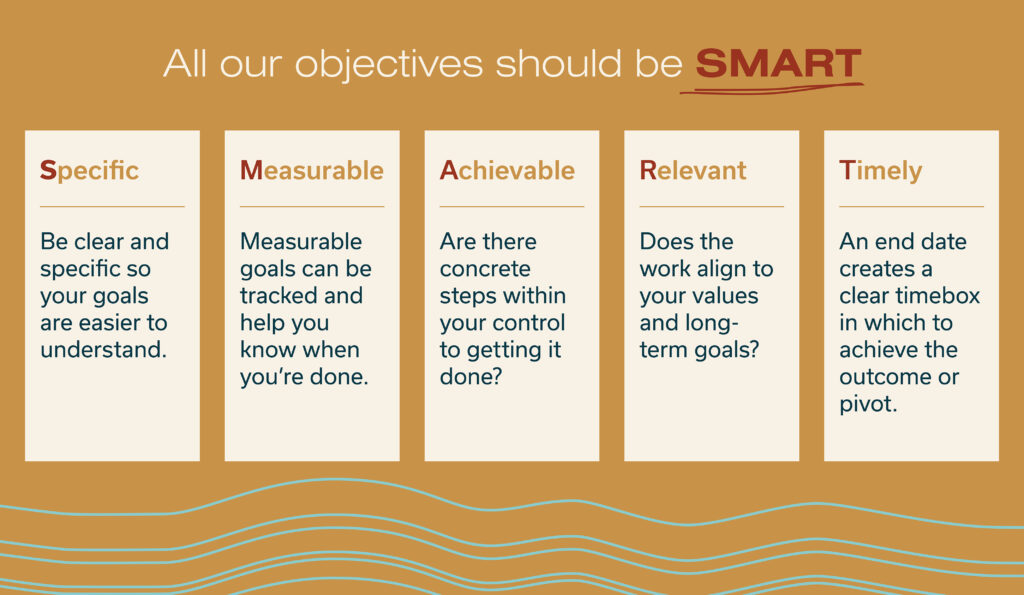
Planning Interval (PI) events. Use tools to rapidly calculate initial capacity. Instead of spending hours on spreadsheets, you can ask AI to instantly adjust for part-time team members and scheduled PTO, allowing the team to spend more time on story analysis. AI can even assist in drafting PI objectives that are specific, measurable, and aligned with the business goals.
Backlog management. GenAI can assist in splitting large features into vertical slices of value. AI can suggest acceptance criteria in a given-when-then format, moving your requirements from ambiguity to technical precision.
The strategic benefits of AI-Empowered Scrum Masters
Automating the mundane: Scrum Masters can use tools to automate Iteration Planning summaries and technical debt tracking—saving hours of manual documentation. Tools exist to handle sprint reporting, and can connect to the platforms you already use. AI note-takers can record, transcribe, and extract action items from your Team Syncs. During backlog refinement, GenAI assistants can help you write clear acceptance criteria and identify overlapping user stories.
Providing predictive risk management: AI can analyze historical Agile Team data to identify hidden dependencies or predict if a sprint is likely to fail its commitment by midweek.
Enhancing decision-making: By synthesizing vast amounts of data, AI helps Scrum Masters identify why continuous improvement has plateaued, offering suggestions based on industry benchmarks.
Offering facilitation support: AI can help structure retrospectives by clustering feedback into themes, ensuring every voice is heard without facilitation bias.
The future of the AI-Empowered Scrum Master
The future of the role isn’t about working harder; it’s about working smarter with AI-Empowered SAFe® Scrum Master training. This isn’t just a certification; it’s a transformation. An AI-Empowered Scrum Master uses GenAI and advanced analytics to automate the everyday and illuminate the invisible.
Imagine a world where your iteration reports are auto-generated with narrative context, where AI tools predict delivery risks before they happen, and where you have more time to spend on the human side of agile—coaching, conflict resolution, and leadership.
This is the promise of an AI-Empowered Scrum Master.
Boost Your Agile Expertise with AI-powered, Data-driven Leadership
The most tangible application of the AI-Empowered SAFe Scrum Master course is moving from gut-feel coaching to data-driven facilitation. Here are some examples.
A SAFe Scrum Master’s core responsibility is to improve flow. While traditional tools show you a Cumulative Flow Diagram, AI can take this a step further by automatically identifying bottlenecks in your system. It can analyze flow load and iteration velocity to pinpoint exactly where work is piling up—such as a specific testing environment or dependency on another team. Present that information to the team via a bottleneck report that suggests specific flow accelerators, such as adjusting WIP limits, to get value moving again.
AI can quickly convert vague PI objectives and draft specific and measurable ones that tie success measures to business outcomes. The result? Better alignment and stakeholder communication.
If your team is struggling with over-commitment during Iteration Planning, use predictive analytics to compare the current iteration backlog against historical iteration velocity and individual team member capacity. If the team is planning 40 points but AI identifies that the team is only likely to finish 32 (based on current PTO and technical debt levels), you can quickly intervene. This data-driven approach helps the team set realistic iteration goals and maintains the predictability that Business Owners rely on.
Scrum Masters are also turning to AI for “coach me” advice around conflict navigation and tough conversations. Maybe a Product Owner or Product Manager is pushing an unrealistic scope. You can ask AI to help you prepare a ready-to-use conversation guide that is direct, empathetic, aligned to Lean-Agile principles, and focused on outcomes and agreements.
When you can show leadership a clear correlation between technical debt reduction and increased iteration velocity, you move from a facilitator to a strategic partner. This shift is a core benefit of the SAFe® Scrum Master Certification, positioning you as a high-value asset in an AI-first economy.
Responsible AI: The Ethical Frontier of Agility
Integrating these powerful tools into our teams means anchoring innovation in responsible AI. For an AI-Empowered Scrum Master, this isn’t just about following rules; it’s about protecting the team’s psychological safety and the enterprise’s data integrity.
Three pillars of responsible AI in agile workflows
The AI-Empowered SAFe® Scrum Master course structures your ethical approach around three critical pillars:
Human-centric AI: Protecting people and social norms. This pillar focuses on fairness and inclusiveness, ensuring that AI tools do not inadvertently introduce bias into performance reviews or team dynamics.
Trustworthy AI: Ensuring solutions are reliable, secure, and accurate. As a Scrum Master, you must be the first to verify that AI-generated velocity reports are based on high-quality data.
Explainable AI: Moving away from black-box logic. If an AI tool suggests a specific team member is a bottleneck, you must ensure the reasoning is transparent and documented before taking coaching action.
Next steps: Adopting AI tools in the Scrum Master workflow
Starting with AI doesn’t require a computer science degree. Begin by:
Identifying the three manual tasks that take the most time each week.
Introducing one AI-powered tool (like a meeting summarizer) to your team and gathering feedback during the next retrospective.
Pursuing a Scrum Master certification that specifically includes AI-native modules to understand how these tools fit into SAFe.
Unlock Your Full Potential with AI for Scrum Masters
Don’t let the administrative grind stifle your impact. Transition from a traditional facilitator to an AI-powered leader who drives true continuous improvement.
Enroll in the AI-Empowered SAFe® Scrum Master Course today, and lead your team into the future of agile and AI.

Stop letting contracts become your bottleneck.
Tired of the administrative grind? Discover how the AI-Empowered SAFe® Scrum Master course turns manual reporting into strategic leadership and team excellence.
In this series:
Coming soon: The AI-Empowered SAFe® Product Owner/Product Manager
¹ “The Cost of Dysfunction: How Your Ineffective Team May Be Undercutting Your Organization’s Success,” Profusion Strategies, accessed January 9, 2026, https://profusionstrategies.com/profusion-blog/the-cost-of-dysfunction.


![PI Objective Formula
[Activity] + [Scope] so that [Beneficiary] have [User Value] to [Business Value]](https://scaledagile.com/wp-content/uploads/2022/11/SAi_Blog_Header_PI_Formula_103122-1-1024x244.jpg)