Editor’s Note: You’re facing unprecedented business challenges. You need more than theories—you need a blueprint. Welcome to a Leader’s Blueprint, your weekly guide to proven strategies that get results.
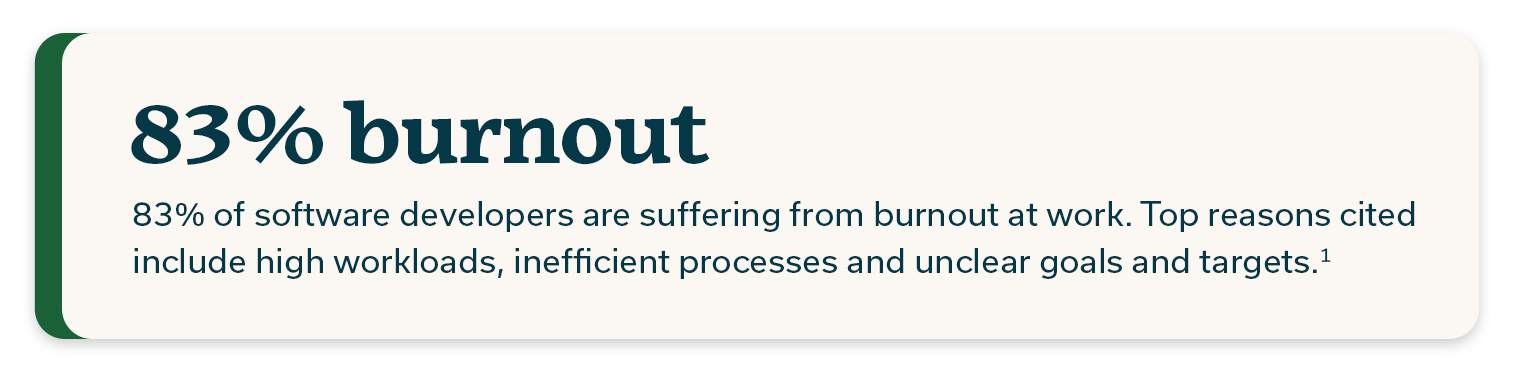
You have brilliant engineering teams and a clear business strategy. Yet, delivering a seamless customer experience feels like an uphill battle. When you look under the hood of your organization, you don’t see a unified engine; you see a collection of spare parts held together by duct tape. Data exists in silos that don’t talk to each other. Every new feature requires navigating a minefield of fragile legacy code. Your teams want to innovate, but they spend half their sprints fixing what broke yesterday or reinventing the wheel because they didn’t know another team had already built it.
The Hidden Costs of Architectural Inconsistency
When technology choices are disconnected from business strategy, you accrue more than just frustration—you accrue a massive liability.
- Innovation Stagnation: Instead of creating new value, your most expensive talent is stuck “keeping the lights on,” battling complexity and maintaining redundant systems.
- Erosion of Trust: When the back-end is chaotic, the front-end user experience suffers. Inconsistent design and system failures tell your customers that you don’t have your house in order.
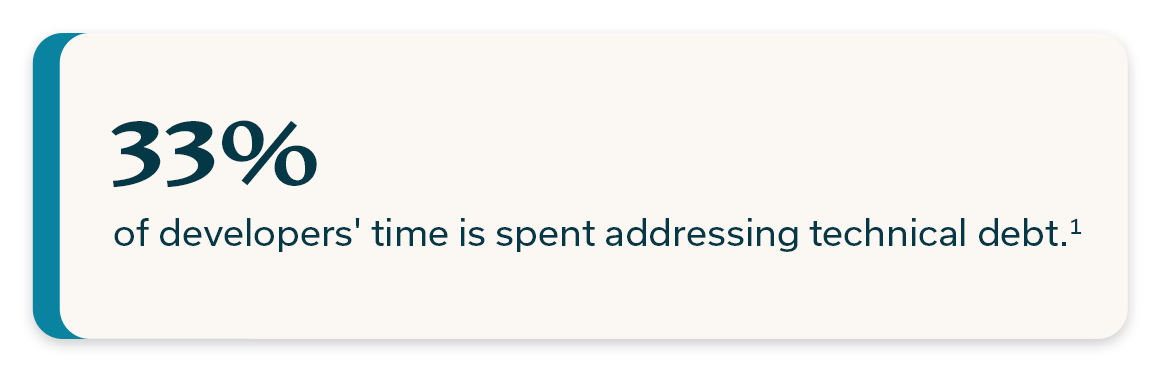
- Compounding Technical Debt: Every duplicated effort and quick fix is a loan taken out against your future speed and efficiency.
A Glimpse of the Solution: Enabling Agility
The answer isn’t to return to the days of rigid, top-down architectural control. The solution is Enabling Agility with Enterprise Architecture. This SAFe® competency shifts the Enterprise Architect (EA) into a strategic servant leader who actively champions collaboration and drives innovation across the enterprise.
Effective EAs provide strategic technical guardrails. These are minimum constraints that ensure consistency and compliance while giving Agile Teams the freedom to innovate within those bounds. It aligns technology investment with business goals, ensuring that the “architectural runway” is being paved before the teams need to land their heavy features. It turns architecture into a continuous flow of value, rather than a static document.
Your First Step
Host a short, dedicated one hour forum with a focused group of Enterprise, Solution, and System Architects. The purpose is not to review failures, but to celebrate and share what’s working well. Ask this single question:
“To accelerate our entire portfolio’s flow of value, what is one successful architectural pattern, standard, or technical principle from your value stream that we can share and align on as a consistent standard for everyone to reuse next week?”
This question achieves the following:
Focuses on Value: It ties the architectural discussion directly to accelerating the flow of value.
Highlights Success: It asks for a successful pattern, reinforcing a culture of positive sharing and learning, rather than only problem-finding.
Promotes Reuse: It immediately pushes for consistency and interoperability by encouraging component reuse.
Unlock the Full Blueprint
Moving from technical chaos to a streamlined Architectural Runway requires a shift in practices and mindset. The Enabling Agility with Enterprise Architecture competency provides the tools to establish technical guardrails, evolve the EA role, and align technology with value streams.

Stop letting technical debt dictate your roadmap.
Unlock the full SAFe Framework to build an architecture that adapts as fast as your market does. Get complete access by purchasing your SAFe® Insider membership today.
In this Series:
- Catch up on last week’s post: Lean-Agile Procurement
- Coming up next: Enabling Agility with Enterprise Architecture from a Technology Leader’s viewpoint
¹ Stripe, “The Developer Coefficient,” September 2018, accessed December 8, 2025, https://stripe.com/files/reports/the-developer-coefficient.pdf