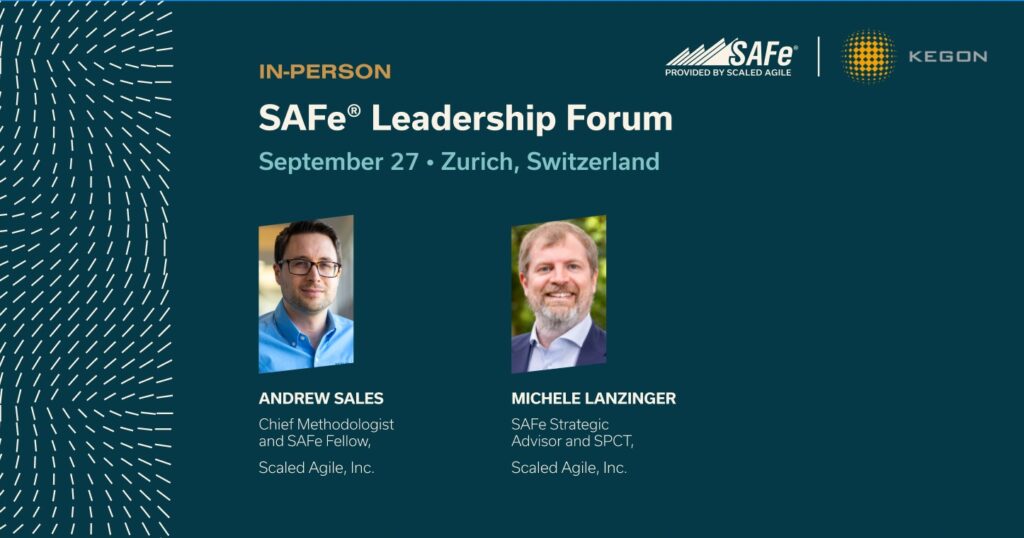
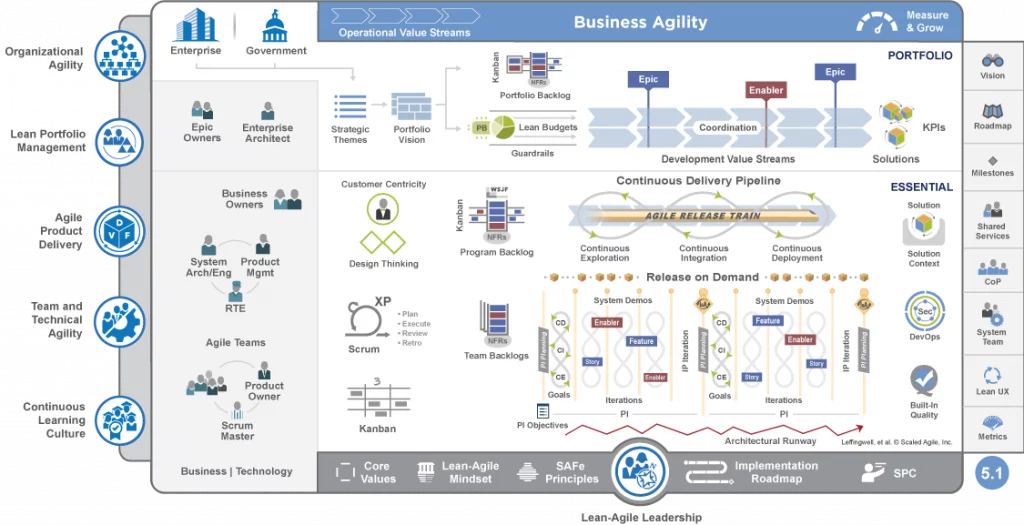
This immersive experience in Zürich will be packed with networking opportunities and content focused on pivotal themes, such as: • Agile Leadership • Business Agility • Improve & Accelerate • Measure & Grow
Laurens is an Agile Trainer & Management Consultant and a mentor to leaders creating resilient organizations at any scale. He has a strong background in IT with experience in almost every role. Laurens takes great pride in his work, and it shows in the recommendations he has received over the years. As a Professional Scrum Trainer and SAFe Practice Consultant, he helps to improve the profession of software delivery as well as marketing, human resources, and finance. Laurens brings his experience in enterprise IT since 1999 and on Scrum Teams since 2006 to his teaching, is a driving force in the Agile community, and a sought-after speaker at conferences and events.
Audrey Boydston
SAFe Fellow and SPCT (Scaled Agile, Inc.)
Audrey Boydston is a SAFe Fellow and Strategic Advisor at Scaled Agile and an experienced SPCT, Leadership Coach, and Master Facilitator. Her work focuses on continuous learning, community building, strategy development, and helping leaders create exceptional experiences for their employees and customers. Audrey spent her early career working in leadership roles at financial institutions, including GE Capital, Citigroup, Discover, and Capital One. While at Capital One she transitioned from strategy and product management into Agile coaching, where she successfully rebooted her business unit’s Agile transformation through coaching, re-training, and establishing mentoring programs. At Scaled Agile she co-created a program to help leaders understand their critical role in leading enterprise Lean-Agile transformations. She also co-created a virtual edition of the Training from the BACK of the Room! course with Sharon Bowman and 10 other Certified Trainers around the world.
I’ve been a SAFe® Product Owner (PO) for two years and I’ve learned that showing up well in this role is more than just a skill set you build. It becomes an art that deserves practice, consideration, professional development, and your authentic personality.
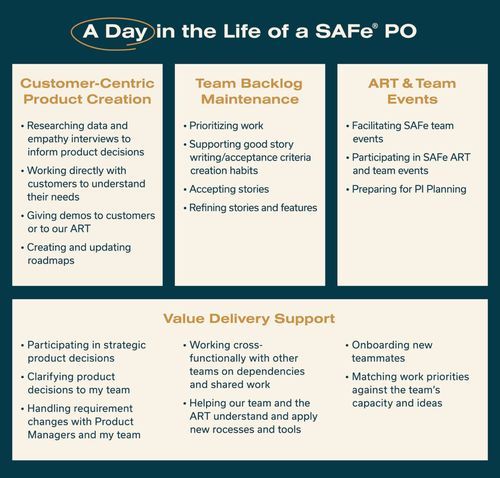
As a PO of a very busy team that is charged with understanding and delivering on customer journeys with SAFe learning content, my daily work life can include:
In short, my day can hold many twists and turns. Over the last two years, I’ve developed some habits and practices that help me bring my best self to this role as often as possible:
Treat the work as an important teammate
Treat yourself as an important teammate
Know whose opinions matter most to you
Practice setting boundaries
Form a great bond with your team’s Scrum Master/Team Coach
In the following sections, I’ll explain these practices in more context and share resources to help you accomplish them on your team.
SAFe® Product Owner Tip One: Treat the Work as an Important Teammate
POs often face competing priorities, needs, and opinions.
This means I may hear from someone in one part of the organization why we need X and then hear from someone on my team why X is a terrible idea. I can learn why someone desires to work on something new and learn why we won’t be pursuing that idea in the same hour. I often do.
One way I resolve this is to treat the work as a teammate that deserves respect, care, and consideration.
Here’s an example of how this works.
A high-performing team member shared she was interested in enabler work towards researching and selecting upgraded tools. However, her work in the upcoming PI was heavy in iterations one, two, and three. This planned work was for committed deliverables in iteration four.
Architecture also approached me to help get alignment on having that team member work with them on this tool selection. They proposed several longer-than-average meetings with this team member in iterations one, two, and three as well as asking for exploration work from this team member in iterations three, four, and five.
I knew my team member was invested in choosing the right future tool for our work. I also knew we would miss our PI objectives and delivery of products without the crucial work she was planning in the early part of the PI.
I thought of my teammate and the work as equals, having needs and deserving a thoughtful decision. I worked with Architecture and the teammate to craft expectations for this PI and an extended timeline for the enabler work so the team’s work, the teammate, and Architecture all had a path forward.
SAFe Product Owner Tip Two: Treat Yourself as an Important Teammate
SAFe Product Owners and Scrum Masters/Team Coaches have specialty roles AND are a part of the team. This can be confusing sometimes. Should you add items to the team retro or vote in estimating poker? What happens when you have a family emergency or take vacation? Can you plan stories?
Having a different title or being a decision-maker can serve to distance you from teammates. In my first two PIs as a PO, I felt this keenly and decided to think about it differently. My skills help the team deliver value and understand who will consume it and what they need. Once I started thinking about myself as a contributor rather than a “distanced person with a different role,” it made it much easier to decide: Yes, and.
YES, I should add items to our Team’s iteration retrospective! AND maybe I should mind my airtime and let others go first when the team is discussing which actions or changes they’d like to pursue in the next iteration.
YES, when we take team assessments such as the Team and Technical Agility assessment, my voice matters, AND if I have areas of disagreement, I’ll wait for my Scrum Master/Team Coach to facilitate conversations.
YES, I can vote in estimating poker when we’re sizing stories, AND if the person doing the work has a strong feeling or the rest of the team disagrees with my estimate, I’ll cede my opinion.
YES, I can take a long vacation AND find ways for my team to move stories through our Kanban while I’m unplugged.
YES, I can write stories! If there are areas of expertise I can leverage to help us develop our products, I can and should write stories! AND, when I have the opportunity to learn more about how others on the team are completing work, this builds my T-shaped skills and helps me plan work on our team with more knowledge and empathy.
Since making this shift, I’ve become more equipped to
Know what work we’re doing
Understand the how and why
Help our team reach out cross-functionally in the ART or to work with customers
Our team has been on a high-performing trajectory since this shift. While correlation isn’t causation, I intend to continue this mindset.
SAFe Product Owner Tip Three: Know Whose Opinions Matter Most to You
I like to joke about what I do for a living because (let’s be honest) parts of my family struggle to understand what I do at work. Sometimes I tell people I solve problems just-in-time for a living. Sometimes I tell people I negotiate and set boundaries for a living. Often I tell people I make someone unhappy nearly every day for a living.
Making people unhappy is one of the hardest parts of being a SAFe Product Owner. Because I’m involved in a team executing product development, maintenance, and delivery while acting as an interface with other teams we need work from or need work from us as they execute, misaligned needs and timing will arise.
Every decision I make, negotiate, share, or support, can potentially frustrate a teammate, someone on another team, someone on the extended product team, our business owners, or any combination of these folks.
People’s work is personal. This is their career, their time away from their family, their commitments, and the products they love and use. Their feelings about work are valid.
I’ve learned to accept and sit closely with someone having uncomfortable feelings about a decision. I put intense work into validating feelings, no matter how strong they may be and regardless of my agreement about that person’s wishes or ideas.
It can be challenging to stay calm with someone in an emotional situation. This is even harder to do without talking them out of their experience. I can’t do it unless I hold deep and important knowledge—I’m ok even if people disagree with me today. Not everyone’s opinions of me need to shape me in every moment.
I extend unconditional positive regard for people while building a working relationship with them. I assume good intent. And after that, the people who really stick with me respond to my brand of being me and getting work done.
This means I can live with some people who are unhappy with the news, decision, or strategy I’ve just shared. I can stay calm, professional, and empathetic without agonizing over the interaction.
It may sound like I care less about some people. However, what results from this approach is room for me to care deeply about the people I work with most frequently and maintain room for my own work, their needs, and new work relationships to grow.
Early in my life as a PO, carrying everyone’s thoughts and feelings kept me up at night and sometimes prevented me from saying things that needed to be said.
Rejecting this mindset has made me a better, more decisive, and more reliable PO.
SAFe Product Owner Tip Four: Practice Setting Boundaries
SAFe Product Owners often need to tell their team, Product Manager, an engineer or architect, other teams, ART, or Business Owners “no.” No feels like such a scary word. No can sit on the tip of my tongue and raise questions like, “Will this cause anger? Disappointment? Personal dislike?”
In the end, saying no to some things allows teams to say yes to others, and to take meaningful action on those commitments. It’s what allows us to create quality products. Conversely, saying yes to everything leads to poor quality, missed commitments and objectives, and personal and professional disappointments.
I decided to take a deep dive into setting boundaries. I started by considering how I could say “no” or “maybe” with clarity.
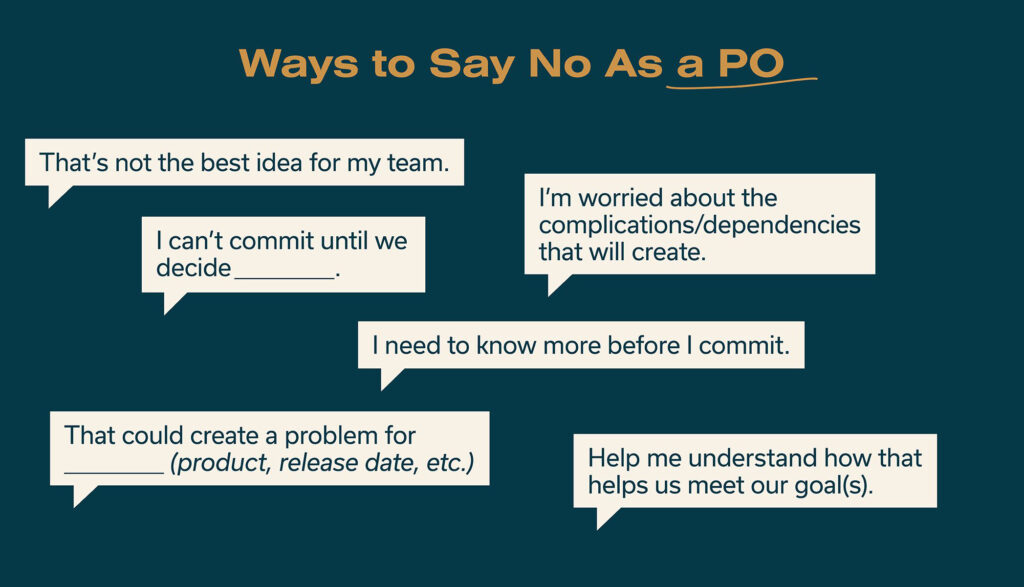
These are a few of the ways I trained myself to respond so I could communicate boundaries without shutting down necessary conversations.
For some time, I had these on a sticky note on the wall behind my desk. I rehearsed them and queued myself to remember to use these phrases.
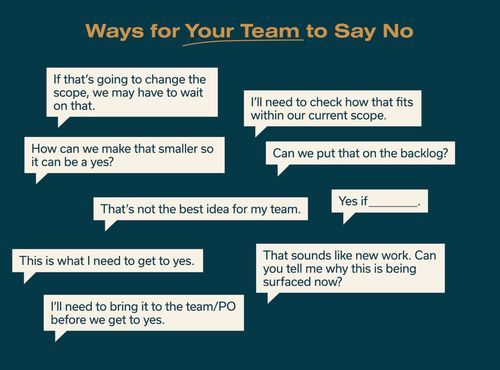
After several PIs, my team started asking how I got so measured and productive at setting boundaries. We now brainstorm as a team ways to set boundaries before we go into PI planning. Here are some of the boundary-setting phrases our team has come up with:
The truth is these phrases are useful outside of PI planning throughout iterations. The bigger truth is they’re helpful in day-to-day life outside of work.
SAFe Product Owner Tip Five: Form a Great Bond with Your Team’s Scrum Master/Team Coach
I am lucky to have the kind of relationship with my team’s Team Coach where we happily grab taco dinners together. I don’t think all POs must be buddies with their teams’ Scrum Masters/Team Coaches. But it does help the work and team for POs to have good working relationships with the person in this role on the team.
As a SAFe Product Owner, you have your eyes on the needs of the customer (i.e., anyone who consumes your team’s work) and the work. I like to say, “I’m not the boss of anyone. I represent the work.”
The Scrum Master or Team Coach has their eyes on team performance, work progress, and delivery. I’ve found that having a great working relationship with the Team Coach on my team means we can coordinate to support the team and work and fine-tune our team and technical agility.
Ways I’ve coordinated with my Team Coach to support the team include:
Proposing breaking our Agile team events up differently
Devising ways to handle things asynchronously when we have scheduling traffic jams
Asking me powerful questions when I’m facing hard decisions on priorities and moving the work forward
I can also go to our Team Coach and propose agenda items for our team events, ask for help getting data and metrics, and collaborate on thinking through team challenges and needs.
It’s so rewarding to have a relationship with our Team Coach where I can talk candidly about where we’ve been as a team, where we’re headed, and the ways we can both leverage our skills and perspectives to help the team succeed.
This makes it enjoyable to collaborate on planning team celebrations. We’ve worked together to coordinate
A “game show”-themed gathering
Gift bags
Creative ways for the team to learn about one another and appreciate each other more
A remote cookies and hot cocoa gathering
Team meals
By far, the best part of working so well with my Team Coach is that we can support and challenge each other. When my Team Coach had a professional development goal to become an SPC and SAFe Trainer, I covered team events and cheered him on.
Likewise, he got creative with ideas for story acceptance and team events I usually handle so I could take a long vacation. We also push each other to look at our team’s metrics, consider new ways to engage the team in Agile team events, share successes and improvements with the ART, and share our talents beyond the team level.
In this relationship, each of us has grown into our roles and pushed ourselves and each other. The team has also been recognized as high-performing in qualitative and quantitative ways.
Enhance These Tips with Some PO Resources
I hope including these tips, practices, and mindsets helps you consider your own development as a PO and how your work positively impacts your team’s work. Lean into the art of being a PO in your own way as you try some of these ideas out:
As a writer and education nerd who loves processes, Christie seeks to move the needle on what learners can do and what educators and trainers will try with learners. She designs and delivers compelling content and training and builds communities of avid fans using these resources as a Scaled Agile, Inc. Product Owner. Connect with Christie on LinkedIn.
Discover SAFe® 6.0 – The Next Evolution with Dean Leffingwell
Here at Scaled Agile, we were thrilled to announce the launch of SAFe® 6.0 and SAFe Studio this month. These new updates will deepen SAFe’s impact, help you build resiliency and reshape the way you approach transformation. On 30 March, Dean Leffingwell is joining us for a deep dive into what these changes mean for you in the APAC region.
When:
March 30, 2023, 11:12 am – March 30, 2023, 11:25 am
The Scaled Agile APAC team is thrilled to host our Co-founder and Cheif Methodologist, Dean Leffingwell, to share his insights about SAFe 6.0. Learn directly from Dean about how these updates enable you to work differently and build the future.
11:30 am AEDT 6:00am IST 8:30am SGT 8:30am CST 9:30am JST
Recognized as one of the world’s foremost authorities on Lean-Agile best practices, Dean Leffingwell is an entrepreneur and software development methodologist best known for creating SAFe®, the world’s most widely used framework for business agility.
His best-selling books, Agile Software Requirements, Scaling Software Agility, and SAFe® Distilled, form much of the basis of modern thinking on Lean-Agile practices and principles. Founder of several successful startups, including Requisite, Inc. (acquired by Rational), Mr. Leffingwell also served as Chief Methodologist to Rally Software, and prior to that, as Sr. Vice President at Rational Software (now part of IBM). He currently serves as Chief Methodologist to Scaled Agile, Inc., which he co-founded in 2011.
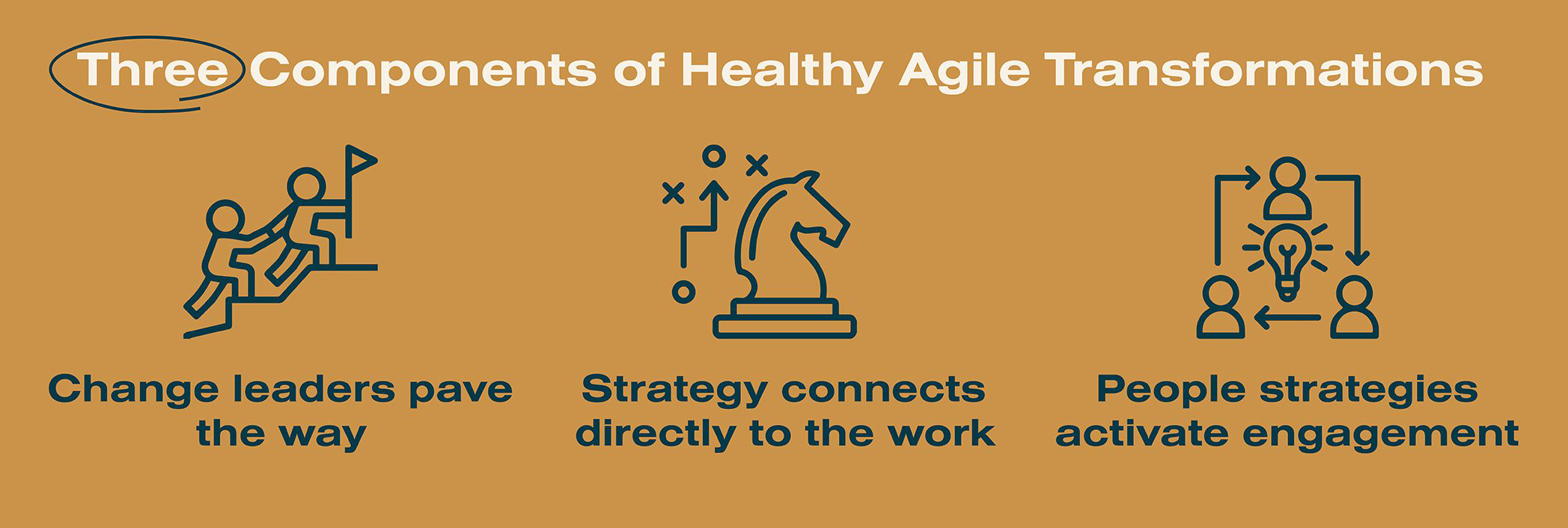
Improving your health is important so you can live a longer life. The same goes for your Agile transformation.
Certain habits improve your transformation’s health. Like eating healthy and working out do for our bodies.
I’ve seen these habits improve and sustain Agile transformations in many organizations:
Change leaders pave the way
Strategy connects directly to the work
People strategies activate engagement
Each of these habits signals your organization embraces real change. And embracing change is the foundation of a sustainable Agile transformation.
Change Leaders Pave the Way
Leadership is the most important part of a healthy Agile transformation. I’d go as far as saying leaders can make or break transformation efforts.
So leadership teams must lead the change for it to stick. They do this by leading by example at all levels of the organization (from the portfolio to Agile teams).
Leaders should embrace and demonstrate the principles and values in their leadership roles. And consult them when making a change to one of their transformation strategies.
Easterseals demonstrates one way to apply this thinking in this customer story. The company applied SAFe starting with Lean-Agile leadership. They placed change leaders in key roles. And then added the principles and structures to guide their decisions.
Some organizations disregard the principles and values to tailor SAFe. They make this modification to fit SAFe into their culture. But this creates an anti-pattern.
These modifications may include:
Changing the names of the roles identified in the Framework
Picking and choosing which ceremonies to hold
Training leaders on SAFe without proper leadership coaching and guidance
SAFe is not a prescriptive framework. Yet it’s important to maintain its foundational principles and values. This ensures a healthy Agile transformation.
Read more about how to apply the SAFe Core Values in a work setting here.
Change leaders extend their reach through Lean-Agile Communities of Excellence (LACE). LACEs should share transformation learnings across portfolios. This aligns each portfolio to Lean-Agile practices and leadership. It also helps to create a Continuous Learning Culture.
Transformation leaders in the LACE should also spearhead improvement initiatives within the organization. Also, they should focus on cross-training initiatives. This solves bottlenecks and other flow issues.
Leadership sponsorship extends beyond sustaining to accelerating change
In a healthy Agile transformation, leadership doesn’t stop at sponsoring the change. They go as far as participating in and accelerating the change.
When this does not happen, the following pattern can occur.
A Fortune 100 large enterprise pivoted from Waterfall to Agile. (Notice Lean was not even part of the conversation).
Leadership did not choose the method for this transformation. Instead, they pushed this decision to the leaders in each business unit.
You can only imagine what happened. Some business leaders chose SAFe. Others tried a hybrid approach and pulled practices from several Agile frameworks. Others decided to ‘baby step’ it and start with small teams. None of the teams in this ‘small team’ example took into account all the dependencies on the other teams.
Six months in, one leader asked: “Where can I get a holistic view of our product delivery and how we are tracking against all our initiatives?”
With so many frameworks and practices in play, there was no easy way to answer this.
Other impacts?
Business units often worked on initiatives with other business units. But they did not have a common cadence. Or alignment on dependencies or ceremonies. It became chaotic to figure out how to execute together to deliver on business requests.
If leadership selected one framework and language, that would have united the organization. And made the transformation smoother.
This example demonstrates why leadership needs to extend beyond sponsorship to participation. It ensures a transformation’s health and, thus, long-lived success.
Strategy Connects Directly to Daily work
Leadership is in place. Now what? Everyone in a healthy Agile transformation engages in their work. To improve employee engagement, show employees how their work makes a difference.
Make this connection through transparency about your strategies. Show how they align with your enterprise’s Vision and Mission.
How do you make this a healthy habit? By sharing updates during all hands or other standing company-wide meetings.
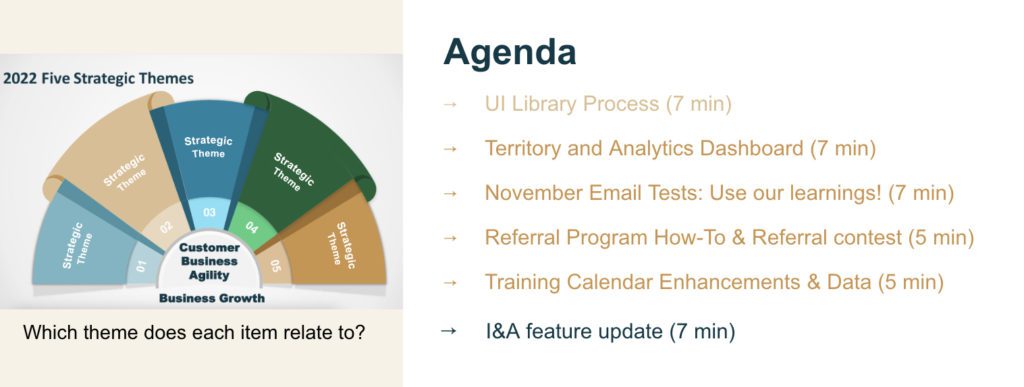
One way Scaled Agile, Inc. shows its employees how they’re impacting enterprise strategy is through color coding. We assign each strategic theme a specific color (on brand, of course). In System Demo, the agenda is color-coded by the corresponding strategic theme.
Agenda from a recent system demo
This transparency is important, especially when the strategy must pivot. It’s important employees understand the following before any work stops or changes:
Learnings from the pivot
The reason for the pivot
Be thoughtful about how you communicate this information with your organization. This is work that many spend the majority, if not all, of their time on. It’s important to be sensitive to this.
Porsche shared an example of strategy transparency at the 2021 SAFe Summit. Their executive leadership committed to how they wanted to work. And which KPIs they would drive with their products. Leadership did this on stage in front of the entire digital division. This commitment launched the digital sector into its first ARTs and PI Planning.
This shared strategy gave employees a reason to stay engaged with their work. They knew they were working towards a common goal across the digital department.
Once employees understand company strategy, they can connect it to their daily work. This connection is important for improving engagement too. Engagement is the final piece of maintaining a healthy Agile transformation.
People Strategies Activate Engagement
One indicator of a transformation’s health is its most important asset: people. To keep your transformation healthy, you must keep your people happy. One way to do this is through actively engaging them in their roles.
Generate future-focused learning opportunities with paths for Agile roles
If employees see growth opportunities, they will likely remain at their current company.
See these recently updated articles for career development inspiration:
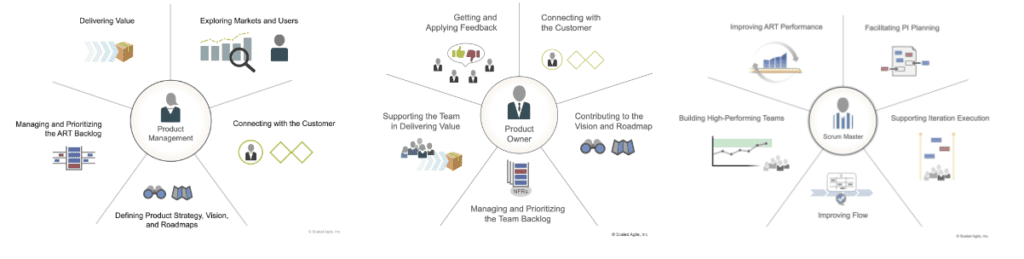
Each article includes role descriptions by category. These descriptions provide opportunities for growth in each of these Agile roles.
Organizations can create paths and learning opportunities based on these role-specific focus areas.
Refresh engagement strategies to align with the current workforce
When employees were asked, “What’s one thing that keeps you from being engaged?” they responded with the following reasons:
No autonomy
Lack of safe space
No clear career direction
Lack of vision and inspiration
Missing feedback
As mentioned in the previous section, engagement creates happier, more motivated employees. Happier and more motivated employees sustain a healthy Agile transformation.
If your engagement strategies need a refresh, try these suggestions:
Overhaul outdated engagement strategies
Align intent with your organization’s social purpose
Facilitate a relational and emotional connection with employees
Generate future-focused learning opportunities
Transform your ceremonies into learning socials
Connect individual contributions to the organizational vision
Connect people to the Vision, Mission, and each other
In a remote/hybrid post-COVID environment, it can feel like you’re working on an island. It’s hard to feel connected to the people you no longer share an office space with.
This connection is important for creating a healthy Agile transformation. Connect people to the following to remind them what they’re working for:
The organization’s Vision
The organization’s Mission
Each other
It gives them the drive to work through the uncomfortable parts of transforming.
Ways you can connect people in your organization:
Schedule volunteer opportunities for teams
Add standing mystery 1:1s to the company calendar
Share rotating appreciations for individual team
Highlight positive customer experiences, interactions, or success milestones
It takes work to maintain your health. Maintaining the health of your transformation is no different. Incorporate these three components into your Agile transformation. It will give you a strong foundation for sustainable change. And prolong your Agile transformation life.
Other resources to incorporate into your transformation routine. You can think of them like supplements if we’re sticking to the health metaphor:
SAFe Enterprise: This enterprise-level subscription provides SAFe training and resources.
Transformation in Practice Panel: This webinar zeroes in on change leadership approaches. Available to SAFe Community members only.
Measure and Grow Assessments: Check your organization’s health with Measure and Grow Assessments. Available to SAFe Community members only.
About Audrey Boydston
Audrey Boydston is a senior consultant at Scaled Agile and an experienced SPCT, Lean-Agile coach, trainer, and facilitator. Her work focuses on continuous learning, building fundamentals, re-orienting around principles, and helping clients—from senior executives to developers—build networks and communities that support their transformations.
Recently I’ve transitioned from working as a Release Train Engineer (RTE) to an Enterprise Agile Coach. While the RTE career path isn’t always well defined, this has been a rewarding journey personally for my professional development and collectively for growing our organizational capabilities.
In this blog post, I discuss:
Enterprise Agile Coach as a potential development path for RTEs
My personal experience nine months into the role and what an Enterprise Agile Coach does in a SAFe® context
Learning paths for RTEs and several key insights
Pointing the Release Train Engineer Career Path toward Enterprise Agile Coach
If you look at the SAFe Big Picture (in any configuration), you can quickly identify Agile coaching roles at the team (Scrum Master) and program level (Release Train Engineer). But beyond these roles, the development path isn’t always clear.
What are the opportunities for Release Train Engineers?
To start, current Release Train Engineers could look at either a Solutions Train Engineer (STE) or a SAFe® Program Consultant (SPC) role. STE is a good progression, but the role only exists in very large enterprises (typically comprising thousands of people) building large solutions (for example, cyber-physical) that require multiple ARTs for development. SPC is a much more common role because it is required at organizations of any size. SPCs play a critical part in implementing SAFe.
But, because SAFe leverages the concept of a dual-operating system (proposed by John Kotter), SPC is often more a set of responsibilities than a specific position. So although many RTEs become certified SPCs to deepen their knowledge of SAFe and increase their own SAFe transformation capabilities, SPC is their next credential but not their next job title.
Enterprise Agile Coach is a common job title for someone who operates at an organizational level and works across organizational boundaries to coach Agile transformations and enable business agility.
These functions make Enterprise Agile Coach an excellent progression for an RTE whose scope has expanded beyond an ART to a broader role in their organization.
What Does an Enterprise Agile Coach Do? My Experience After Nine Months
After working in my current organization for six months, it became clear the role had grown significantly beyond Release Train Engineer. I found myself increasingly leading a SAFe implementation rather than facilitating an ART. I was also managing an Agile delivery function/department with Scrum Masters working on projects operating outside of SAFe. I was promoted to Enterprise Agile Coach to recognize these responsibilities and to make my role clearer across the organization.
Some of my new Enterprise Agile Coach responsibilities, which are described in SAFe, include:
Delivering and provisioning SAFe training across the business
Establishing a Lean-Agile Center of Excellence (LACE)
Value Stream identification and onboarding new teams onto our ARTs
Extending practices to the portfolio level
Leading Communities of Practice
RTEs or Scrum Masters may occasionally do (or directly support) some of this work, but there is an essential distinction between leading and contributing to these activities. Additionally, RTEs and Scrum Masters have program and team-level responsibilities that they need the capacity to focus on.
My new role also encompasses leading an Agile delivery function/department, which has a wider scope than our current SAFe implementation. Some of our delivery teams work outside our SAFe ARTs on independent projects with fixed durations. Taking a more complete and integrated view of how we deliver our value streams and projects has allowed us to gain a broader range of perspectives and insights, share knowledge, and apply standard practices across teams when beneficial.
In my experience, the biggest shift from RTE to Enterprise Agile Coach has been learning to influence across organizational boundaries and starting to more fully apply systems thinking (SAFe Principle #2). This includes partnering with departments beyond Product and Technology (like HR) to examine the impact of policies, consider the working environment, and remove systemic impediments. I’ve also gained a better understanding of how value flows across the organization rather than just focusing on optimizing development activities.
One of the challenges that I had not anticipated was the amount of work needed to develop my own personal leadership capabilities. Here are a few of the practices I’ve found beneficial for building a new skill set:
Regular professional coaching
Developmental practices such as meditation and journaling
Leadership self-assessments
Enterprise Coaching Mastercamp
Additionally, I’ve continued reading widely to expand my knowledge in some of the disciplines listed in the next section.
Going Beyond Release Train Engineer Skills: My Key Learnings
Enterprise Agile Coaching is shaped by a wide range of disciplines. If you’re interested in moving to Enterprise Agile Coach, some of the areas you might start exploring include:
Some of the ideas and concepts that immediately resonated with my own experience are:
Holons – The concept that something is simultaneously a whole in and of itself but also a part of a larger whole (see Arthur Koestler, Ken Wilber, and Michael K. Spayd). This is a useful way to consider individuals, teams, ARTs, and the enterprise.
Fractals – Patterns reoccur at various scales, and this occurs throughout the organization (Mandelbrot).
Developmental stage models – Understanding how organizations can be centered in a developmental stage and how their worldviews and values affect the system and culture (see Clare Graves, Don Beck, Ken Wilber, and Frederic Laloux).
Defining Your Release Train Engineer Career Path: More Resources
Enterprise coaching can be very challenging but is also incredibly rewarding. Working more holistically as an Enterprise Agile Coach across the organization has broadened my perspective and understanding of how systems work.
My previous work as an RTE gave me access to program-level perspectives and insights invaluable to my current role. For any RTE that wants to move into Enterprise Agile Coaching, I recommend seeking out mentors and peers to help support you in your learning journey, adopting a strong growth mindset, and investing in your own development as a leader.
From Our Team
Defining your RTE career path can start now with a few small steps. Below are more resources you can use to improve your daily practice as an RTE and clarify your professional development path:
Tom Boswell is an Enterprise Agile Coach and certified SPC and RTE. He has worked at multiple organizations using SAFe, coaching at the team, program, and enterprise levels. He is passionate about lifelong learning, helping others grow, empowering teams, and co-creating more meaningful workplaces. Connect with Tom on LinkedIn or at www.tomboswell.com.
Deema Dajani, Product Manager and SPCT at Scaled Agile Inc. will share synthesized updates applicable to your current operations. Carol McEwan and Anaël Pichon from iObeya will join Deema to share ideas on how to scale and improve your LACE practices as your organization matures. During this webinar, you will learn the following:
– How LACE formation evolves as a SAFe organization matures – The top concerns every LACE experiences – What LACEs budget for – How to improve awareness of your LACE progress and impact
Speakers
Deema Dajani
Product Manager, SPCT (Scaled Agile Inc.)
Deema draws on a Startup background and an MBA from Kellogg. She helps established enterprises create the environment to shape disruption with business agility and Lean Portfolio Management (LPM). Started her Agile journey in the early 2000’s as a Product Manager, Director of Strategy, and pre-IPO turn around specialist. Deema transitioned to advisory where she led some of the largest transformations to Lean-Agile with SAFe in Financial Services and Insurance. Deema currently serves as a Scaled Agile Product Manager focused on LPM and Leadership. Co-founder of the Women in Agile, a non-profit organization focused on breaking barriers and inclusivity in the agile community.
Carol McEwan
Agile Program Director (iObeya)
Carol McEwan currently serves as Agile Program Director at iObeya. She has more than 10 years Agile experience and is passionate about creating spaces for people to collaborate and solve complex problems. Previously, Carol has held senior leadership positions at Scaled Agile, Scrum@Scale, and Scrum Alliance.
Anaël Pichon
Manager – US Customer Success Operation (iObeya)
Anaël Pichon currently manages iObeya’s Client Success operations in the USA. She combines her experience as a Project Manager and her passion for Agile as a certified Professional Scrum Product Owner and SAFe SPC to help iObeya users get the best out of the platform.
Join us at the interactive fireside chat with Phil Alfano (Apptio), Francisco Loras (Wi-Tronix), and Joe Vergara (Agile Rising) and learn how you can become the catalyst in your organization.
When:
September 15, 2022, 11:00 am – September 15, 2022, 12:00 pm
Leading organizations in the digital age are expanding agile operating models from a team to a corporate level. And agile leaders play a critical role in the transformation. They understand the company’s vision – the north star – and the chasm between the current state and the vision. In essence, agile leaders must be the catalyst to drive change management within the organization. Agile leaders need to recruit champions that can translate the value of agile to the company’s vision to their colleagues and, most importantly, business leaders.
This session will cover:
How to design a structure for the organization to expand agile to the enterprise level
Getting the right stakeholders in to align on the company’s vision – from strategy to execution
Finding the right champions that will become the backbone of the transformation
Speakers
Phil Alfano
Field CTO (Apptio)
As Field CTO, I act as the bridge between Apptio’s solution factory and our field organizations. Reporting to the Chief Revenue Officer, I liaise between Product Marketing, Product Management, Presales, and Customer Success to ensure that what we demonstrate matches what Apptio delivers. My professional purview includes partner business development, competitive surveillance, and go-to-market messaging.
Francisco Loras
RTE & Agile Coach (Wi-Tronix, LLC)
Add a short Technology enthusiast studied Industrial Engineering in Spain and obtained a Masters in Electrical and Computer Engineering in Chicago. Started working for Wi-Tronix LLC as a hardware intern and grew into a Release Train Engineer role as part of a Digital Transformation at Wi-Tronix.-3 sentence bio here.
Joe Vergara is a Sr. Agile Transformation Consultant and SPCT Candidate with more than ten years of experience helping organizations improve their operations and achieve their strategic objectives using Lean and Agile approaches. Having served as a consultant and coach to multiple Department of Defense (DoD) and Fortune 500 organizations, as well as several small public and private companies, Joe brings a wealth of experience and expertise across various industries. Joe has helped multiple organizations across various industries realize their objectives by empowering people, evolving processes, and enhancing technology solutions. As part of this, Joe commits to the personal and professional growth of others by meeting individuals where they are and helping to generate opportunities for learning and growth.
Lean-Agile practices thrive in a trust-based environment. And leaders play a huge role in creating that environment for everyone in the organization. But leadership skills and behaviors aren’t necessarily intuitive for all leaders. And leaders often don’t get the help they need to learn how to evolve and grow in their role. In this episode, Dr. Steve Mayner, SAFe Fellow and principal consultant at Scaled Agile shares insights he’s observed about leaders (and himself) while developing his Leading in the Digital Age development series.
Click the “Subscribe” button to subscribe to the SAFe Business Agility podcast on Apple Podcasts
Lean-Agile practices thrive in a trust-based environment. And leaders play a huge role in creating that environment for everyone in the organization. But leadership skills and behaviors aren’t necessarily intuitive for all leaders. And leaders often don’t get the help they need to learn how to evolve and grow in their role. In this episode, Dr. Steve Mayner, SAFe Fellow and principal consultant at Scaled Agile shares insights he’s observed about leaders (and himself) while developing his Leading in the Digital Age development series.
Melissa and Steve discuss topics including:
Key differences between leaders and individual contributors
How to successfully involve leaders in exploring their role
A real-world story about an individual leader’s personal transformation
Hosted by: Melissa Reeve
Melissa Reeve is the Vice President of Marketing at Scaled Agile, Inc. In this role, Melissa guides the marketing team, helping people better understand Scaled Agile, the Scaled Agile Framework (SAFe), and its mission. Find Melissa on LinkedIn.
Guest: Dr. Steve Mayner
Steve is an expert thought leader, speaker, coach, consultant, and trainer in the principles and practices of agility at the enterprise level. He excels at creating positive relationships with C-level executives and management teams to help them translate business goals into initiatives that support ongoing investment themes. Connect with Steve on LinkedIn.
Transcript
Speaker 1
Looking for the latest news experiences and answers to questions about SAFe? You’ve come to the right place. This podcast is for you. The SAFe community of practitioners, trainers, users, and everyone who engages SAFe on a daily basis.
Melissa Reeve:
Welcome to the SAFe Business Agility Podcast recorded from our homes around the world. I’m Melissa Reeve, your host for today’s episode. Joining me today is Dr. Steve Mayner, SAFe Fellow and principal consultant at Scaled Agile. It’s a pleasure to have you on the show today, Steve.
Dr. Steve Mayner:
Thanks, Melissa, it’s great to be here.
Melissa Reeve:
In this episode, Steve will share interesting insights he’s observed about leaders while facilitating Scaled Agile’s new Leading in the Digital Age development series. Let’s get started. So Steve, as you led the creation of this development series for leaders and have been running these cohorts for a while, what have you learned about leaders that maybe shifted from your previous perception of them?
Dr. Steve Mayner:
You know, Melissa, many of us often put leaders on a pedestal, and I think we often think that they all have it figured out. And what I learned, truth be told, as leaders, we can all fall into the trap of even thinking of ourselves that way as well. But the reality is leaders are people too, every leader’s a human, and they have good and bad experiences like everyone else, and they make mistakes and they struggle. The real difference between a leader and an individual contributor is that one, a leader has accepted the responsibility for leading others. And two, the leader has the ability to use their influence and authority to create the success conditions for those in their charge. Here’s the key though, leaders must learn to lead themselves first before they can do either of those things effectively. And that means continuously growing and improving in their leadership skills and behaviors. So leaders in the SAFe ecosystem need the same kinds of learning opportunities and ongoing support as we’ve historically provided to the individual contributor roles in the Framework. Mid-level managers in particular often need help finding their place in SAFe, particularly those whose roles change when their organizations adopt SAFe as the new way of working.
Melissa Reeve:
So, you said something really interesting there, which is that people put them on a pedestal, and then they can sometimes put themselves on a pedestal. What do you think separates the folks who put themselves on a pedestal versus the ones who maybe just accept their humanity and maybe lead from a different place?
Dr. Steve Mayner:
You know, I think a lot of it is all of us who have grown and evolved into leadership positions have done so gradually over time. And, you know, as they say in media, sometimes we read our own press, right? And we believe the things that culturally we use in terms of our language about leaders. And it’s very easy to buy in, to sort of bask in your own success if you will. And the reality is unless opportunities, hopefully positive opportunities like this type of a development experience come along, or maybe a not-so-great experience where, you know, we have situations where we fail and then we have to learn that lesson the hard way. Unless either of those two things happen, it’s very easy for leaders to just buy into that myth that, you know, leaders have to have all the answers and leaders can’t be seen as vulnerable around the people that they lead. And so with this experience, we hope to have the positive alternative there. That being a development opportunity where we shine the light on that aspect and provide a lens for leaders to be self-reflective and to take more of that posture of, you know, hey, I’m a human being just like everybody else, just like the people I lead. I have a unique role and I’m going to do the best I can in that role to create the right environment for all of those contributors to be successful.
Melissa Reeve:
Yeah, and I think you’re right. And hidden behind those words is really finding your leadership voice. And maybe you start off with this persona or this perception of what it means to be a leader. And then as time goes by, as experience happens, hopefully, we as leaders can slip into a more authentic place.
Dr. Steve Mayner:
That’s certainly our goal and authenticity is definitely one of the things that we highlight in one of the modules of this series. And provide some very practical exercises and activities that give participants the opportunity to do that self-reflection and to find that authentic self, that true north, and to gain the awareness of how important behaving and leading from that authentic place is in terms of creating that trust-based environment. That’s so critical in any organization but particularly in organizations that are adopting SAFe.
Melissa Reeve:
Yeah. So, I’m realizing as we’re chatting, we’re talking about this new Leading in the Digital Age series. But for our listeners out there, they probably aren’t familiar with this. Can you give our listeners just a brief overview of this series, kind of why, what motivated you to develop it, who it’s for, how people can access it?
Dr. Steve Mayner:
Certainly, this has been a passion project for me. I have been working with leader development for many years long before coming to Scaled Agile. And it’s just for my own journey from being, you know, an entry-level technical person coming right out of college and following a normal development path and eventually getting into management and leadership, and rising through those ranks and having my own failures and successes in my private career. But also having experienced a lot of these same things in my military career. So, I kind of had both perspectives of what it meant to be in leadership roles. And the older I got and the more experienced I got moving into particularly consulting types of roles and helping organizations adopt these new ways of working, it just became very, very apparent to me that the role of leaders in creating the right culture, the right environment, is just so very critical. But so often, they don’t get the help that they need to learn how to evolve and to exhibit those most positive behaviors.
Sometimes they do, there are many leadership development programs out there, but many times they don’t. And so they do the best they can. And we’ve seen that in the field, working with organizations adopting SAFe and the implications of both great leaders who have the right mindset and behaviors, and unfortunately those that don’t. So it’s those experiences that have always motivated me to do whatever I could to help those people in those roles. And then coming in to Scaled Agile, having these conversations with Dean and Chris and our leadership team, just looking for the opportunity. And eventually, it was provided to explore and experiment. Could we at Scaled Agile as a learning company, not only provide learning assets, like our courses and our workshops and our toolkits and all the things that we provide to help the learning process for our individual contributors, which we’re well known for, but could we also step into that space of providing similar help to leaders who aren’t in the role of scrum master or RTE or something like that, but who have these leadership responsibilities in the ecosystem in which SAFe operates.
Melissa Reeve:
And so you developed the Leading in the Digital Age series. And I understand that we need to engage our leadership. And in fact, on the podcast, we talk a lot about how to engage leaders in a SAFe transformation. So in this new leader development series, how do you involve leaders successfully in exploring their roles?
Dr. Steve Mayner:
So when we have a customer express interest in running either of the first two modules in the series, which are Leading by Example and Accelerating Change Leadership, the first thing that we had to work with our customers on was to identify leaders who were open to engaging in a personal growth process through this experience, kind of the coalition of the willing, if you will. And the next thing we had to do was create a psychologically safe environment where leaders could be vulnerable with a group of their peers. And we also wanted the same participants to learn how to create that same safe environment for their employees. This is so critical to create that generative, trust-based environment where Lean-Agile practices can flourish. And the thing about it is only leaders can create that environment. We also had to commit to absolute confidentiality throughout the entire experience because the participants were going to be sharing some personal, private information, as far as they were comfortable.
So, confidentiality was absolutely, absolutely crucial. Then the next thing we had to do is in every activity, we invited leaders to bring their real work, the real challenges, the real initiatives into the learning process. So there were no abstract or mythical organizations for the activities. This allowed participants to take the results of those discussions and immediately apply their action items into their real context, which made them much more willing to engage in this learning experience. And then finally, we created the conditions where the participants left with the experience of feeling more connected and more committed to each other than ever before. I mean, we really saw true leadership teams emerge from these experiences. And it was so positive that many of them wanted to immediately create that very same experience for their teams and for their peers.
Melissa Reeve:
Yeah, I hear what you’re saying. You know, my experience with folks in leadership positions is that part of the reason they got there was this interest in furthering their knowledge, developing self-growth and learning more about themselves and how they can become a better leader. So it’s not surprising to me that you get people leaning in. You know, some of the other things that you mentioned there, which is creating a psychologically safe environment and doing that by making sure that you’ve got absolute confidentiality, is so critical. My guess is that who facilitates this also plays a really important role in the outcomes?
Dr. Steve Mayner:
It absolutely does. And we have a very different process for validating facilitators for this series. And we do for any of our other learning products for that very reason. We want to make sure every facilitator is properly equipped and are really adept in their facilitation skills before we just turn them loose with a very powerful, but, you know, and also a type of product that you want to handle very carefully because of the nature of the kinds of things that you’re going to be doing, and the kinds of conversations that are going to be had in these cohorts.
Melissa Reeve:
Yeah, so for any of our listeners out there who are eager to try out this new series, just know that it is a commitment to get up the learning curve of how to facilitate this effectively. So, Steve, that’s great when we have leaders who lean in and engage with this type of learning. What do you do with the resistors, those leaders who are like, “I’m too busy. I don’t need this.” You know, I’m happy to write the check for a SAFe implementation but you know, I feel like I’ve already got this down.”
Dr. Steve Mayner:
Oh, sure. We certainly have our share of those. And what I always encourage our facilitators to do is first start from a position of empathy. You know, the truth is most people who are resisting this opportunity or resisting change, they’re not trying to be difficult. There are real fears and concerns that lie underneath that behavior. We identify as being resistors. So we need to, first of all, acknowledge and respect those concerns. And if we can guide them to a point of being open to the experience, then we absolutely do. And if not, we don’t force it. We encourage our customers to give those leaders who may not quite be ready the time and the space and the support and then provide them other opportunities to participate in a cohort. At a later time, we also caution our Leading in the Digital Age facilitators that they can’t use these learning experiences to force behavior change on those who aren’t ready and willing to adapt.
That’s just going to create more conflict and it will actually impede the growth of the other members of the cohort if these individuals actually do participate. In fact, the best implementation model we’ve seen is what we’ve called an invitation-based approach where leaders actually have to apply to be accepted into a cohort. We’ve had several of our customers actually build an application process where leaders had to describe why they wanted to attend and how their participation would benefit the company. And this helped identify who truly had a growth mindset and was open to the personal changes that we knew would be prompted by the experience. So again, let me just encourage everyone out there listening, please, don’t give up on your resistors. They may just need a little more time and a little more one-on-one help to guide them down the path from a fixed to a growth mindset so that they can get the intended benefit from such an experience.
Melissa Reeve:
So, this sounds like pretty basic Agile, right? Wait for the pull, see where the interest is, and use that to help lead the way for the rest of the organization, including the resistors.
Dr. Steve Mayner:
Absolutely. So much of Agile is a cultural element even more so at times and even the practice elements of what we typically think of when we think of Agile.
Melissa Reeve:
So, as you’ve gone through the process of developing out this series, it sounds like a lot of learning has taken place. Can you share a story with our listeners about a leader’s transformation that you witnessed?
Dr. Steve Mayner:
There are so many stories, and I know we don’t have time to share them all, but one particular one stands out in my mind. We had one participant and this individual actually owns his own company. And he went through the enablement version of Leading by Example so that he could facilitate modules with his customers in the future. What he didn’t expect from that experience was how transformative it was going to be for him personally. And when he shared this story, after the cohort was concluded, I’ll never forget it, because he was almost in tears. As he left the experience in Leading by Example, as he described it, he had a completely different take on how he needed to show up as a leader in his own company, on the responsibility that he had to create a positive, generative, trust-based environment for everyone else.
And that his role was much more than just running meetings and making decisions and meeting numbers. And he also left with a new appreciation for how his own behaviors—like how he interacts with people, how he speaks, how he responds—directly affect his people and how well his company performs financially when he creates that positive, generative, trust-based environment. So succeeding in the digital age absolutely requires that kind of culture where people at all levels are personally invested in the organization’s success and in each other. And that’s what it means to have that generative culture, whether or not that culture exists is completely based on how leaders lead. And he was a personal testimonial to that.
Melissa Reeve:
So, it sounds like part of this experience is really being able to look in the mirror, see what’s there, see how you as a leader need to adjust, and potentially even getting feedback in a safe environment from your peers. And it feels to me like that type of feedback is just, it’s what we’re all craving.
Dr. Steve Mayner:
It absolutely is. And you know, the funny thing is even if we don’t cognitively recognize it if we don’t think about it in those terms when we actually do have the opportunity to get that kind of feedback and kind of get over that initial little fear of, you know, I’m not sure, this sounds uncomfortable. And then we get that insight that we never would’ve gotten otherwise. And we have this two-way conversation and we start to sense how much the other person is committed to us and to our success. And then we get to reciprocate and do the same thing in return. It takes our perception and our feeling about what it’s like to be a part of that organization to an entirely new level. And if we’ve never experienced that before, let me tell you it’s, it’s just amazing. And I hope everyone has that opportunity at some point in time.
Melissa Reeve:
It sounds really powerful. So, my guess is that as you’ve been going through this experience, you’ve learned a thing or two about yourself as well. Would you be willing to share some of that with the audience?
Dr. Steve Mayner:
Here’s the reality, I’m a human being just like anyone else. And even though I’ve taken a leadership role in trying to bring this product to market, everything that we describe in the courses applies to me just as much as it does to anyone else. I don’t get it perfect all the time any more than any other leader does. And in fact, I can remember this at the very same time that our team was building the session in Leading by Example, on emotional competence at work, I actually experienced what we described in the course as a hijack moment. One of those highly charged emotional situations. And of course, as the person guiding the development of that product, I would love to say that, you know, I immediately drew upon all of that great information and used it to handle that situation flawlessly. But if I did, I’d be lying <laugh>, you know, and, and right after it happened, I paused and I thought, oh my goodness. You know, I should have used the very things that we’ve been talking about to handle that situation. So, yeah, even in developing it, I think we all learned much more about ourselves than we ever anticipated. Just going through the experience of exploring these topics and assembling them together and testing them out with different cohorts. Absolutely.
Melissa Reeve:
Steve, thanks so much for sharing what you’ve learned about leaders while designing and testing the leadership series. The first two modules in the new Leading in the Digital Age series are Leading by Example and Accelerating Change Leadership. Both modules will be released in early 2022 and will be available to all of our SAFe Enterprise customers. Steve, it’s been a pleasure.
Dr. Steve Mayner:
Thanks, Melissa. It’s been a pleasure for me as well, and thanks so much for inviting me.
Melissa Reeve:
And thanks to all of our listeners for listening to our show today, you can find helpful links about topics we cover today in the show notes at scaledagile.com/podcast. Be sure to revisit past topics at scaledagile.com/podcast.
Speaker 1
Relentless improvement is in our DNA and we welcome your input on how we can improve the show. Drop us a line at podcast@scaledagile.com.