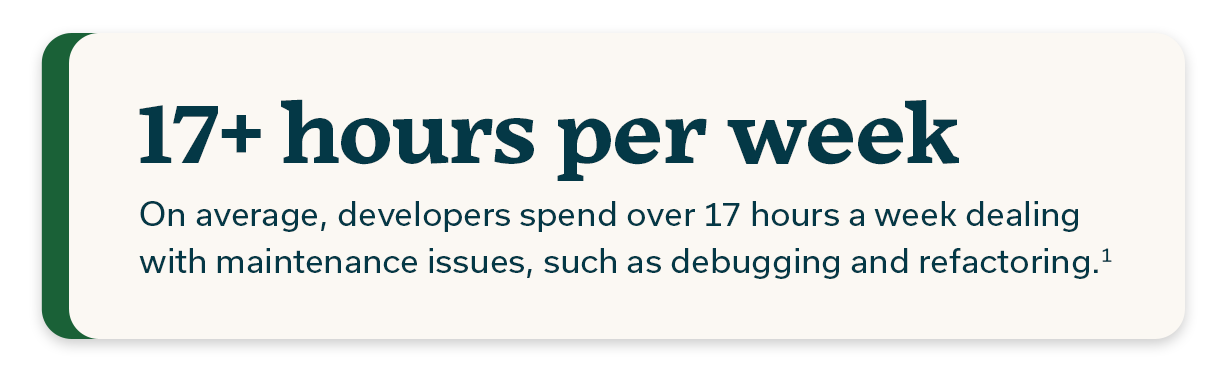
Editor’s Note: You’re facing unprecedented business challenges. You need more than theories—you need a blueprint. Welcome to a Leader’s Blueprint, your weekly guide to proven strategies that get results.
It’s 2:00 AM on a Saturday. A critical deployment has failed, again. You’re on a conference call with a team of exhausted engineers who are trying to manually roll back a change, hoping they don’t make things worse. Your business stakeholders, who were promised a seamless update, are sending frustrated emails.
You have brilliant engineers, yet every release feels like a high-stakes gamble. The path from a developer’s laptop to a live customer is a murky, complex maze of manual handoffs, tribal knowledge, and heroic efforts. You’re responsible for the outcome, but you have no real visibility into the slow, error-prone system that produces it.
The Hidden Costs of an Opaque Pipeline
An unpredictable and inefficient delivery process isn’t just a technical problem; it’s a significant liability that generates compounding costs.
- Erosion of Business Trust: When you can’t provide clear answers on when a feature will be delivered or why a release failed, the business loses confidence in the technology organization’s ability to execute. “IT” becomes seen as a bottleneck, not a strategic partner.
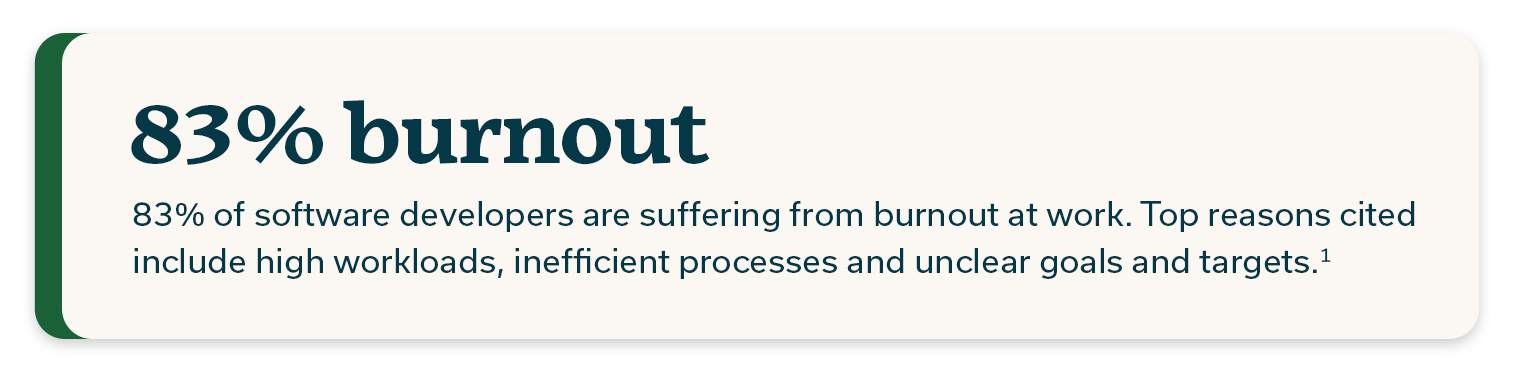
- Hero-Driven Burnout: Your process relies on a few key individuals who know the “magic” to get things deployed. This is not a sustainable model. It creates single points of failure and burns out your most valuable talent, who eventually leave for environments where they can be more effective.
- Innovation Gridlock: When every release is a high-risk, all-hands event, you can’t afford to do it often. This means valuable features, bug fixes, and security patches sit on the shelf for weeks or months, undelivered. Your innovation pipeline is clogged by your own internal friction.
From Black Box to Glass Box: A Glimpse of the Solution
The solution is to transform your delivery process from an unpredictable art into a reliable science. In SAFe®, this is the Continuously Delivering Value competency. The core of this is building a Continuous Delivery Pipeline (CDP)—an automated, visible, and streamlined path from idea to deployment.
The goal is to identify and break down pain points, transforming your pipeline from a series of disconnected, manual steps into a transparent system where every stage—from build to test to deployment—is optimized for speed and quality. This turns your release from a high-stakes, manual event into a low-risk, automated process.
Your First Step
You can’t fix a process you can’t see. Your first step is to make the work visible. This week, gather your key technical leads around a whiteboard. Include developers, QA, release management, and operations, and ask them to perform a simplified Value Stream Mapping exercise.
Pick the last feature your teams released. For that feature, “Map every step we remember—both manual and automated—that a piece of code goes through to get to production. Then, estimate the ‘wait time’ and ‘pain points’ between each step.”
The delays you uncover will be staggering, and they will point directly to some quick improvements you can resolve.
Unlock the Full Blueprint
Making your pipeline visible is the first step toward fixing it. But creating a true continuous delivery capability requires a systematic approach to automation, testing, and collaboration. The Continuously Delivering Value competency provides a full blueprint for visualizing, building, and optimizing your delivery pipeline.

Stop letting release day be a source of dread.
Unlock the full SAFe Framework, with the competencies and guidance needed to build a fast, reliable, and transparent delivery engine. Get complete access by purchasing your SAFe® Insider membership today.
In this Series:
- Catch up on last week’s post: Accelerating Product Flow
- Coming next week: Organizing Portfolios
1 Rene Millman, “83% of Developers Suffer from Burnout,” IT Pro, July 12, 2021, accessed October 28, 2025, https://www.itpro.com/development/software-development/360192/83-of-developers-suffer-from-burnout