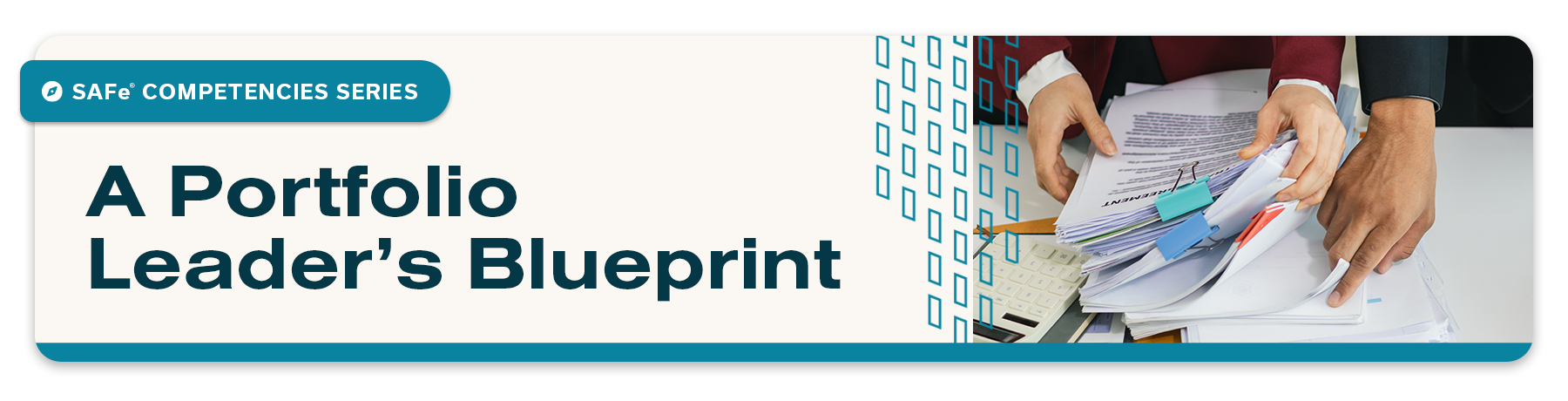
The Contract Bottleneck: When Traditional Procurement Slows You Down

Editor’s Note: You’re facing unprecedented business challenges. You need more than theories—you need a blueprint. Welcome to a Leader’s Blueprint, your weekly guide to proven strategies that get results.

Your Agile Teams are ready to sprint. The product vision is clear, the funding is approved, and the market opportunity is right now. But then, you hit a wall. You need a partner—a vendor to supply a critical component or specialized skill. Suddenly, agility grinds to a halt. You enter the world of traditional procurement: months of writing detailed requirements for an RFP, waiting for sealed bids, and enduring long rounds of contract redlining. By the time the ink is dry, the market has shifted, your requirements have changed, and your Agile Teams have been idling. You aren’t co-innovating; you’re just waiting on paperwork.

The Hidden Costs of Transactional Sourcing

When your procurement process operates in a silo separate from your development value stream, it creates a drag on the entire organization.

  • Lost Market Windows: While you negotiate terms and conditions, competitors who treat partners as extensions of their team are already launching.
  • Transactional Friction: Focusing rigidly on “lowest price” and fixed scope creates an adversarial relationship. Vendors protect their margins rather than solving your problem, leading to change-order wars later.
  • Innovation Stagnation: When you dictate the solution in a rigid RFP, you cap the potential for innovation. You get exactly what you asked for, not necessarily what you need or what the expert vendor could have proposed.

From Vendors to Partners: A Glimpse of the Solution

The solution is to stop treating procurement as a back-office administrative function and start treating it as a strategic capability. This is the Lean-Agile Procurement (LAP) competency. LAP moves away from the “us vs. them” transactional model toward co-innovation. Instead of paper-heavy RFPs, LAP utilizes collaborative events—like the Big Room Workshop. Here, key stakeholders and potential partners come together to clarify goals, co-create solutions, and even draft agile contracts in real-time. It integrates procurement directly into the Agile release train, ensuring that legal and sourcing align with the rhythm of value delivery.

Your First Step

You can start shifting the mindset from transaction to partnership this week. Identify one critical vendor or partner relationship currently in the pipeline or up for renewal. Ask your team:

“Are we collaborating with this partner to define the solution, or are we just negotiating the price of a predefined output?”

If the answer is the latter, you are likely leaving innovation—and speed—on the table.

Unlock the Full Blueprint

Moving from traditional sourcing to Agile partnerships requires a new toolkit. The Lean-Agile Procurement competency provides the frameworks you need, including the Lean Procurement Canvas™, to align partners, create adaptive legal frameworks, and reduce risk.


In this Series:

¹ Mirko Kleiner, “The Values of Lean-Agile Procurement,” Lean-Agile Procurement Alliance, accessed December 8, 2025, https://www.lean-agile-procurement.com.
Betting the Business on a Guess: When “Good Ideas” Waste Millions

Editor’s Note: You’re facing unprecedented business challenges. You need more than theories—you need a blueprint. Welcome to a Leader’s Blueprint, your weekly guide to proven strategies that get results.

It’s the annual planning meeting, and the star project is unveiled—a massive digital transformation, a new product line, a major platform overhaul. It has executive backing, a compelling narrative, and a huge budget. Everyone nods; it feels right. The entire organization begins to mobilize, committing months, or even years, of effort to this single, big bet.

But deep down, a quiet question lingers: “How do we know this is what customers actually want?” Too often, the answer is, “We just do.” You’re building what you think the market needs, hoping your intuition pays off, all while precious resources are poured into an unvalidated future.

The Hidden Costs of Unvalidated Bets

When an investment is based on an unvalidated assumption—even a “really good” one—the cost isn’t just the initial budget. It’s a cascade of failures that silently drain your organization’s potential and can lead to significant financial losses.

  • Wasted Capacity: Entire departments spend months building a complex solution that customers don’t adopt, leading to 100% opportunity cost. That’s time and talent you will never get back, delaying other potentially valuable initiatives.
  • Delayed Value & Diminished Competitive Advantage: While you’re busy building the wrong thing, your competitors are capturing market share by solving the real customer problem first. This directly impacts your growth, market position, and ability to innovate, leaving you to play catch-up.
  • Eroding Morale: Nothing burns out a team faster than seeing their hard work and long hours shelved because the initial hypothesis was wrong. It breeds cynicism and resistance to the next big idea, impacting future productivity and retention.

From Gambling to Learning: A Glimpse of the Solution

The antidote to this high-stakes gambling is to treat big ideas not as directives, but as hypotheses. In SAFe®, this is the core of the Validating Investment Opportunities competency.

Instead of funding a massive, multi-year project, you fund the smallest possible experiment—a Minimum Viable Product (MVP)—designed to test a critical hypothesis with real customers. By applying a rapid Build-Measure-Learn cycle, you use real data—not opinions—to decide whether to pivot, persevere, or stop the initiative before you’ve wasted millions. This shifts the conversation from “Are we finished?” to “Did we learn?” It’s about reducing waste, de-risking innovation, and accelerating value delivery by ensuring your investments align with real customer needs.

Your First Step

You can start de-risking your investments this week. Look at the biggest, most expensive initiative (Epic) currently funded or being considered in your portfolio. Write down in the lean business case, what business outcome do we hypothesize will occur because this is delivered to our customers? Ask product leadership and architects, what’s the smallest thing we can build in under 3 months to see if that hypothesis might be true?

Then, gather the Epic Owner and relevant Business Owners and ask this one crucial question:

“What is the single, riskiest assumption this entire investment rests upon, and what is the cheapest, fastest experiment we could run next week to prove or disprove that assumption with real customer feedback?”

If the answer involves building a large part of the final product, you’re still planning a bet, not a validated investment. Your goal is to find the smallest actionable learning, not the first deliverable.

Unlock the Full Blueprint

Knowing you should test assumptions is easy. Building an organizational system that does it repeatedly, at scale, is hard. The Validating Investment Opportunities competency provides a complete blueprint for defining Epics, crafting compelling MVPs, and establishing the processes to make data-driven portfolio decisions that accelerate learning and value.


In this Series:


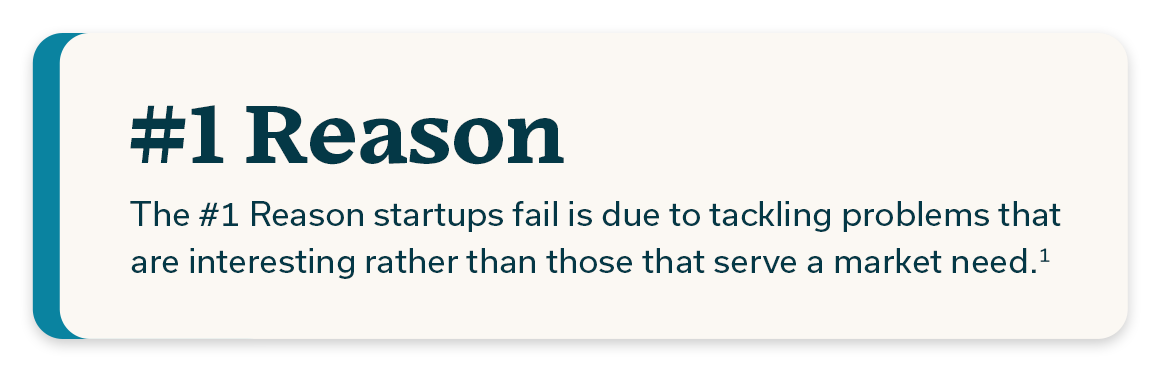
1 Stanford University, “Top 20 Reasons Startups Fail,” VCS 2019 Conference Report, 2018, accessed October 28, 2025, https://conferences.law.stanford.edu/vcs2019/wp-content/uploads/sites/63/2018/09/001-top-10.pdf

LPM in Practice: Participatory Budgeting with SAFe CoFund Presented with Cprime

LPM in Practice: Participatory Budgeting with SAFe CoFund Presented with Cprime

SAFe’s guidance on funding value streams effectively to support LPM.

When:

November 9, 2023, 8:00 am – November 9, 2023, 8:30 am MST

Where:

Zoom

Who:

Agile Leaders, Portfolio Managers, Product management, Release Train Engineer, Solution Management, VMOs

Event Overview

The LPM in Practice series returns with an exciting view of Portfolio prioritization and Participatory Budgeting in SAFe organizations. In today’s business climate, organizations are continuously seeking innovative approaches to improve their responsiveness, and overall business outcomes. Lean Portfolio Management (LPM) has emerged as SAFe’s key strategy for achieving these goals. However, traditional funding models pose a challenge to realizing the promise of LPM and SAFe. Participatory budgeting is a collaborative portfolio event for allocating the portfolio budget to its value streams, and it’s adoption is increasing SAFe portfolios.

This panel discussion explores the integration of Participatory Budgeting and SAFe’s new application, SAFe CoFund, to advance LPM and enable focus on the right portfolio investments to achieve the strategy. The panelists feature industry experts from Cprime who have successfully implemented the shift and were the early adopters of CoFund.

Speakers

Neru Obhrai

Principal Consultant at Radtac, SAFe SPCT at Cprime, Inc.

Neru is a certified SPCT and experienced Transformation Coach, who has lead and delivered a range of large scale, complex business transformation programmes.
After 3 decades of delivery of business solutions in the airline sector, Neru has also led multiple transformation initiatives within the finance and telco sectors. As a principal consultant with Cprime, Neru takes pride in establishing high performance diverse departments to deliver quality solutions and services and championing the drive for excellence

Ken France

VP, Enterprise Agility Practice and SAFe Fellow at Cprime, Inc.

Ken France is an executive enterprise coach cultivating transformational organizations, a recognized and highly-rated trainer, and one of the first US minted SPCT and a SAFe Fellow. Ken France has worked with SAFe since its inception, contributing actively to the framework, including SAFe LSE/4.0. With 25+ years’ experience in Information Technology, Ken has successfully supported multiple Fortune 100 enterprises tackling large and complex scaled agile transformations across numerous verticals.

Isaac Montgomery

SAFe Fellow and SPCT at Cprime, Inc.

I’ve spent the past 25 years working with organizations across the spectrum of sizes and industries seeking to realize the promises of business agility – responsiveness, productivity, quality, predictability, customer satisfaction and employee engagement. By helping leaders understand how their operating model and leadership practices drive the culture and performance of the organization, we’ve been able to realize lasting change and measurable improvements. Through these experiences I’ve become recognized as a thought leader in the areas of lean portfolio management (LPM), agile product management (APM), and organizational change management (OCM). While I regularly speak and teach at conferences around the world, and am a contributor to the Scaled Agile Framework (SAFe), my passion remains working in the field, helping organizations achieve sustainable competitive advantage and business agility.

Deema Dajani

SAFe Fellow and Product Manager at Scaled Agile, Inc.

A SAFe Fellow, Deema helps large institutions create the environment to shape disruption like a startup with business agility and Lean Portfolio Management (LPM). Deema currently serves as a Scaled Agile Product Management Director focused on enabling sustainable SAFe transformations at scale. Co-founder of Women in Agile, a non-profit organization focused on breaking barriers and inclusivity in the agile community.

Adopting Lean-Agile UX – Scaled Agile

Safe Business Agility

Learn the benefits of adopting Lean-Agile UX into a SAFe implementation and how to balance the roles of the PO, PM and Business Owners. We’ll also be addressing how servant leadership differs from traditional leadership and common antipatterns when writing PI Objectives.

Click the “Subscribe” button to subscribe to the SAFe Business Agility podcast on Apple Podcasts

Share:

SAFe in the News

Three things we learnt about integrating UX design into the Scaled Agile Framework, SAFe

By Jennifer Fabrizi and River Brandon

Full article

  • Learn about the “zone of happiness” where product management, business technology and design converge.
  • How to shift the product team’s mental model from work being a feature factory to being more of a learning ecosystem that we share with one another.
  • The importance of creating a culture of shared responsibility

Learn more about how SAFe addresses Lean UX by visiting scaledagileframework.com/lean-ux/.

SAFe in the Trenches

Hear Jennifer Fawcett, one of the leading experts on the Product Manager/Product Owner role in SAFe shares an example where the PM/PO and BO roles got out of balance and how the organization worked to get them back in balance.

Check out the new Agile Product Management course at scaledagile.com

Audio CoP

The Audio Community of Practice section of the show is where we answer YOUR most frequently asked and submitted questions. If you have a question for us to answer on air, please send it to podcast@scaledagile.com

The two questions we answer in this episode are:

  • Lean-Agile Leadership is a foundational concept in SAFe. How does this mindset – and a servant leadership mindset in general – differs from a traditional mindset?
  • What makes PI Objectives tricky and what are some of the common antipatterns that our listeners can avoid?

Hosted by: Melissa Reeve

Melissa Reeve is the Vice President of Marketing at Scaled Agile

Melissa Reeve is the Vice President of Marketing at Scaled Agile, Inc. In this role, Melissa guides the marketing team, helping people better understand Scaled Agile, the Scaled Agile Framework (SAFe) and its mission.

Hosted by: Joe Vallone

Joe Vallone is an experienced Agile Coach and Trainer

Joe Vallone is an experienced Agile Coach and Trainer and has been involved in the Lean and Agile communities since 2002. Mr. Vallone has helped coach several large-scale Agile transitions at Zynga, Apple, Microsoft, VCE, Nokia, AT&T, and American Airlines. Prior to founding Agile Business Connect, Joe Vallone served as an Agile Coach at Ciber, CTO/CIO of We The People, and the VP of Engineering for Telogical Systems.